




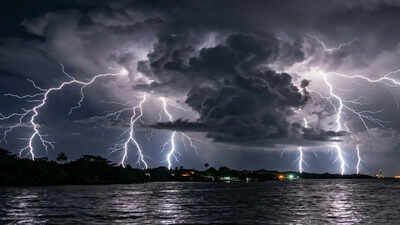
Not all parts of the Earth’s surface are equally exposed to storms. Some areas of the planet have developed such high levels of activity that they are called lightning hotspots. These are places where storms are constantly formed under the same atmospheric conditions, night after night.A particularly powerful lightning hotspot is Lake Maracaibo in Venezuela. According to NASA’s new lightning maps, this tropical area is considered to be the most active lightning hotspot in the world today. Previously, it was believed that the Congo Basin was the leader, but the results of the latest research proved otherwise.Overall, it should be noted that such phenomena are not uncommon for tropical zones. The Earth’s atmosphere provides favourable conditions for the occurrence of constant storms. Warm air, moisture, and wind patterns help create natural factories of lightning.Why tropical zones produce lots of lightningLightning hotspots are unevenly distributed around the globe. As mentioned above, the largest numbers are observed over the continents in tropical zones. This happens because of high temperatures. During the daytime, the ground heats up under the action of sunlight. This heat makes the warm and humid air at the surface rise rapidly into the atmosphere. As the air rises, a thunderstorm begins forming. This activity is very prominent in tropical areas since the humidity levels are always high throughout the year. Humidity helps to fuel thunder clouds.The Congo Basin is a classic example of a region characterised by this pattern. Although new data has taken the title of the top lightning area from the Lake Maracaibo, the Central Africa has many highly active storm areas.According to NASA, six of the ten top lightning active areas occur in Africa.Why do storms form in Lake Maracaibo even at nightOne of the reasons why Lake Maracaibo remains a stormy place even after sunset is timing. Most storms tend to become weaker at night, but in this place, the night tends to be more active.As explained by NASA Earthdata, winds blowing from the mountains around the area make this unique activity happen at night. The cool air blowing from the mountain meets warm air in the basin and starts thunderstorms. From the surface, the effect seems continuous as lighting strikes the horizon continuously while other clouds form at the same time.Some researchers term such phenomena as “Catatumbo lightning” because the location is near the Catatumbo river, where storms usually occur.One such meteorologist who works with NASA describes this region as one of the most electrically charged regions on Earth that he had ever witnessed using satellite observations.
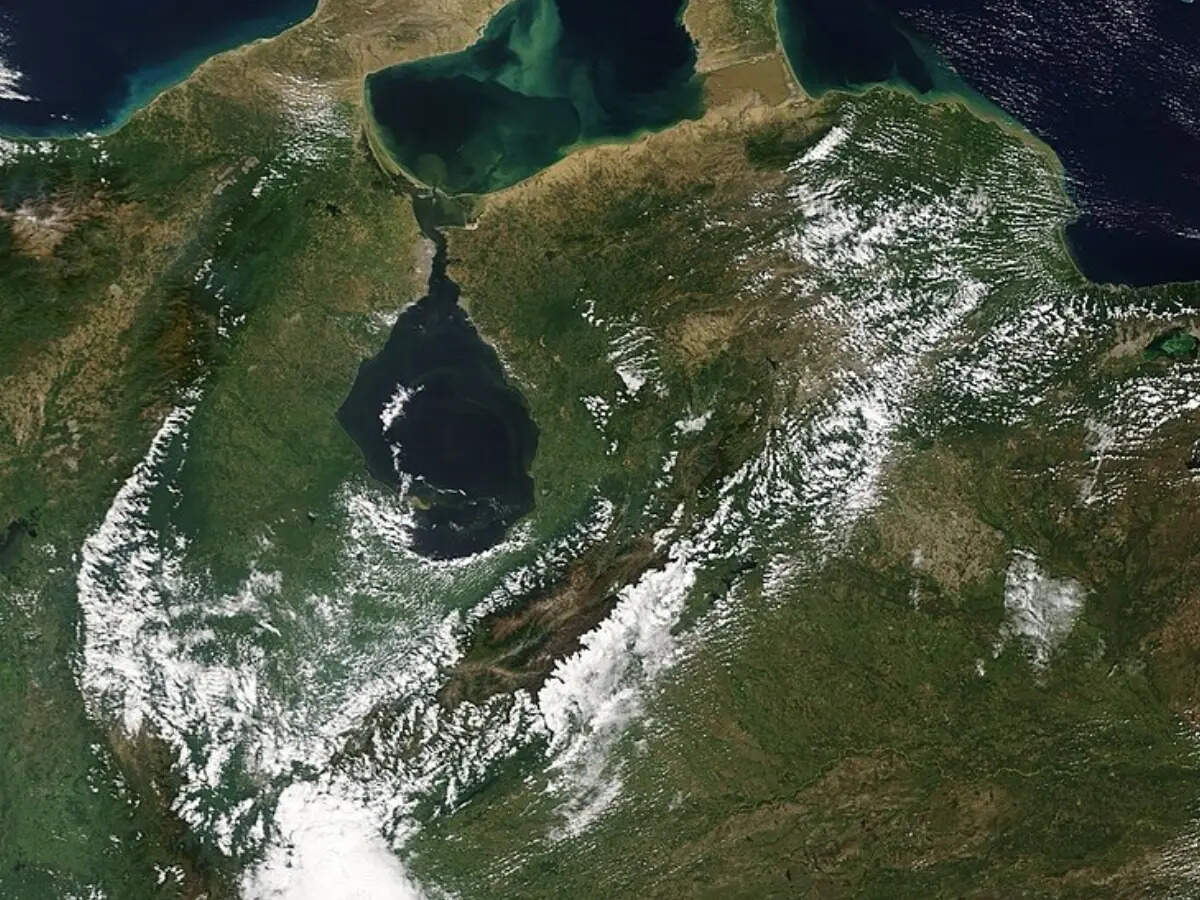
Lake Maracaibo has become Earth’s most active lightning hotspot. Image credit – Wikimedia
How improved satellite maps affected the rankingsIn previous studies, scientists believed that the highest lightning concentration on Earth occurred in the Congo Basin. This conclusion was made using low-resolution satellites that had been around previously.With improvements in satellite technology, scientists discovered that the situation is different. Later, data provided from NASA’s Lightning Imaging Sensor indicated that Lake Maracaibo is more charged with lightning than the Congo Basin.An interesting aspect of science demonstrated here is that rankings can change with advancements in technology. Improvements in technology did not make the Congo Basin less significant. On the contrary, it helped identify the region with maximum lightning activity. The tropical storm region that spans Africa and South America still stands out as one of the busiest places around.What makes lightning hotspot feel relentlessLightning hotspots have certain characteristics in common. First, they offer plenty of warmth and moisture. Second, they tend to be located near bodies of water, mountain ranges, or coasts that affect local air currents. Third, weather patterns tend to be cyclical in nature. It is that repetition that gives some of the hotspots their relentless nature. According to NASA, when atmospheric conditions coincide, thunderstorms may be able to form again and again in the same region. Warm air rises, the wind mixes, moisture condenses, and a new storm is created. Such processes may continue for hours and happen daily during thunderstorm seasons.Locals would have a unique experience of witnessing lightning storms every night. It would be one of the most powerful natural shows in the world.There are several reasons why scientists keep looking for hotspots where lightning often occurs, since the behaviour of lightning can tell us a lot about the behaviour of climate, precipitation, and weather conditions around the globe.Concludingly, these locations also have special conditions that make them perfect storm generators. Wherever they are, they feature lightning not as a sporadic phenomenon, but as a regular nighttime occurrence.