




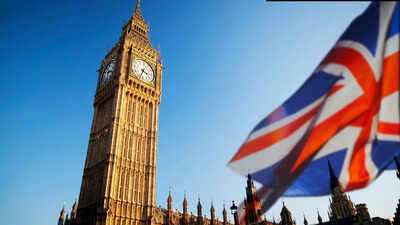
Big Ben is often spoken of as if it were a single object, but the reality is more layered. The name refers to the Great Bell, not the tower itself, and it sits within a structure that mixes Victorian engineering with careful maintenance and constant adjustment. Standing beside the River Thames, the Elizabeth Tower has become a shorthand for London, Parliament, and British public life. Yet much of what keeps it running is unseen, from the weight of its mechanism to the pennies that fine-tune its timekeeping. Looking closely at the tower, the clock, and the bells reveals a structure built on precision, scale, and quiet routine rather than spectacle.
Facts and figures behind Big Ben and the Elizabeth Tower
The Elizabeth Tower rises 96 meters above Westminster, roughly the height of 21 London buses stacked one on top of another. Inside, the climb is long and narrow. There are 292 steps to reach the clock faces and 334 steps to the Belfry, where the Great Bell hangs. A further 65 steps lead to the Ayrton Light, a lantern that glows when Parliament is sitting. The tower contains 11 floors in total. Its outer shell is built from thousands of cubic meters of stone and brick, including Anston stone from Yorkshire, Clipsham stone from Rutland, and Caen limestone brought from France.
The Great Clock is distinctive
The Great Clock has four dials, one on each side of the tower. Each dial measures seven meters across and is made from 324 pieces of pot opal glass set into a cast iron frame. The Roman numerals are 60 centimeters long and stand out sharply against the glass. The minute hands are made from copper sheet and weigh around 100 kilograms each. At 4.2 meters long, they travel the equivalent of about 190 kilometers every year. The hour hands are shorter at 2.7 meters but heavier, made from gun metal, and weigh around 300 kilograms.
The working of clock mechanism
The clock mechanism sits behind the faces and drives both the timekeeping and the striking of the bells. It weighs five tonnes and is made mainly of cast iron. The structure measures about 4.7 metres in length and 1.4 metres in width. At its heart is a pendulum that swings with steady regularity. Each beat lasts two seconds. The pendulum itself is 4.4 metres long and weighs 310 kilograms. Its bob weighs 203 kilograms and is made from steel and zinc tubes arranged concentrically.
Pennies used to adjust the time
Timekeeping at the Elizabeth Tower relies on a surprisingly simple method. Pre-decimal pennies are added or removed from the pendulum to adjust the clock’s speed. Adding one penny causes the clock to gain two fifths of a second over 24 hours. This fine balance matters because outside forces can interfere. Wind pushing against the clock hands can alter their movement. To address this, Edmund Beckett Denison designed the double three-legged gravity escapement. This mechanism isolates the pendulum from external pressure, allowing the clock to keep accurate time even in poor weather.
Big Ben is not the only bell inside the tower
Big Ben is the largest of the bells, but it is not alone. Four quarter bells hang in the belfry alongside it. Unlike many church bells, these bells do not swing. They are fixed in place and struck by hammers from the outside. Together, they produce the familiar Westminster chimes. Big Ben sounds the note E, as does the third quarter bell. The first quarter bell sounds G, the second sounds F sharp, and the fourth sounds B. Each bell has a distinct weight and tone.
How heavy are the bells
Big Ben weighs 13.7 tonnes, with a hammer weighing 200 kilograms. The first quarter bell weighs 1.1 tonnes. The second weighs 1.3 tonnes. The third comes in at 1.7 tonnes, while the fourth weighs four tonnes. Their combined sound has become one of the most recognisable in the world, though the bells themselves remain largely hidden from view.
When the clock stopped
Despite its reputation for reliability, the Great Clock has stopped on several occasions.
- The longest recent stoppage of the hour strike lasted six weeks in 2007.
- Earlier interruptions included six months in 1956 and two months in 1934.
- In 2005, the clock was stopped for two days so the brake shaft could be inspected.
These pauses are rare, but they remind visitors that even landmarks depend on care, patience and occasional silence.