
Survival with Better Branding: Navigating India’s Cost of Living Crisis in 2026
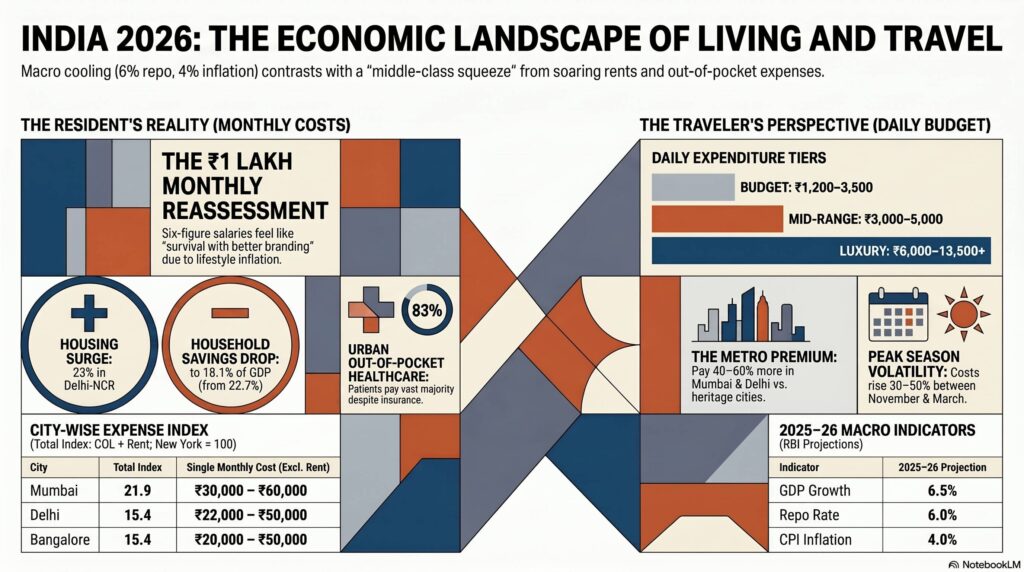
As India navigates the midpoint of 2026, a paradox has emerged in the national narrative. On one hand, the Reserve Bank of India (RBI) has projected a steady GDP growth of 6.5% and recently cut the repo rate to 6% to stimulate investment. On the other hand, the urban middle class is finding that even a “six-figure” salary—once the ultimate marker of success—now feels like “survival with better branding”.
For our readers at Voices of India News, we have broken down the actual costs of living and traveling in India today, based on the latest 2026 data.
The Six-Figure Struggle: Why Rs 1 Lakh Isn’t Enough
For years, earning Rs 1 lakh per month was a dream milestone. Today, it is increasingly viewed as insufficient for a comfortable life in a Tier-1 city. While companies are offering an average salary increase of 9.1% in 2026, expenses are often outstripping these gains.
The pressure isn’t just from “lifestyle inflation” or the “social media effect” of curated luxury. It is driven by systemic costs:
- Housing: In Delhi-NCR, residential property prices have surged by nearly 23%, making homeownership a distant dream for many.
- Healthcare: Despite wider insurance coverage, out-of-pocket expenses still dominate hospitalization. In urban areas, patients pay approximately 83% of their bills themselves, averaging Rs 39,000 per stay.
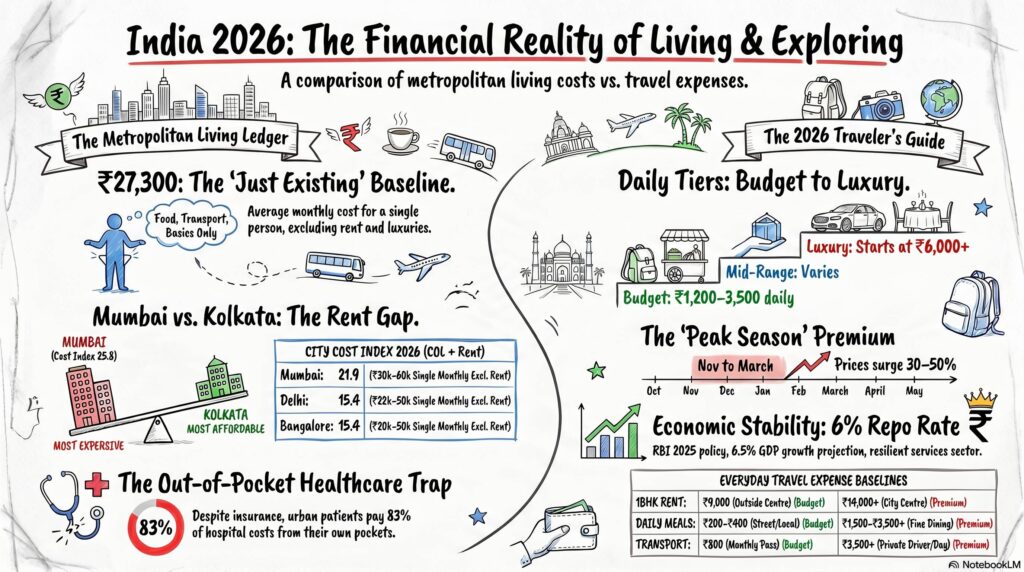
- The “Just Existing” Number: To simply exist in an Indian metro—covering rent, groceries, utilities, and transport—costs between Rs 28,000 and Rs 55,000 per month before saving a single rupee.
City-Wise Cost Breakdown (2026 Estimates)
The cost of living varies drastically depending on your zip code. According to March 2026 data, the average single person in India spends Rs 27,300 per month excluding rent, while a family of four requires roughly Rs 98,000.
| City | Single Monthly Cost (Excl. Rent) | Rent Index (High to Low) |
|---|---|---|
| Mumbai | Rs 30,000–60,000 | 17.5 (Highest) |
| Delhi | Rs 22,000–50,000 | 7.1 |
| Bangalore | Rs 20,000–50,000 | 8.5 |
| Hyderabad | Rs 12,000–50,000 | 5.6 |
| Kolkata | Rs 20,000–40,000 | 3.8 (Most Affordable) |
While Mumbai remains the most expensive due to soaring rents, cities like Hyderabad and Pune are currently offering the best value, as purchasing power in these hubs tends to stretch further.
Travel and Tourism: A Value Proposition
Despite the internal squeeze, India remains one of the world’s most affordable travel destinations for 2026.
For those planning a journey across the subcontinent, daily budgets fall into three tiers:
- Budget Backpacking (Rs 1,200–3,500/day): Includes hostel dorms (Rs 200–600), street food, and public transport.
- Mid-Range Comfort (Rs 3,000–5,000/day): Covers private guesthouse rooms (Rs 1,500–3,500), restaurant meals, and occasional taxis.
- Luxury (Rs 6,000–13,500+ /day): Features palace hotels, fine dining, and private drivers.
Pro-Tip for 2026: Seasonal timing is critical. Traveling during the peak season (November–March) will cost you 30–50% more for accommodation than the shoulder months of April–June.
The Path Forward
The 2026 middle-class dilemma is defined by a shift in what “financial security” means. It is no longer just about the number on a paycheck, but about resilience, adaptability, and managing rising obligations like EMIs and healthcare. As the gap between “basic life” costs and average earnings widens, many are turning to side hustles—from freelancing to driving taxis—to bridge the divide.
At Voices of India News, we believe that while the macroeconomic indicators look “cautiously optimistic,” the lived reality for the average urban professional is one of disciplined survival