




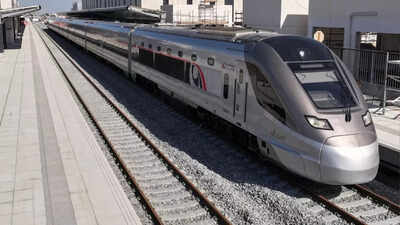
In a historic and rare move, the UAE’s national railway network transformed from a freight giant into a lifeline for citizens and residents. While Etihad Rail is primarily known for transporting sulfur and heavy goods across the desert, it pivoted operations this week to run three “exceptional” passenger services. This emergency mission was launched to facilitate the safe return of people stranded near the Saudi-UAE border, proving that the rail network is more than just an industrial asset, it is a critical pillar of the nation’s emergency response infrastructure.
Etihad rail operates 3 passenger train services
On March 3, 2026, Etihad Rail confirmed it had operated three exceptional passenger train services to facilitate the safe return of UAE citizens and residents from the Saudi border to Abu Dhabi.Etihad Rail activated these special services in coordination with the Emergency, Crisis and Disaster Management Centre Abu Dhabi as part of precautionary mobility measures introduced during ongoing regional airspace and travel disruptions.According to the official update shared by Etihad Rail, the trains transported passengers from Ghuweifat Station in the Al Dhafrah region, a key rail gateway near the Saudi border, to Al Faya Station in Abu Dhabi.Etihad Rail operated the three trips on an exceptional basis; they were not part of the regular passenger timetable. Authorities arranged these services to ensure residents returned in an organised, secure and efficient manner, reducing dependence on long-distance road travel and easing movement at a critical time.The move highlights the operational readiness of the UAE’s national railway network, which can be mobilised swiftly to support national emergency response efforts when required.
Route details
The trains transported passengers from Ghuweifat Station, located in the Al Dhafrah region near the Saudi border, to Al Faya Station in Abu Dhabi.Ghuweifat serves as a strategic gateway linking the UAE and Saudi Arabia by rail. The exceptional services ensured that residents who had crossed or were located near the border area could travel safely back to Abu Dhabi without relying solely on road transport.The move reflects the growing operational readiness of the UAE’s national railway network in times of need.
Coordination with Abu Dhabi authorities
The operation was carried out in direct coordination with Abu Dhabi’s emergency management authorities, highlighting the integration between transport infrastructure and crisis response planning.By deploying rail services quickly and efficiently, authorities managed passenger movement in an organised manner, reducing pressure on highways and enhancing overall safety.This cooperation demonstrates how rail infrastructure is increasingly becoming a critical pillar in national emergency preparedness strategies.
Looking ahead
The exceptional services underline the operational flexibility of Etihad Rail and the broader resilience of the UAE’s transport network.As the country continues to expand passenger rail connectivity, such coordinated responses show how rail can play a key role not only in daily commuting and logistics but also during extraordinary circumstances.The three services mark an important example of how infrastructure, planning and rapid coordination can work together to ensure the safety and comfort of residents when it matters most.