




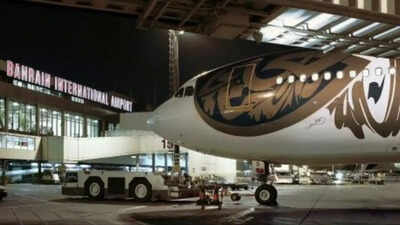
The aviation sector in the Gulf has been thrown into turmoil after flights at Bahrain International Airport were temporarily suspended following the closure of national airspace, a precautionary move linked to escalating Iran-US-Israel tensions affecting air travel across the Middle East. Authorities say recovery planning is already underway but thousands of passengers could face disruptions as airlines scramble to adjust schedules and reroute flights.
Flights suspended as Bahrain airspace closes amid US-Israel war against Iran
The suspension of flights came after Bahrain’s aviation authorities ordered the closure of the country’s airspace as a safety measure amid regional security developments. Officials confirmed that arriving and departing flights could be diverted, cancelled, or rescheduled while authorities monitor the situation closely.
The disruption is part of a wider aviation crisis across the Gulf triggered by escalating geopolitical tensions linked to the Iran-US-Israel war, which has forced multiple countries to restrict or shut down their airspace temporarily. Several Gulf states, including Bahrain, the UAE, Qatar and Kuwait, imposed restrictions, forcing airlines to suspend or reroute flights across the region.As a result, major airlines and airports have faced cascading cancellations and operational challenges, leaving travellers stranded and disrupting global travel routes that rely heavily on Gulf hubs.
Regional aviation disruption spreads amid US-Israel war against Iran
The suspension at Bahrain’s main airport comes amid a wider wave of flight disruptions across the Middle East. Aviation analysts say the conflict has triggered one of the region’s most severe travel disruptions in recent years, with tens of thousands of flights cancelled since the crisis began.Data from aviation monitoring firms shows that more than 27,000 flights to and from Middle East hubs have been cancelled since late February, highlighting the scale of the crisis affecting airlines and passengers worldwide. Major global carriers, including European and Asian airlines, have also adjusted flight paths or suspended routes to the region altogether.Some flights have been rerouted through alternative corridors, while others have been grounded due to safety concerns in affected airspace. The disruption has had a direct impact on Bahrain’s national carrier, Gulf Air, which suspended operations following the closure of Bahraini airspace. Flights are expected to resume once authorities determine that conditions are safe for civilian aviation.Other airlines operating across the Gulf have also been forced to make operational changes. Some carriers have cancelled flights entirely, while others are offering rebooking options or adjusting routes to avoid restricted airspace. The ripple effects have extended beyond the region. Several international flights connecting Europe, Asia and North America through Gulf hubs have faced delays or cancellations as airlines reassess flight paths and fuel requirements.
Bahrain’s recovery plan underway amid US-Israel war against Iran
Authorities in Bahrain have begun preparing a recovery strategy aimed at restoring normal airport operations as soon as the situation stabilises. The plan is expected to involve coordinated efforts between aviation authorities, airlines and regional partners to gradually reopen routes and resume scheduled flights.However, aviation experts warn that even after airspace restrictions are lifted, the recovery process could take time. Airlines may need days or even weeks to reposition aircraft, reorganise crews and clear the backlog of delayed passengers. Industry analysts say the complexity of global aviation networks means that disruptions in one region, especially a major transit hub, can ripple across continents.The Gulf region plays a crucial role in global aviation, acting as a bridge between Europe, Asia, Africa and Australia. Major hubs such as Dubai International Airport, Hamad International Airport, and Zayed International Airport handle millions of transit passengers each year. When airports or airspace in this corridor shut down, airlines often struggle to find efficient alternative routes. Longer detours increase fuel costs, flight times and operational complexity, while also limiting the number of flights airlines can operate.Experts warn that if geopolitical tensions persist, the aviation industry could face months of disruptions as airlines attempt to rebuild schedules and restore passenger confidence. Authorities are urging travellers to monitor airline updates and check flight statuses before heading to the airport. Passengers whose flights have been cancelled or delayed may be eligible for refunds or rebooking depending on airline policies.For now, Bahrain’s aviation sector remains on standby as authorities prioritise safety while preparing to gradually restore operations.