






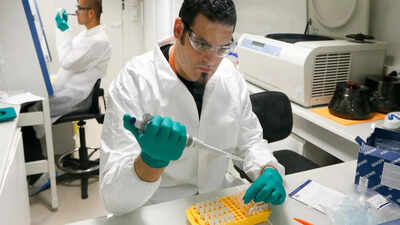
A £1 million research project led by the University of Sheffield is developing a new generation of “smart” drug delivery vehicles that could deliver chemotherapy directly to post-surgical sites in patients with glioblastoma, a rare and aggressive form of brain cancer, while also opening new treatment possibilities for severe inflammatory skin diseases and difficult fungal infections.
£1 million project targets precision drug delivery
The three-year project is funded by the Engineering and Physical Sciences Research Council (EPSRC) and is being led by Professor Rob Short FTSE and Professor Nick Turner.The research combines Cold Atmospheric Plasma (CAP) with molecular imprinting to create precision treatments for glioblastoma, autoimmune disease and invasive fungal infections, news agency PTI reported.While CAP used alongside drugs is a relatively recent scientific development, researchers say a key hurdle has been finding a way to bring the plasma and the drug together at the same site so treatment can be delivered locally and on demand.
New ‘smart plasters’ could expand drug options
Professor Short’s group had previously developed drug-delivery hydrogels that acted like sponges, absorbing specific water-based drug molecules. But this limited the kinds of drugs that could be used.The new project aims to overcome that limitation by using Molecularly Imprinted Polymers (MIPs).Instead of inserting a drug into an existing hydrogel, the researchers will effectively “grow” the hydrogel around the drug molecule itself, creating what PTI described as a new generation of “smart” plasters.Using AI-driven modelling to simulate molecular interactions, the team can build custom-fitted cavities that hold more complex drugs that were previously difficult or impossible to use in such systems.
Potential use in brain cancer, skin disease and fungal infections
The technology could enable a wider range of treatment formats, including implantable pellets.For skin disease, a clinician could use a handheld CAP device, likened to an EpiPen, to trigger the release of medicine from a plaster.For glioblastoma, pellets could be implanted directly at the tumour site after surgery and later activated using an endoscopic CAP device, allowing localised, controlled dosing.The plasma produces a safe “cocktail” of reactive particles and electric fields that acts like a switch for on-demand drug release, according to PTI.Researchers say the system may also offer a dual benefit by oxygenating tissue and speeding up healing, while providing a new option for managing severe inflammatory skin disease and preventing dangerous post-surgical fungal infections in vulnerable patients.
‘Could transform treatment like lasers did’
Professor Rob Short said the technology could have a transformative impact.“Cold atmospheric plasma has the potential to transform the treatment of disease in the way that lasers already have. However unlike lasers, CAP will realise its potential in combination therapies with drugs. Our MIP technology brings CAP and drugs together,” he said, as quoted by PTI.The project also brings together experts from Sheffield’s Faculty of Health and School of Biosciences, with the multi-disciplinary collaboration aimed at ensuring the materials are designed with future clinical trials in mind.The researchers hope the work will help bridge the gap between laboratory science and real-world medical applications, potentially creating new targeted therapies for some of the most challenging cancers and inflammatory conditions.