




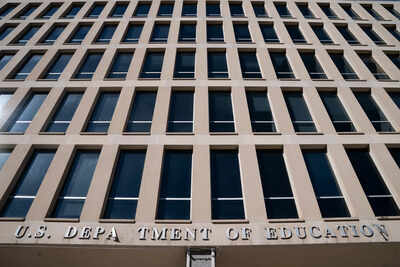
The United States (US) Department of Education will transfer part of its student loan portfolio to the US Department of the Treasury, marking an initial step towards moving the entire portfolio out of the education agency, according to an agreement announced on Thursday.Under the deal, the Treasury Department will take over management of student loans that are in default. These loans, where borrowers have missed payments for several months, total about $180 billion and account for roughly 11 percent of the federal government’s $1.7 trillion student loan portfolio.A second phase of the agreement states that the Treasury Department will eventually assume operational responsibility for non-defaulted loans as well, although no timeline has been specified.
Part of plan to reduce Education Department’s role
The move represents a significant step in the effort by the administration of President Donald Trump to dismantle the Department of Education. The agency, established more than 40 years ago, currently oversees federal student aid, including grants and loans for higher education.Borrowers will not need to take any action during the transition, officials said. Loan servicers and repayment processes will remain unchanged.
Agreement outlines restructuring of loan management
The 17-page agreement outlines a restructuring of how federal student loans are managed. “The agreement marks an intentional and historic step toward breaking up the Federal education bureaucracy and improving the administration of Federal student aid programs,” Education Secretary Linda McMahon said in a statement.Administration officials said the Education Department is not equipped to manage such a large loan portfolio. They also criticised the previous administration of President Joe Biden, saying it focused on loan cancellation rather than repayment.Officials cited data showing that fewer than half of borrowers are currently making payments, with nearly a quarter in default.
Legal concerns and opposition
However, the plan is expected to face legal challenges. Critics have pointed out that federal law requires student loans to be overseen by the Department of Education. Administration officials have described the arrangement as a partnership, with policy decisions remaining within the Education Department.The move is part of a broader effort to reduce the role of the Department of Education. While only Congress can formally close the agency, the administration has been shifting its functions to other departments through inter-agency agreements.The future management of the federal student loan system has been under discussion for some time. During her Senate confirmation hearing, Linda McMahon described the Treasury Department as a suitable option. President Trump has also previously suggested that the Small Business Administration could oversee student loans.
Past proposals and questions over capacity
Past proposals by conservative groups have included creating a separate entity to manage student debt. The Heritage Foundation, for example, proposed a government corporation for this purpose in its Project 2025 plan.There are questions about whether the Treasury Department has the required expertise. A 2015 pilot programme in which Treasury attempted to collect defaulted loans showed lower success rates than private collection agencies used by the Education Department.
Rising defaults and borrower impact
Federal student loan borrowers are generally considered in default after 270 days without payment. According to recent Education Department data, about 9.2 million Americans are currently in default.Default can affect credit scores and may lead to wage garnishment or reductions in Social Security benefits.At present, about 12 million borrowers are behind on payments in some form. Analysts expect an increase in defaults as pandemic-era relief measures end. Earlier this year, the administration delayed plans to resume involuntary collections on defaulted loans.The issue is expected to remain significant in the current political climate, particularly as affordability concerns continue to influence voters.