





For decades, one man quietly documented Chicago’s live music scene with an intensity that few noticed at the time but many are recognising now. Aadam Jacobs, known as the city’s “tape guy”, recorded more than 10,000 concerts across nearly 40 years, preserving performances that would have otherwise disappeared into memory. What began as a personal habit has now emerged as a major cultural archive. With thousands of ageing cassette tapes being digitised and uploaded online for free, his collection is offering an unprecedented look into the evolution of live music in a pre-internet era.
Recording habits turn him into Chicago’s ‘tape guy’
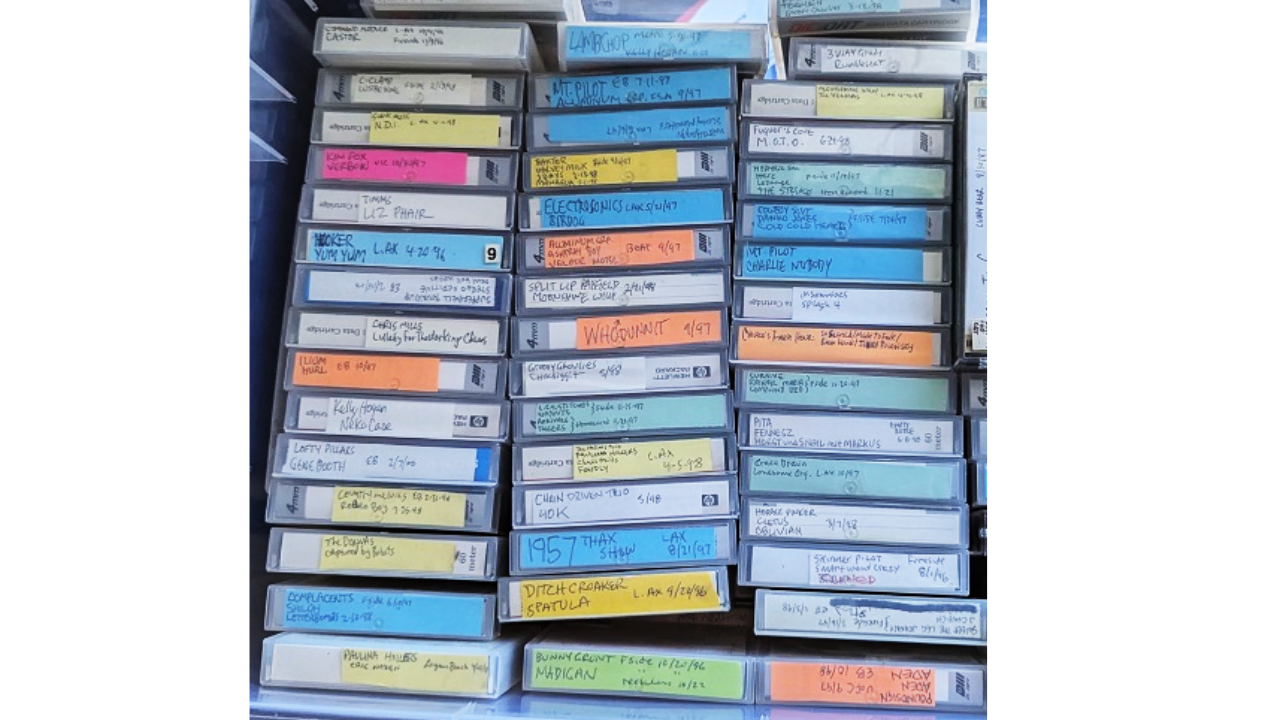
Jacobs began recording concerts in the mid-1980s, initially as a teenager attending shows around Chicago. At the time, live performances were rarely documented unless officially recorded, and much of the city’s music culture existed only in the moment. Jacobs started bringing recording equipment to shows simply because he wanted to revisit what he had heard. Over time, that instinct became routine. He attended concerts multiple times a week, often moving between venues, quietly capturing entire sets without drawing attention to himself.He has said in interviews that he never intended to build an archive of historical value. Recording, for him, was a compulsion rather than a project. He described it as something he “just kept doing”, without thinking about scale or long-term purpose. The tapes accumulated over decades, stored and organised but largely unheard beyond his personal access.What distinguishes Jacobs’ recordings is their scope. While some tapes include early performances by artists who later became internationally recognised, much of his work focuses on local and emerging acts. He recorded opening bands, short-lived groups, and entire line-ups from a single night, capturing the full context of live shows rather than isolated highlights.His archive reflects Chicago’s diverse music ecosystem, spanning rock, punk, alternative, indie, and hip-hop. It documents not just individual artists, but the environments in which they performed — the venues, the audiences, and the energy of specific moments in time. In many cases, these recordings are the only surviving evidence of bands that never released studio material or achieved commercial visibility.
Early recordings that gained historical value
Among the thousands of tapes are early performances by artists who would later become widely known. These recordings are valued not only for their rarity but for their rawness. They capture musicians before major label involvement, before polished production, and often before their sound had fully evolved.Some of Jacobs’ recordings have been noted for preserving early shows by bands like Nirvana during their initial tours, as well as performances by alternative and underground acts that defined the late 1980s and 1990s music landscape. These tapes offer insight into how music scenes developed organically, without the influence of digital platforms or widespread media coverage.Jacobs typically used portable recording devices, often working within the limitations of analogue technology. The quality of the recordings varies depending on venue acoustics, equipment, and positioning, but many are considered remarkably clear given the circumstances under which they were made.He maintained a system of labelling and storing tapes, noting details such as dates, venues, and performers whenever possible. This consistency has proven crucial in the current digitisation process, allowing volunteers to organise and catalogue the material more effectively.Despite the scale of his work, Jacobs remained largely anonymous within the broader music world. Those who frequented Chicago venues may have recognised him, but his recordings were not widely circulated, and he did not attempt to commercialise or publicise them.
From private collection to public archive
The shift from private archive to public access began when others became aware of the extent of Jacobs’ collection. Recognising its historical value, volunteers stepped in to help preserve the tapes before they degraded further. Magnetic tape is prone to deterioration over time, making digitisation urgent.The process involves transferring each cassette in real time, cleaning the audio where possible, and adding metadata such as artist names, dates, and locations. This work is being carried out by a distributed network of contributors, many of whom are archivists or music enthusiasts.The recordings are being uploaded to the Internet Archive, where they are freely accessible. This ensures that the material is not only preserved but also available to a global audience without cost or restriction.
Intentions rooted in access rather than ownership
Jacobs has consistently indicated that his motivation was never financial. He did not sell the recordings or attempt to license them. His approach aligns with a broader philosophy that music, especially live performance, should be experienced and remembered rather than controlled.In interviews, he has suggested that he recorded shows because he felt they were important and worth keeping, even if no one else was doing so at the time. The decision to allow the archive to be shared publicly reflects that same mindset — prioritising access over exclusivity.
Minimal resistance from artists
Despite the legal complexities surrounding concert recordings, the project has encountered limited opposition. Because the archive is non-commercial and framed as a preservation effort, many artists have been supportive or indifferent. In some cases, musicians have expressed appreciation for the recordings, particularly those that capture early stages of their careers.Only a small number of takedown requests have been reported, allowing the digitisation and upload process to continue largely uninterrupted. This has enabled the archive to grow steadily as more tapes are processed.
A record of a changing music culture
Beyond individual performances, Jacobs’ recordings provide a broader narrative of how live music evolved over time. They document shifts in genre popularity, changes in venue culture, and the emergence of new scenes within the city. As venues opened, closed, or transformed, his tapes captured those transitions.For researchers and listeners, the archive offers a layered understanding of music history — not as a series of major releases, but as a continuous flow of live experiences. It highlights the importance of local scenes and the role they play in shaping larger movements within the industry.As digitisation continues, more recordings are being made available, gradually revealing the full extent of Jacobs’ work. What was once a private collection is becoming a shared resource, accessible to anyone interested in exploring decades of live music.Jacobs did not set out to create a historical record, yet his persistence has resulted in one of the most extensive archives of live performance ever assembled by an individual.