




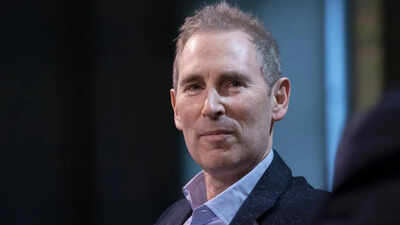
Months after Amazon‘s stock cratered over 10% in a single session—its worst day in years—CEO Andy Jassy isn’t backing down. In his annual shareholder letter released Thursday, Jassy made the case, again, for the company’s plan to pour roughly $200 billion into capital expenditures in 2026. Nearly all of it goes toward AI infrastructure—data centres, custom chips, networking gear. “We’re not investing approximately $200 billion in capex in 2026 on a hunch,” Jassy wrote. “We’re not going to be conservative in how we play this.”He also dropped a number Amazon had never shared before: AWS’s AI business has hit a $15 billion annualised revenue run rate—up from essentially nothing three years ago. That’s about 10% of AWS’s total $142 billion run rate, and it’s clearly meant to do one thing—tell Wall Street the money is already working.
Jassy frames the AI bet as an AWS replay, not a gamble
The letter leans hard into a familiar playbook. Jassy drew a direct line to Amazon’s early AWS days, when the company burned through cash on cloud infrastructure while investors questioned the logic. The parallel is deliberate—heavy upfront spending, scepticism, and then durable returns.He pointed to customer commitments already backing a “substantial portion” of this year’s capex, including a deal with OpenAI worth over $100 billion. Most of that investment, he said, gets monetised in 2027 and 2028.Amazon’s custom chip unit—Graviton, Trainium, and Nitro—also featured prominently. That business now generates over $20 billion in annualised revenue, doubling from $10 billion just one quarter ago and growing at triple-digit rates. Jassy even floated the idea of selling chip racks to outside customers—a move rival Google has already made with Anthropic.
Wall Street warms up, but the February bruise hasn’t healed
Investors liked what they read. Amazon shares climbed 5.6% on Thursday. But the stock is still barely positive for the year. The February selloff—sparked by the original $200 billion reveal—left a mark: Amazon posted its worst month since December 2022, and free cash flow is projected to turn negative in 2026 for the first time in four years.Jassy’s thesis is straightforward—AI demand is real, Amazon’s infrastructure lead is wide, and the cash will follow. Whether Wall Street stays patient enough to see that through is the only question that matters.