




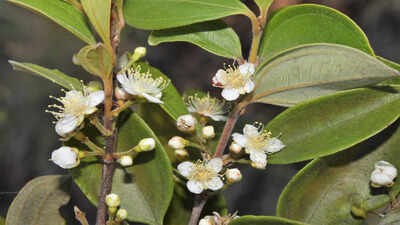
In the heart of Australia’s rainforests, there is a newly discovered species of tree that has gained the attention of scientists for its extremely unusual and alarming feature. The newly discovered tree, named the “Zombie Tree,” is alive, yet unable to reproduce in the wild. The tree, named Rhodamnia zombi, is unable to reproduce because it has been attacked by a highly contagious fungus. As a result, the tree is unable to produce flowers, fruits, and seeds, making its existence on the brink of extinction. Yet, the question is, can this species be saved before it completely disappears from the face of the earth? It is not just the tree, but the entire balance in nature.
What is Australia’s ‘zombie tree ’
The term ‘zombie tree’ is used for a tree species named Rhodamnia zombi, which is found in the rainforest and was first discovered in Queensland in 2020. The tree was recently named by experts due to the reason that although some of the trees are alive, they are unable to reproduce naturally.Research carried out by the University of Queensland found that the tree is ‘alive but unable to reproduce’ due to repeated infections that have made it impossible for the trees to develop new growth that is required for reproduction.Due to this reason, the species is considered functionally extinct despite the presence of some trees. The botanist, Professor Rod Fensham, described the trees by stating that, without any intervention, the trees are ‘the living dead’.
Myrtle rust : The fungal disease driving extinction
The main threat to the zombie tree is a fungal disease, which has been termed myrtle rust. The disease is caused by a fungus known as Austropuccinia psidii. This disease targets the myrtle family of plants, which includes many indigenous Australian species, like the eucalypt and the tea tree.The myrtle rust disease can spread rapidly through the spores of the fungus, which can be transported by the wind, insects, animals, and even humans. The disease then starts to affect the plant, leading to yellow or orange spots appearing on the leaves and young growth. This eventually leads to the plant not being able to produce flowers or seeds, hence stopping the life cycle of the plant.However, what has made things worse in Australia is that the indigenous plant species have not been able to defend themselves against the disease. This, according to Professor Fensham, means that these species, which include the myrtle family, like the eucalypt and the tea tree, have been termed “naive hosts” because they have not had time to develop resistance to the disease.
Scientific efforts to save the zombie tree
As scientists face the problem of Rhodamnia zombie’s quick decline, they have come up with different solutions to prevent its extinction. One of the first solutions to be put into practice is to clone the few trees that remain. This will be done by planting cuttings in controlled environments.There has also been research on treatments that will be able to protect the trees from the infection. This includes the use of fungicides, as well as RNA-based treatments, which will be able to enhance the tree’s ability to fight disease.Another solution to Rhodamnia zombi’s decline is to cultivate seedlings in controlled environments where the fungus is not active. This will hopefully, over time, enable some of them to be immune to the fungus, thus being able to be reintroduced to their natural habitat. This, as has been shown in ongoing studies, will be done to “grow disease-free seedlings in protected locations to ensure the future of the species.”
Why this matters beyond a single species
The zombie tree crisis, however, presents us with a larger ecological issue. Myrtle rust, in fact, does not affect only one species but many in the Myrtaceae family, and we have to think about the loss of biodiversity in the rainforests of Australia.The zombie tree, therefore, presents us with the impact of invasive species, which can threaten an entire ecosystem, especially when the native species have no defence. It, in fact, points to the challenges that have emerged in the wake of globalisation and the effects of climate change, which have made it easier for diseases to spread.The battle to save the zombie tree in Australia, however, reminds us of the fragility of nature. While the species is on the brink of extinction, science and innovation offer us a sense of hope. The outcome of this race, in fact, will not only determine the fate of this unique species but will also have implications for the way we choose to face other ecological issues in the near future.