




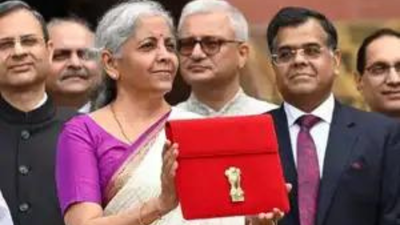
The address of the finance ministry may have changed, but when it comes to guarding the country’s most closely held financial secret, tradition still holds firm on Raisina Hill.Even after the ministry’s move to the new Central Secretariat offices at Kartavya Bhawan last year, the printing of the Union Budget — among the most confidential exercises of the Indian government — will once again take place deep inside North Block, its former home.According to official sources as reported PTI, the highly sensitive printing of Budget 2026-27 documents will be carried out at the dedicated government press located in the basement of North Block, which continues to remain shielded from public access and scrutiny.The new Kartavya Bhawan complex, though modern and expansive, does not yet have a secure printing facility capable of handling the elaborate and secrecy-bound Budget exercise.This continuity underscores how, despite administrative modernisation, some Budget rituals remain anchored to tested spaces and protocols.
A guarded tradition steeped in secrecy
While the documents were initially printed at Rashtrapati Bhavan, a leak forced the government to move the exercise to Minto Road in 1950. Three decades later, in 1980, the press was shifted to North Block, where it has remained since.The process itself is as elaborate as it is confidential. Hundreds of copies of voluminous documents are printed under strict security, with printing staff quarantined inside the press for up to two weeks. Once printing begins, access to officials involved in the exercise is curtailed entirely, in line with long-standing secrecy protocols.Marking the formal start of this lockdown is the traditional ‘halwa’ ceremony — a symbolic ritual held at the printing press to signal the beginning of quarantine for all staff associated with the exercise. The ceremony is expected to take place next week, indicating that preparations for Budget 2026-27 have entered their final stage.Finance Minister Nirmala Sitharaman is set to present her ninth consecutive Budget on February 1 in the Lok Sabha, against the backdrop of GDP growth projected at 7.4% for the current financial year and inflation remaining within a comfortable range.
From paper stacks to tablets — but rituals endure
While the physical printing continues, the Budget itself has undergone a digital transformation in recent years. In 2021, Sitharaman made history by presenting the Budget from a tablet, marking the first paperless Budget since Independence.That year also saw the launch of the Union Budget Mobile App, allowing Members of Parliament and the public to access 14 Budget documents digitally — including the Annual Financial Statement, Demand for Grants and the Finance Bill.