





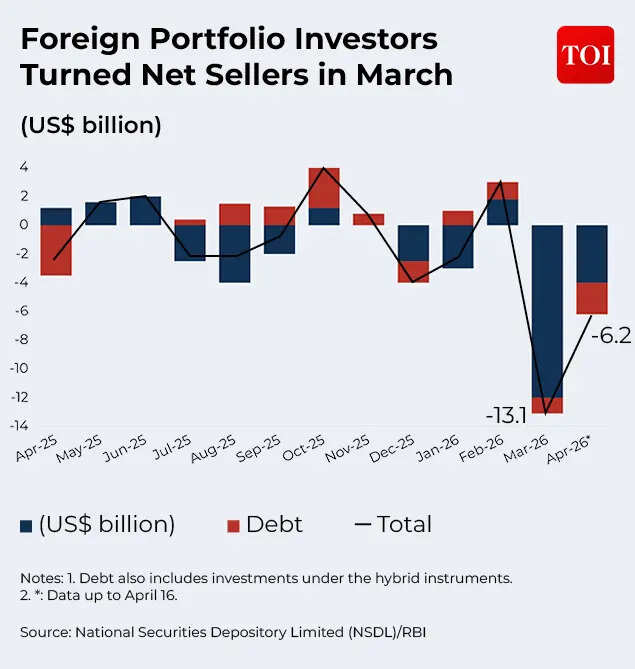
When it comes to the Indian economy, domestic resilience is often cited as its biggest strength. But how long can the Indian economy continue to hold well as external pressures in the form of supply disruptions and rising import prices pile pressure? In its latest bulletin the Reserve Bank of India (RBI) has pointed to emerging pressure points, while at the same time exuding confidence in India’s ability to withstand shocks.For RBI the situation is clear: The resilience of the global economy, already inflicted with trade tensions, is being tested by the conflict in West Asia. The near halt in tanker movements through the Strait of Hormuz has intensified pressures in the global supply chains. The durability and intensity of the conflict pose substantial uncertainty to the global growth prospects amidst broader supply chain disruptions and elevated energy prices.The standstill tanker traffic in the Strait of Hormuz caused a significant disruption in the global supply chains in March. The World Bank Commodity Price Index rose sharply, driven by higher energy and fertiliser prices, says RBI.In this scenario, India is not immune to global shockwaves – but it’s managing to hold on for now. “The Indian economy continues to hold its ground despite facing a major supply shock due to the conflict in West Asia,” says RBI.
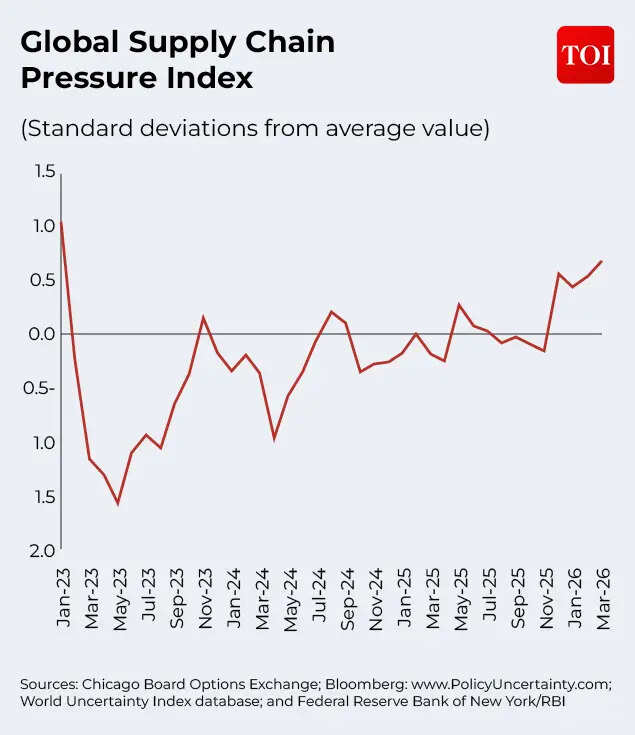
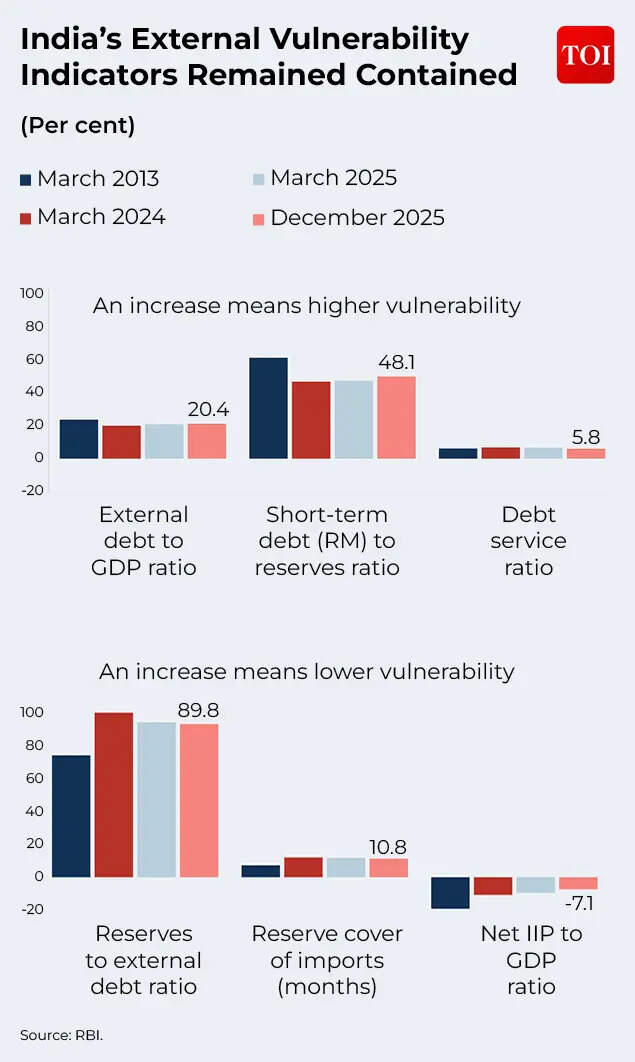
Rupee, markets & external sectorThe key external sector vulnerability indicators, viz., external debt-to-GDP ratio, net international investment position (IIP) to GDP ratio, and debt service ratio, remained contained at end-December 2025, says RBI. Also, India’s foreign exchange reserves remain comfortable, providing cover for goods imports of around 11 months and around 92 per cent of the external debt outstanding as at end-December 2025.
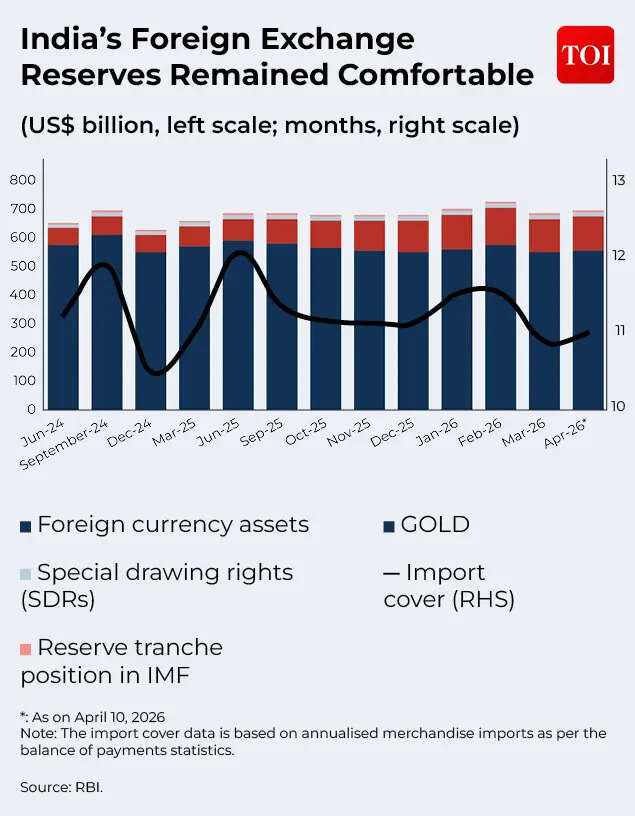
As the war has led to a decline in many global stock markets, Indian equities have also come under pressure. “Indian equity markets declined in March amidst persistent uncertainty and selling pressures by foreign portfolio investors before recovering moderately in April on the announcement of temporary ceasefire and moderation in crude oil prices. Net FPI outflows surged in March and the net selling continued into April,” notes RBI.The rupee, already dealing with depreciation due to FII outflows, has been dealt with another blow in the form of the war.
“Amidst financial market volatility due to the West Asia conflict, the Indian rupee witnessed depreciation against the US dollar in March. The depreciation pressures were, however, arrested in April following the measures taken by the Reserve Bank and the announcement of a ceasefire between the US and Iran. In real effective terms, the Indian rupee depreciated in March due to depreciation of INR in nominal effective terms and relatively lower inflation in India vis-à-vis its major trading partners,” the central bank says.What indicators suggest about India’s situationWhat does the latest data suggest about how India’s various sectors are bearing the impact of higher crude prices and input costs, raw material supply disruptions?According to the RBI, available high-frequency indicators of economic activity displayed divergent trends in March: the demand conditions remained resilient, despite some pockets of slowdown in economic momentum.
However, RBI’s forward looking surveys point towards softening consumer confidence on the current situation and moderation in business optimism along with buildup of cost pressures. These need to be watched out, and the duration of the Middle East conflict will be an important deciding factor in how deeply the disruptions may impact economic growth.The situation is summed up in a few points:
- Global commodity prices, barring precious metals, surged sharply with the upturn becoming broad-based.
- Consumer sentiments have plummeted due to concerns over higher prices eroding purchasing power and weaker asset valuations.
- Business optimism has fallen to a five-month low in March, one of its weakest levels since the pandemic in 2020.
- The
International Monetary Fund (IMF) has projected a moderation in global growth in 2026 alongside an increase in inflation. - The growth slowdown and inflationary pressures are expected to be more pronounced in emerging markets and developing economies.
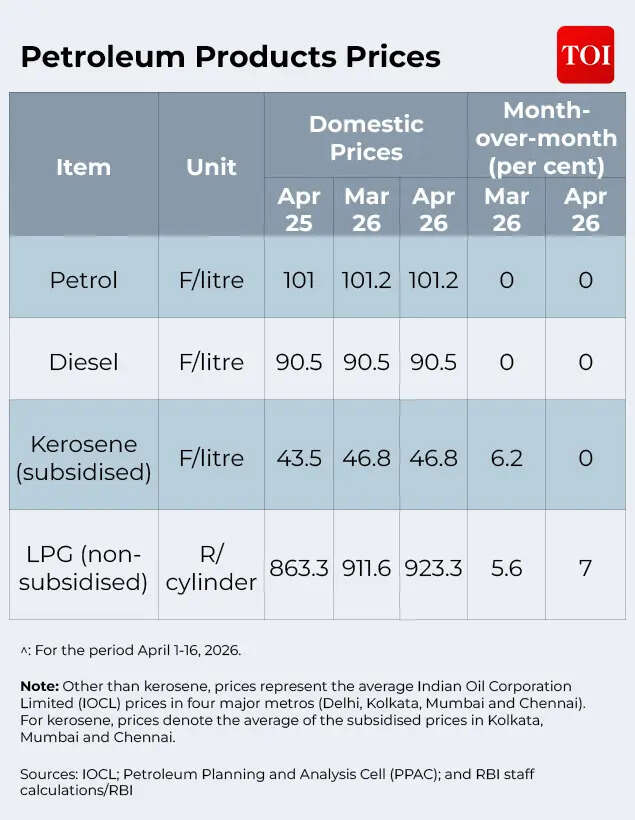
Slowdown looming? Some pockets show signs of pressureWhile the RBI has pointed out that domestic economic resilience continues to shield the economy from any major shocks, external-linked sectors are showing signs of pressure. Some areas in which the early signs of deceleration are showing are:
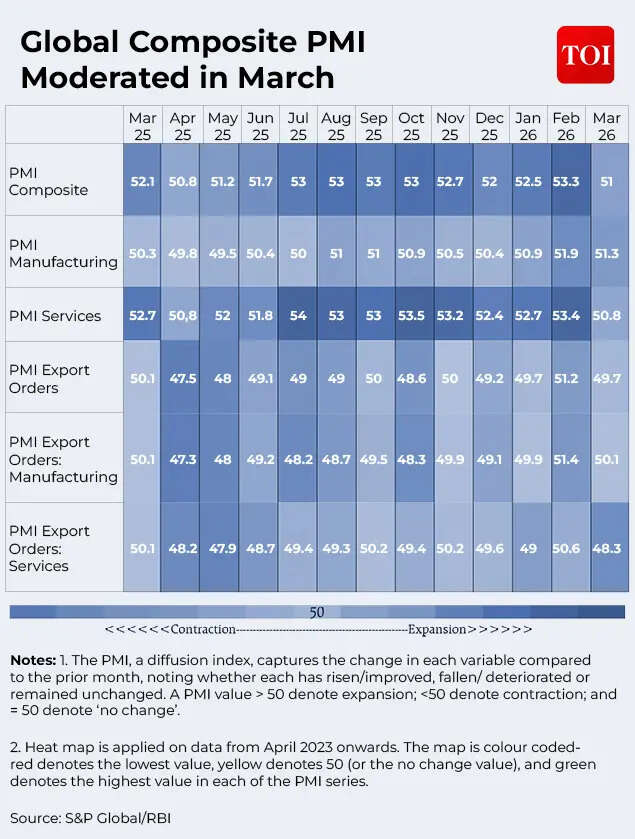
- Select indicators like port cargo, air passenger traffic and the outlook of purchasing managers is down. The manufacturing PMI, while still in an expansionary zone, has dropped to its lowest level in nearly four years.
- According to the RBI, cost pressures and uncertainty have taken a toll on new orders and output, which have actually grown at the slowest rates since those seen in mid-2022.
- The services PMI, even though it exhibits resilience, has seen its pace of expansion slowing to a 14-month low. This reflects softening in new business.
- The index of eight core industries has also declined. It has marked its 19-month low, largely due to a drop in the production of fertilisers, crude oil, coal, and electricity.
However, the RBI also points out that domestic high-frequency indicators for March, in general, do not reflect much adverse impact of the global supply chain bottlenecks.
“Some of the key risks have been contained by the government, ensuring uninterrupted availability of petroleum products across the country. Overall demand conditions remained resilient with greater support from rural areas,” it notes.India’s resilience put to testEven as external pressures continue to mount, the IMF has actually upgraded India’s GDP growth forecast for the current financial year. But inflation projections have also been revised up. The biggest takeaway from the RBI bulletin is that India’s domestic supply chains may come under risk from a prolonged war scenario, though strong macroeconomic fundamentals provide a buffer.“The global macroeconomic milieu has undergone a significant shift with supply chain disruptions and rising energy costs due to the West Asia conflict. Heightened volatility in commodity prices and financial markets has added to the uncertainty,” the RBI says.
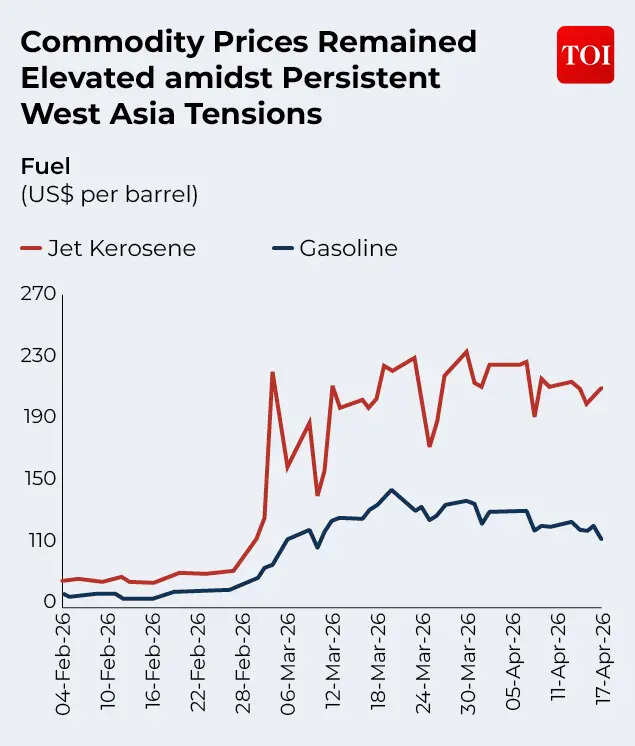
“Further intensification of the conflict, its prolongation and widening geographical spread remain the key downside risks to the global outlook. The intensity and the duration of the conflict and the resultant damage to the energy and other infrastructure add risk to the inflation and growth outlook,” the central bank says.These very risks also have implications for the Indian economy. As the central bank explains: If the conflict persists and supply chains are not restored early, it may create challenges to the domestic economy in the form of higher energy costs, input cost pressures, disruption in trade flows and financial market spillovers. It is this very caution that led to the RBI keeping the repo rate unchanged in its April monetary policy.“Though inflation remains contained within the tolerance band, upside risks have increased, driven by supply-side disruptions, including weather-related uncertainties. Possible second round effects with the supply shock transforming itself into demand shock also warrant careful and continuous assessment,” RBI cautions.“The temporary two-week ceasefire between the US and Iran has, however, provided some breather to the global economy. The strong macroeconomic fundamentals should support the Indian economy to maintain its resilience to withstand such shocks,” it concludes.