




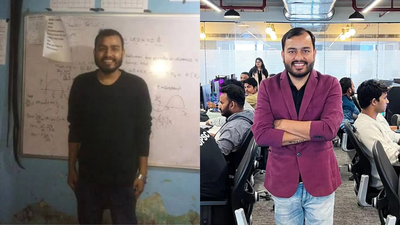
Success stories in India’s edtech sector tends to follow a familiar script: rapid growth, aggressive funding, and, often, an equally sharp correction. But every once in a while, a different kind of story emerges. One that does not begin with capital, but with a classroom. Alakh Pandey’s journey with PhysicsWallah sits somewhere in that space, where scale is built not overnight, but lesson by lesson. In November 2025, that journey reached a defining milestone. PhysicsWallah’s stock market debut minted two new Indian billionaires. Founder and Chief Executive Officer (CEO) Alakh Pandey, then 33, became the country’s youngest billionaire, while his business partner Prateek Boob, 37, also joined the list. The Noida-based company listed at a 42 percent premium to its initial public offering price, raising about 390 million dollars, according to Forbes. At one level, this is a story about market success. At another, it is about a teacher who chose an unconventional path and built a company that now reaches millions of students across India.
A teacher before an entrepreneur
Alakh Pandey did not begin with a company in mind. He began with a classroom. Growing up in Prayagraj in Uttar Pradesh, he started teaching early, offering private tuitions while he was still in school. Later, as an engineering student, he continued teaching, but eventually dropped out in his third year. The decision to leave college did not mark the end of his education journey. In 2014, he started a YouTube channel, “Physics Wallah-Alakh Pandey”, offering free physics lessons. Over time, the channel grew to nearly 14 million subscribers. His teaching style was informal and direct. He used humour, relatable examples and even visual cues like tattoos to explain complex concepts. This approach helped him build a strong connection with students, many of whom were preparing for competitive examinations but could not afford expensive coaching.
Building PhysicsWallah
The company took shape in 2020 when Pandey partnered with Prateek Boob, who had developed an e-learning application called PenPencil. Their shared idea was simple: let us provide affordable and accessible education and at scale. PhysicsWallah began by offering courses for engineering and medical entrance examinations. Over time, it expanded into school-level education and other test preparation segments. The platform operates both online and through offline centres. The growth has been supported by steady funding. The company raised 9 billion rupees in 2022 and 18.6 billion rupees in 2024 from investors such as WestBridge Capital and Lightspeed Venture Partners. It has also expanded through acquisitions. In 2022, PhysicsWallah acquired UAE-based Knowledge Planet to reach the Indian diaspora. A year later, it bought a 50 percent stake in Kerala-based Xylem Learning for about 5 billion rupees. In 2025, it added a 40 percent stake in a test preparation firm focused on public service commission examinations.
A sector shaped by rise and retreat
Pandey’s success comes at a time when India’s edtech sector is still adjusting after a period of excess. The rise of companies such as Byju’s and Unacademy showed how quickly valuations could grow. It also showed how quickly they could fall. This context makes PhysicsWallah’s journey more closely watched. The question is not only how it grew, but whether it can sustain that growth.
Beyond the milestone
For Alakh Pandey, the label of “youngest billionaire” marks a moment, not a conclusion. His identity remains closely tied to teaching, even as PhysicsWallah operates at a national scale. The company now runs more than 200 YouTube channels with a combined subscriber base of nearly 100 million. It continues to expand its physical presence and invest in technology and acquisitions using the proceeds from its public offering.PhysicsWallah began with the idea that quality education could be made affordable and widely accessible. Students will not measure this trophy by market listings or valuations. They will measure it by whether the lessons remain accessible, whether the costs stay within reach, and whether the platform continues to deliver what it promised at the start. In that sense, the journey from college dropout to billionaire is only one part of the story. The more consequential part is what happens next, in classrooms that may never know the details of the market, but will feel the outcomes of its decisions.