




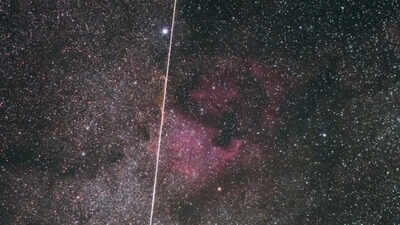
The annual Lyrid meteor shower is set to illuminate the night sky from April 16 to April 30, offering stargazers a chance to witness one of the oldest known celestial displays, observed for over 2,500 years.The meteor shower occurs as Earth passes through debris left behind by Comet Thatcher. The comet, which last appeared in 1861, takes about 417 years to orbit the Sun and is not expected to return until 2283.
When to watch and peak timings
The Lyrids will peak on the night of April 22. During this period, observers can expect around 10 to 15 meteors per hour, with occasional surges that may produce up to 100 meteors in an hour.
Where the meteors appear from
The meteors seem to originate from the constellation Lyra, which rises in the northeastern sky during the late evening and early morning hours.
Distinctive features of the Lyrids
The Lyrids are known for their bright and fast meteors, along with occasional fireballs that can briefly outshine Venus.Their colours are produced when tiny dust particles, often no larger than a grain of sand, interact with Earth’s atmosphere, heating up and ionising to create visible streaks of light. The glowing trail fades as the particles cool.
Viewing conditions this year
Viewing conditions in 2026 are expected to be moderate, as the peak coincides with a half-illuminated Moon, which may reduce visibility of fainter meteors. However, brighter streaks should still be visible to the naked eye.
Best places to watch
There is no single best location, but darker areas away from artificial lighting will provide clearer views. Open landscapes such as coastal areas, hilltops and fields are considered ideal for uninterrupted views of the night sky.
What is a meteor shower
A meteor is a small piece of interplanetary matter that burns up upon entering Earth’s atmosphere at high speed, producing a streak of light. When Earth encounters a stream of such debris, the event is known as a meteor shower.Following the Lyrids, the Eta Aquariids meteor shower will be visible from April 19 to May 6, providing another opportunity for skywatchers to observe meteors in the coming weeks.The annual Lyrid meteor shower is set to illuminate the night sky from April 16 to April 30, offering stargazers a chance to witness one of the oldest known celestial displays, observed for over 2,500 years.The meteor shower occurs as Earth passes through debris left behind by Comet Thatcher. The comet, which last appeared in 1861, takes about 417 years to orbit the Sun and is not expected to return until 2283.