




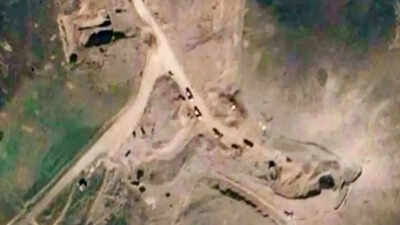
Iran is using the ongoing cease-fire to clear debris and restore access to underground missile bases damaged in recent US and Israeli strikes, according to satellite imagery cited by the Daily Telegraph and other reports.Satellite images from April 10 showed trucks and heavy machinery operating at missile facilities near Khomeyn and Tabriz, both of which were targeted during the conflict. Crews were seen removing rubble from tunnel entrances that had been sealed during airstrikes, loading debris onto trucks and reopening access points.The activity appears concentrated at key entry sites that were blocked to prevent Iran from deploying missiles. The images suggest Tehran may be attempting to recover or redeploy missile launchers during the temporary halt in fighting, which remains in effect.Similar observations were reported by Israeli newspaper Haaretz, which said Iran had used bulldozers to dig out missile launchers from underground bunkers. Additional satellite images cited by CNN showed excavation and dumping equipment near tunnel openings in locations including Hormozgan and Tabriz, indicating continued restoration work.The developments come even as mediators attempt to revive talks between Washington and Tehran after negotiations stalled over the weekend.US intelligence had earlier warned that Iranian operatives were working to make missile bunkers and silos operational again. Assessments cited in the reports suggest some facilities may have been repaired quickly, in certain cases within hours of being struck.The Pentagon and the White House have said that US and Israeli forces targeted 13,000 sites in Iran over five weeks of conflict, including more than 450 ballistic missile storage facilities. Despite this, US officials briefed on the matter told The New York Times that Iran retains the ability to launch attacks using its remaining arsenal.While officials did not specify the exact number of operational launchers, they said estimates suggesting that about half of Iran’s launchers survived are broadly consistent with intelligence assessments.Analysts note that much of Iran’s missile infrastructure is located in mountainous regions and protected by underground tunnel networks, making it difficult to fully destroy using conventional strikes. These networks are believed to connect storage sites, launch points and concealed exits.Iran is also thought to rely on mobile launch systems that can be quickly deployed and relocated, complicating detection and targeting.Although missile and drone activity has declined compared to earlier phases of the conflict, intermittent launches continue. Reports suggest Iran is deploying between 50 and 100 drones daily, with many intercepted.Officials from the US and Israel have said a key objective of the military campaign is to eliminate Iran’s ability to target Israel and American allies in the region. However, analysts cited in the reports say Tehran’s efforts to restore its missile infrastructure may be aimed at preserving its capabilities and maintaining leverage in any future negotiations.