




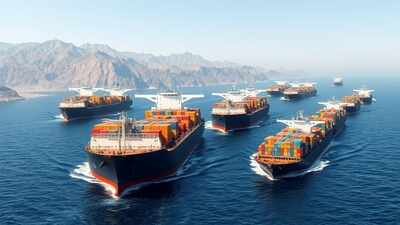
The Middle East war has pushed global oil markets deeper into crisis, as Iran’s tightening grip over the Strait of Hormuz continues to squeeze energy supplies worldwide. These tensions could escalate further, with Iran warning it may completely shut the passage if the US targets its power plants. At the moment, for those considering alternative routes, options remain limited and uncertain. As the disruption nears the one-month mark, Tehran is now moving to further formalise its control over the vital waterway. Iran’s parliament is reportedly working on a draft bill to introduce a system of charges on vessels passing through the Strait, requiring ships to pay for safe passage.
Iran moves to leverage its chokehold
As the disruption nears the one-month mark, Iran is planning to introduce a system to charge ships passing through the Strait. According to the semi-official Fars news agency, parliament is working on a draft bill that would require vessels to pay for safe passage.Fars, citing an unnamed lawmaker, said that the proposal could be finalised next week, giving legal backing to Iran’s control over the Strait.
Shipping activity has remained very limited since US and Israeli strikes on Iran began nearly a month ago. Only a small number of vessels have crossed the Strait, mostly those linked to Iran or China, along with a few that reportedly received clearance from the Islamic Revolutionary Guard Corps.Reports from the shipping industry suggest that an informal system is already in place. Ship operators have been asked, often through intermediaries, to share details about crew, cargo and routes, and in some cases to pay up to $2 million, although these demands have not been consistent.The idea of a formal toll, along with promises of safe passage, has created a dilemma for shipping companies. While they are keen to move stranded crews and cargo out of the Persian Gulf, concerns remain over sanctions risks and security challenges. Key sea routes such as Hormuz are typically governed by international laws that ensure freedom of navigation.
Meanwhile, India’s shipping ministry has dismissed reports of any proposed toll or levy on vessels passing through the Strait of Hormuz, calling such claims “baseless” and reiterating that the crucial maritime route is governed by international conventions guaranteeing freedom of navigation. Special secretary in the ministry of shipping, Rajesh Sinha, emphasised that no charges can be imposed on ships transiting the strait under global regulations.“On the question of any toll or levy while crossing the Strait of Hormuz, this is an international strait. As per international conventions, it ensures the right to freedom of navigation and no levy can be imposed under global regulations. Therefore, any such claim or argument has no basis—it is baseless,” he said.
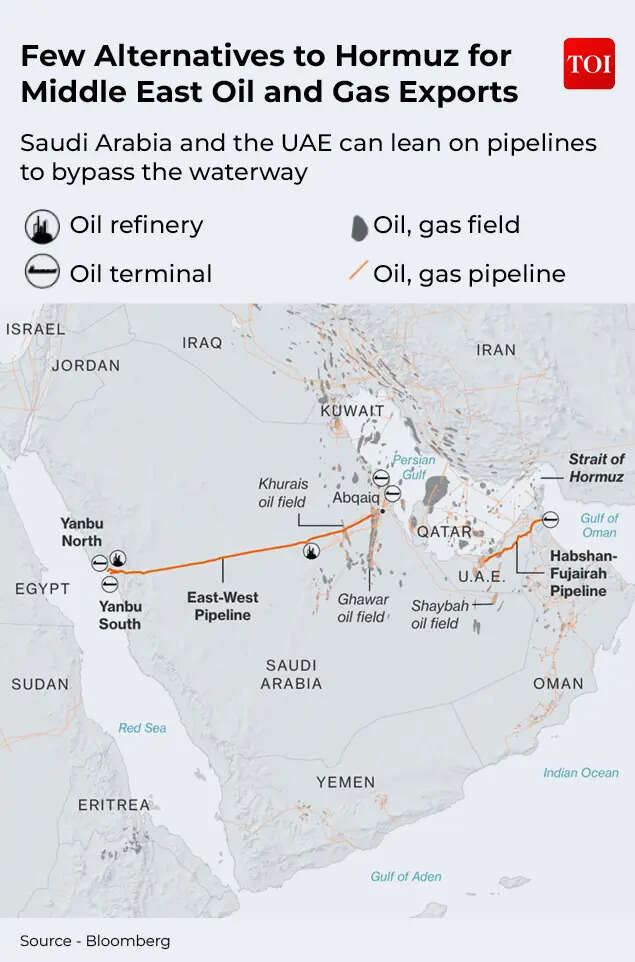
Alternatives to Hormuz
At the time, rerouting shipments through the Red Sea may appear to be a viable alternative after the Hormuz disruption, but that route carries its own risks. Just a day earlier, Iran raised fresh concerns by threatening the safety of vessels attempting to pass through a key Red Sea passage.The Bab el-Mandeb Strait, located between Yemen and Djibouti and around 1,200 miles from the Strait of Hormuz, is now also under scrutiny. The possibility of military threats from Iran’s proxies has added another layer of uncertainty to already strained global shipping routes.The Strait of Hormuz, a crucial artery for global oil and gas flows, has remained disrupted since February 28. The closure has reduced tanker traffic, pushed up fuel prices and unsettled global markets. On one hand, Iran is seeking to tighten its grip on the situation by considering legislation to impose transit fees on ships passing through the Strait of Hormuz. On the other, questions are raised over what is preventing other nations from stepping in to restore normal passage through the vital waterway.
Can other nations push open the Strait of Hormuz?
With the conflict ongoing, a return to normal shipping remains distant. Even if hostilities ease, uncertainty lingers over how quickly vessels can return and in what numbers.With few viable alternatives available, the question remains: How can ships eventually resume passage through the Strait of Hormuz?First hurdle: Overcoming the strait’s geographyReopening the passage is far from simple, largely due to its geography. The strait stretches about 140 miles and narrows to just 25 miles at its tightest point, leaving vessels with little room to manoeuvre and exposing them to potential attacks from the shore or small boats. Fully loaded tankers take between 10 and 14 hours to cross at limited speeds, while relatively shallow waters increase the risk of mines being laid, Bloomberg reported.The mountainous terrain along Iran’s coastline further complicates the situation, offering cover for missile and drone launch sites and making efforts to restore safe passage more challenging.Another challenge: Escorting the ship with safetyAny reopening is likely to depend heavily on security arrangements. Naval escorts are seen as one option, with warships accompanying commercial vessels to guard against threats such as missiles, drones and underwater weapons. However, this would first require shipping lanes to be cleared of mines, a process that can only begin once active hostilities cease and could take around two weeks. Air support would also be needed, with warplanes monitoring the area for incoming threats.Even then, restoring full traffic would be difficult. The number of vessels that typically pass through the strait each day would require coordination between multiple countries. Defence officials, cited by Bloomberg, suggest a multinational coalition would be needed to secure the route, particularly if a ceasefire encourages broader participation.But what if ships get escorted?Significant challenges would still remain. The proximity of Iran’s coastline leaves little time to detect and intercept incoming threats, and even advanced warships could be overwhelmed by large-scale “swarm” attacks. Iran’s strikes on land targets in the region have shown that some missiles and drones can penetrate air defences.At the same time, the US Navy alone does not have enough vessels to protect the roughly 140 ships that typically pass through the strait each day under normal conditions. US President Donald Trump had earlier suggested forming a coalition to escort ships safely, but the proposal did not gain support.A ceasefire, however, could prompt allies to reconsider and respond to US President Donald Trump’s call for a joint maritime protection mission.Bottom lineThe path to reopening the Strait of Hormuz remains uncertain, shaped by Iran’s conditions, ongoing military tensions and the risk that further escalation could disrupt not just one, but multiple key routes for global energy flows.Shipping companies, meanwhile, are facing rising costs. Many are dealing with higher insurance premiums, additional payments to crews operating in a conflict zone, and expenses to maintain cargoes as vessels remain stranded or delayed. While a limited number of ships continue to transit under specific conditions, most operators are holding back. The disruption is also weighing on energy supplies. Oil production in parts of the Persian Gulf has been shut in, and some refineries have been damaged during the conflict. This has tightened supply and pushed prices higher, with Brent crude crossing $114 a barrel earlier this week and maintaining over $100.