




The NFL isn’t waiting for the official start of the new league year to get busy. With the scouting combine in the rearview, we’ve already seen a stream of trades, contract restructures, and cuts.
That latter group is headlined by Cardinals quarterback Kyler Murray, who will be cut next week (Arizona will avoid $19.5 million in contract guarantees by releasing him before March 16), and Patriots receiver Stefon Diggs. The Chiefs have traded cornerback Trent McDuffie to the Rams for a collection of picks—including a first-rounder—and plan to release starting right tackle Jawaan Taylor; both moves will significantly change Kansas City’s roster as quarterback Patrick Mahomes heals from his torn ACL. The Texans have traded tackle Tytus Howard to Cleveland and acquired running back David Montgomery from Detroit. If the last few days are any indication, we’re in for a wild ride this offseason.
It’s time to lay out what the trade market could look like this spring, from quarterbacks on down. This year’s free agent market and draft class appear to be light on difference makers, so teams with major needs and cap space will have to use creative means to add talent. We’ll cover all the players who could be traded in the coming weeks, from the superstars who could use a change of scenery to the quarterbacks in limbo to the veterans with tradable contracts. These are the 23 players to watch:
Quarterbacks
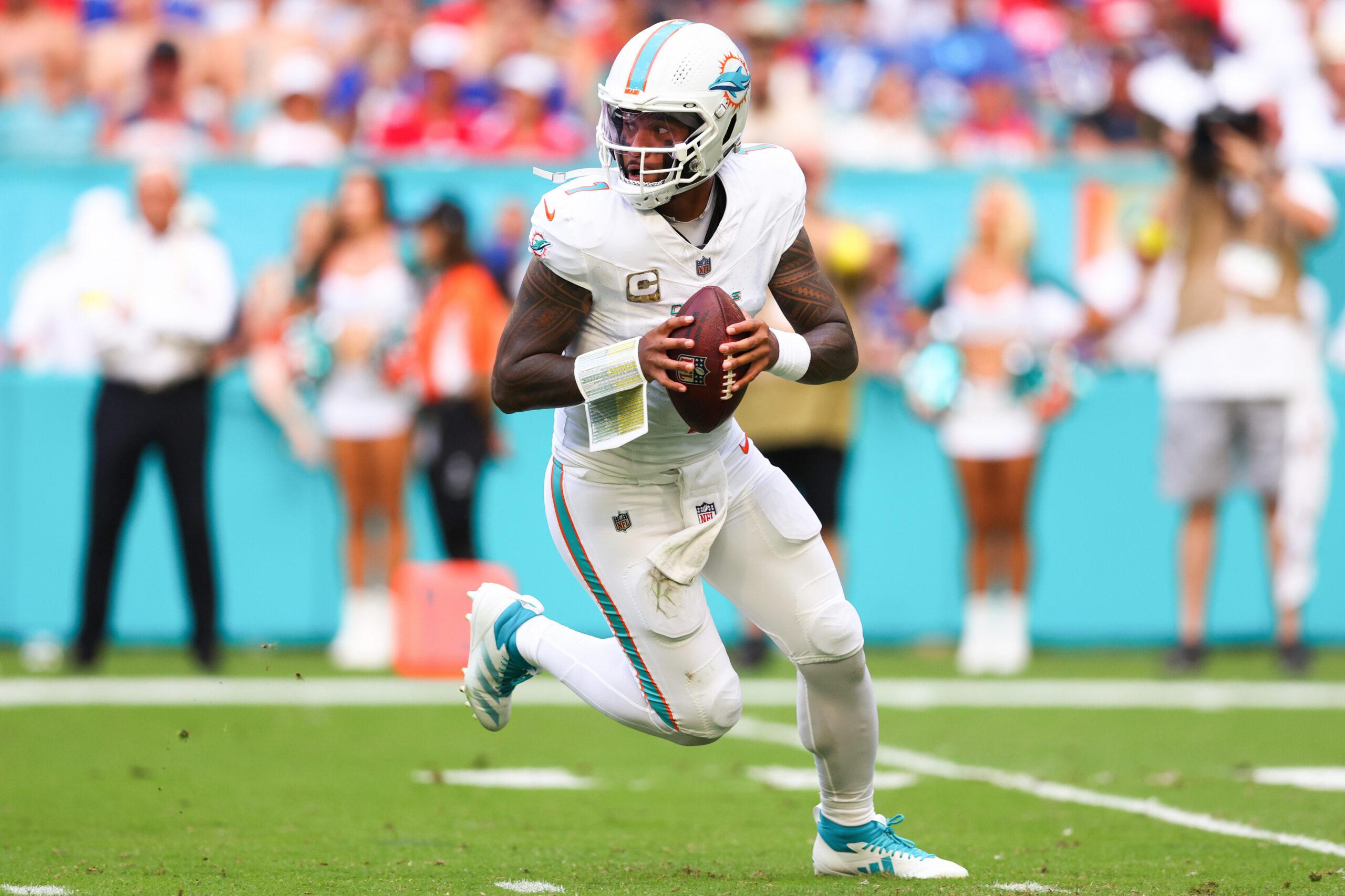
Tua Tagovailoa, Miami Dolphins
Don’t hold your breath waiting on a deal for Tagovailoa. I doubt there will be a serious market early in free agency for a player with a concerning history of concussions and injuries and back-to-back years of underwhelming production and bad vibes.
No team should look at Tagovailoa’s contract as something it wants to take on, and that includes the Dolphins. But there could be a mechanism to make it somewhat manageable later. While his 2026 salary of $54 million is guaranteed at the start of the new league year this month, Miami could spread the cap charges over multiple seasons if he’s traded after June 1. In that scenario, Miami could maximize its savings, find Tagovailoa a spot on a team in need, and begin what’ll be a multiyear roster rebuild.
Even then, it might be difficult for Miami to find a suitor, because it’s hard to envision a team that wants Tagovailoa as a starter—and it’s impossible to envision anyone paying him that sort of money to be a backup. The more likely scenario is that the Dolphins will either stick it out with Tagovailoa for one more season and try to move him in 2027 or simply cut him this spring and designate him as a post–June 1 release. Either way, it’s going to be uncomfortable for everyone involved.
Mac Jones, San Francisco 49ers
Any team in the market for a quarterback this offseason could be looking at a trade for Jones as an insurance plan.
Jones went 5-3 for San Francisco last season while Brock Purdy was out with a foot injury. Jones played pretty well when he had a clean pocket and easy options in the short area of the field. It might not be realistic to expect similar production on a new team without Kyle Shanahan calling the shots and running back Christian McCaffrey and tight end George Kittle as safety valves, but Jones did show that he can execute the basics and keep a well-designed offense on track—and that could translate elsewhere. He also seems coachable, having played in several different systems in the past four seasons, from New England’s to Jacksonville’s to San Francisco’s.
The Jets and Steelers feel like the two teams most likely to pursue Jones. New York would have the most urgency to turn things around quickly, and it has the surplus draft capital necessary to meet San Francisco’s trade demands. The 49ers seem unlikely to deal Jones, but perhaps they could be persuaded by a second-round pick—the same price it took for San Francisco to acquire quarterback Jimmy Garoppolo in 2017. Pittsburgh doesn’t have extra picks in the top two rounds to shop around, but it has several picks in the third and fourth rounds that it could combine to make a deal happen. Should either team strike out on free agents Kyler Murray and Malik Willis, checking in with the 49ers about Jones should be the next step.
Anthony Richardson, Indianapolis Colts
Richardson’s best moments are breathtaking. He throws with the type of raw power that coaches dream about. But Richardson’s accuracy is sporadic, and during his brief career with Indianapolis, his mechanics have too often broken down under pressure, while injuries have kept him from getting the reps he needs to iron out issues in his game.
No quarterback’s trade market is harder to gauge than Richardson’s this offseason. He was recently granted the freedom to seek a trade from the Colts. Richardson likely wants a team that can commit to his development for the next two years, but I’m not certain any team would give him a clear runway to becoming a starter. It would probably be best for him to land with the Bills, Packers, or Ravens—all spots where he could serve as a backup to an established starter and get the time he needs to develop behind the scenes. If he’s dealt, I imagine it’ll be for a sixth-round pick, similar to Zach Wilson in 2024 or Justin Fields in 2024.
Tanner McKee, Philadelphia Eagles
McKee has some interesting tools, and he’s made some impressive decisions with the ball in the last two years in his limited preseason action, but he hasn’t had much time to prove what he can do in the regular season, with most of his snaps coming at the end of the year against bad competition. What McKee would look like as a starter is still mostly unknown, and he’d likely need to land in an offensive system that doesn’t ask its quarterbacks to hold the ball for long periods of time or create outside the pocket. There may be a comfortable landing spot for McKee in Arizona or Minnesota if those teams strike out in free agency. Both teams like to use play-action and the quick passing game to get quarterbacks easy looks.
I expect Philadelphia will try to squeeze as much draft capital as it can from a team looking to acquire McKee. A conditional fourth-round pick—that improves to a third if McKee starts and signs an extension—might be good enough for the Eagles.
Spencer Rattler, New Orleans Saints
For quarterback-needy teams that won’t find themselves in a position to snag a QB in the draft, Rattler, a passer on a rookie-esque timeline, is probably the next best thing. The most generous read on Rattler is that he has unique arm talent and the potential to develop into an average starter if he lands in a franchise with enough stability or patience to let him fail and learn along the way.
If I were running the Steelers, Colts, or Vikings, Rattler is exactly the kind of fringe starting quarterback I’d be looking for to spice up an offseason competition. For Pittsburgh, he’d be a backstop against Aaron Rodgers retiring or declining significantly. In Indianapolis, he’d be a solid option to have in case Daniel Jones isn’t ready by Week 1. And for Minnesota, he’d set the floor of competence that J.J. McCarthy would have to clear to prove himself ready to contribute to winning.
Derek Carr
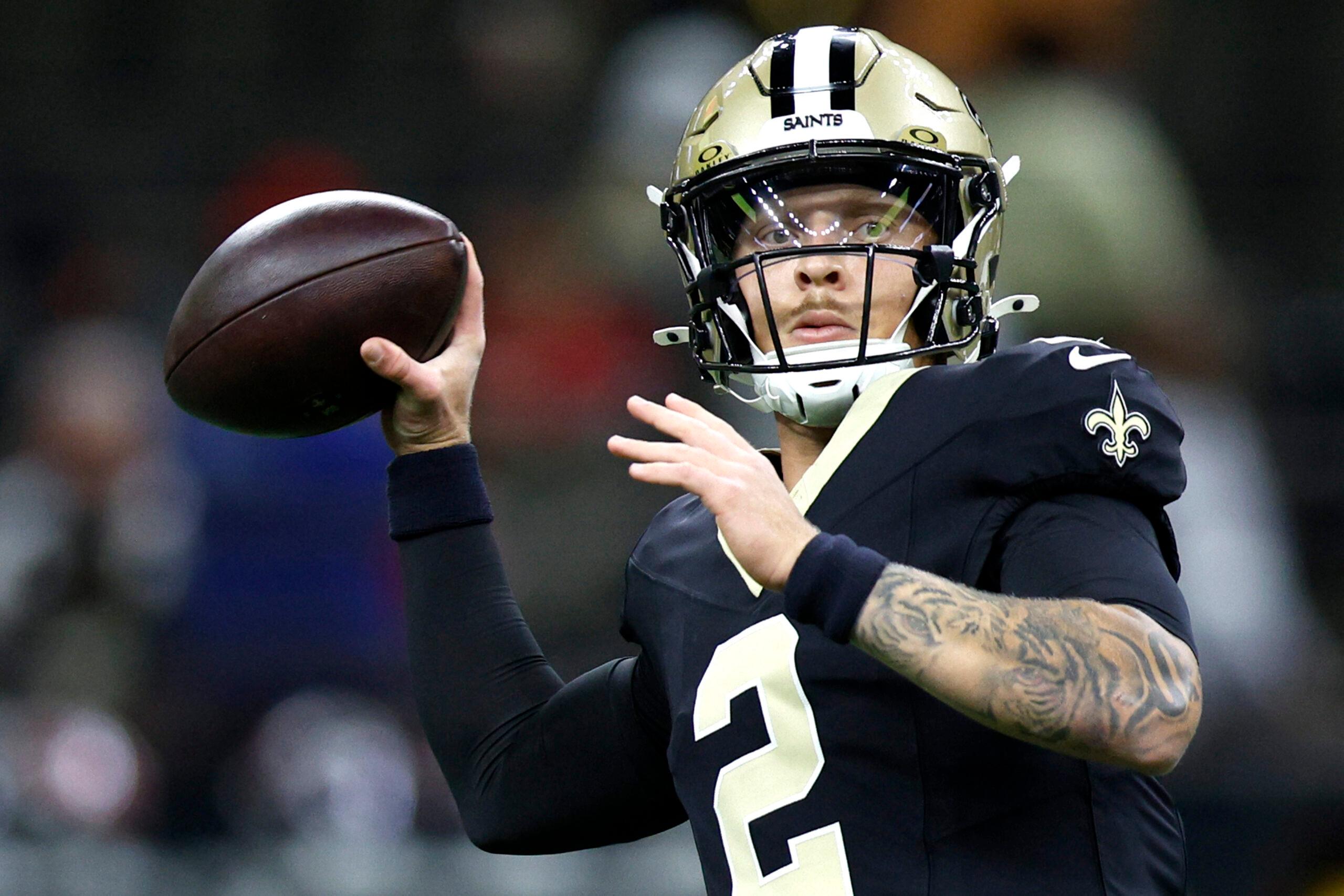
I have a gold medal in the Down-Bad Olympics for any team that talks itself into signing Carr after a year of so-called retirement.
Carr will be 35 by the start of the 2026 season and hasn’t played winning football since 2021—and injuries have taken a toll on his production and play style. He lost the mobility that was key to his game early in his career, and he left the Saints after the 2024 season due to a labral tear and degenerative rotator cuff injury. New Orleans maintains Carr’s rights.
I can’t imagine a team trading for Carr unless it was for a seventh-round pick swap and his contract was reworked to reduce his annual salary. And let’s say Carr got fully healthy in his year away: What’s the real upshot for the acquiring team? Getting a year’s worth of checkdowns doesn’t move the needle. It’s hard to imagine Carr being anything but a placeholder QB for a team that’s already looking ahead to 2027. (I guess that means he’ll be on the Cardinals by the start of training camp.)
The Most Tradable Non-QBs
A.J. Brown, wide receiver, Philadelphia Eagles
It’s fair to wonder whether there’s any possible deal that would convince the Eagles to move their mercurial star receiver.
Let’s lay out what’s at stake for Philadelphia for any Brown trade. The move itself would accelerate $20 million onto the team’s 2026 cap, gutting the moderate amount of cap space Philadelphia has to begin with. Another $43 million would be tied up in dead-cap charges, which would give the Eagles a whopping $94 million in total dead cap for this season. That much dead money would put a significant squeeze on Philadelphia’s ability to fill out other parts of the roster in 2026. For most teams, the idea of incurring these cap penalties would be a total non-starter. But with an aggressive GM like Howie Roseman, who is one of the best at making savvy deals to maximize the free agent market, a trade, even one with big financial ramifications, isn’t off the table.
Still, it will likely take a steep return to convince Roseman to trade Brown. Without a first-rounder as part of the package, there’s probably no trade, and ESPN’s reporting suggests that teams aren’t quite ready to hand over a pick that high. The Eagles would probably ask for additional draft capital along with that first-rounder—probably a third-round pick. An asking price this high would severely limit the list of interested teams. If there’s a team to watch out there, I’d keep an eye on Kansas City, who just received a surplus of draft capital it can use to draw Philadelphia’s interest.
Maxx Crosby, edge, Las Vegas Raiders
The longtime Raiders pass rusher should be highly coveted this offseason. He’s approaching 30 years old but is under contract through his age-32 season. His current deal includes no guaranteed money beyond 2026, which makes it quite tradable. Other teams could have questions about his sack production as he ages, but if Crosby is healthy this season, he’s a top-10 pass rusher. He’s always on the field, he’s an elite run defender, and it’s enticing to think about just how much better he’d be on a team that includes other good defensive players—something he rarely had with the Raiders.
Two AFC contenders, the Patriots and the Ravens, should be calling the Raiders now to try to get a deal done. The Cowboys are also a team to watch here, because they have enough surplus draft capital to outbid anyone on the market for Crosby’s services.
Michael Pittman Jr., wide receiver, Indianapolis Colts
If the Colts plan to keep Daniel Jones, who received the transition tag, and impending free agent receiver Alec Pierce around on long-term deals, that will almost certainly come at the expense of receiver Michael Pittman Jr.
Pittman has a cap hit of $29 million this season, but the Colts can shave $24 million off their books by trading him or reworking his deal. Pittman has been consistently productive against zone coverage throughout his career, he can line up in the slot or as an outside receiver, and he hasn’t missed much time due to injury. It’s reasonable to believe that, at just 28 years old, Pittman can maintain his production and style of play well into his 30s.
DJ Moore, wide receiver, Chicago Bears
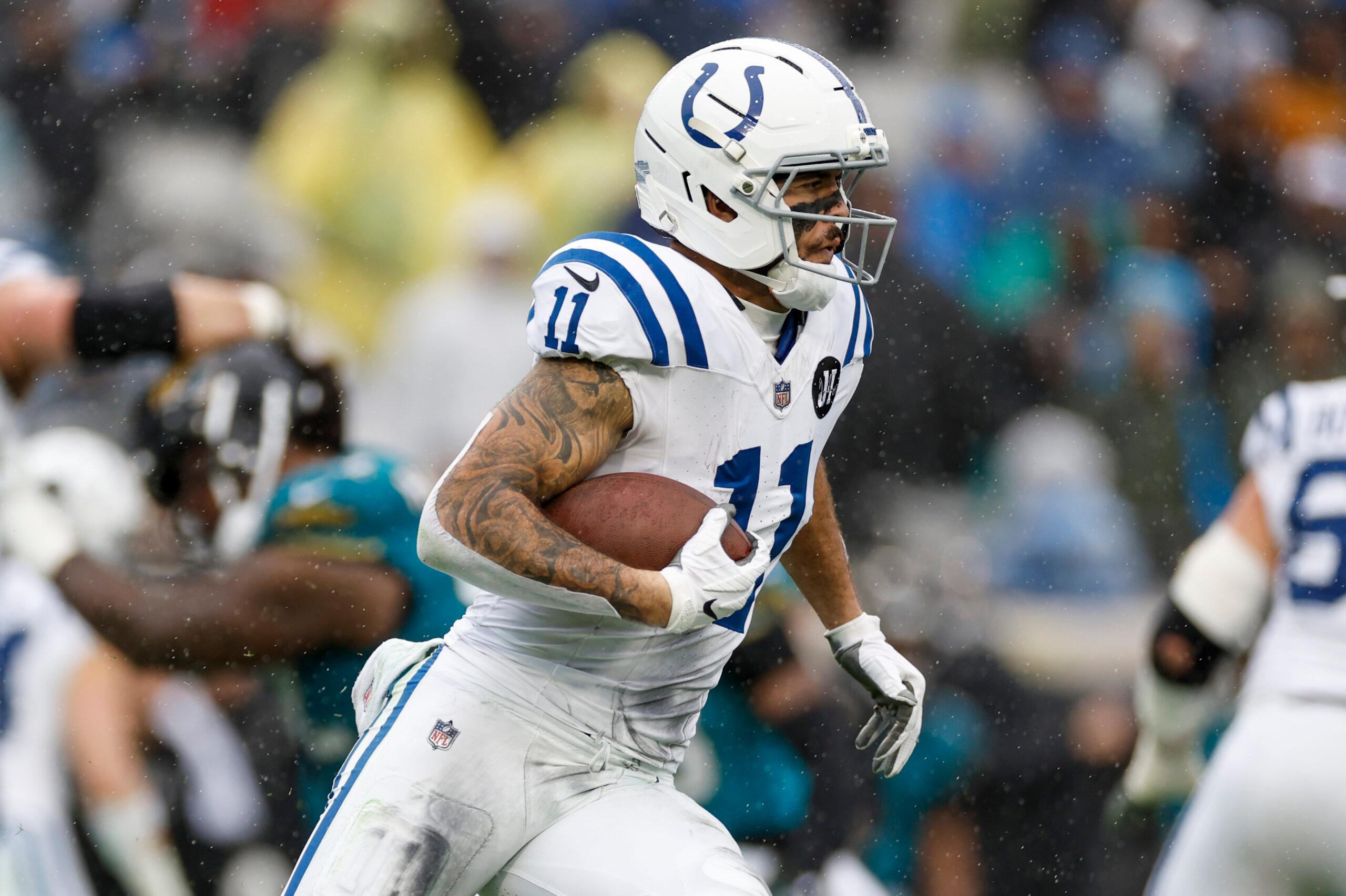
I think the Bears have only two options when it comes to Moore this offseason: restructure his contract to open up cap space or trade him for a mid-round pick. Moore is a good receiver, but he hasn’t been productive enough to justify a $28.5 million cap hit, especially now that Chicago’s passing game seems to revolve around tight end Colston Loveland. Chicago can find less expensive options to fill the role of a downfield threat, and the Bears could use the money they receive from getting rid of Moore’s contract to help improve a defense in major need of upgrades at all three levels.
Moore, meanwhile, would be a major boost to any offense that lacks a true top receiver, like New England’s, Tennessee’s, Las Vegas’s, or the Los Angeles Chargers’. Each of those teams already has a clear starter at quarterback (or plans to get one in the draft).
Cole Kmet, tight end, Chicago Bears
Kmet’s targets have taken a sharp downturn since quarterback Caleb Williams was drafted two years ago, and he’s been passed up on the depth chart by Colston Loveland. Kmet contributes just $11.6 million to the Bears’ cap, but Chicago needs to make moves in order to improve the rest of the roster. If there’s a team willing to trade a pair of day-three draft picks for Kmet, GM Ryan Poles would be wise to consider the draft capital against what Kmet’s projected output will be in the next couple of seasons.
Brandon Aiyuk, wide receiver, San Francisco 49ers
Aiyuk’s time is up in San Francisco. It feels like the most logical move now is a reunion in Washington with his college teammate Jayden Daniels and GM Adam Peters, who was in San Francisco when Aiyuk was developing into a star receiver. The Commanders need a receiver like Aiyuk on the perimeter to open up the offense for Daniels, and Aiyuk needs to land somewhere that will give him a long runway to prove himself again.
There are still two questions to be answered here: How healthy will Aiyuk actually be in 2026, and will the Commanders play ball with the 49ers on a trade? As for Aiyuk’s health, we probably won’t know that until training camp, as Aiyuk’s choice to do his rehab from knee surgery away from the 49ers last season leaves some mystery about his recovery timeline. To the second question, even though it’s clear the relationship between the 49ers and Aiyuk is done, it’s possible this thing could drag out as both sides try to extract maximum value. Don’t be surprised if the drama around Aiyuk isn’t done just yet.
Pat Freiermuth or Jonnu Smith, tight ends, Pittsburgh Steelers
The Steelers have a mess of a tight ends room. Under new head coach Mike McCarthy, this team will inevitably change its offensive roster construction. During McCarthy’s tenure in Dallas from 2020-24, 76 percent of the Cowboys’ passes came with just one tight end on the field. That means Freiermuth or Smith probably won’t be seeing the field much in 2026.
But which of the two would be best for the Steelers offense, and who is expendable? Based on last year’s production, Smith was the more dynamic player, but he’s 31 and on an expiring deal, which could cool interest from teams looking to trade for him. Freiermuth is signed through 2028, which could make it more worth it for other teams to consider giving up draft capital for him, but it’s also fair to wonder how high his ceiling is and whether he can be a difference-making tight end at this point in his career.
Because the Steelers have paid Freiermuth, I’d guess they’ll commit to him as the featured player at his position and deal Smith for a mid- or late-round pick. Teams like the Eagles, 49ers, and Giants could be interested in bringing him in as a receiving threat.
Budda Baker, safety, Arizona Cardinals
Baker has been one of the best players at his position throughout his career. He’s a good leader and has been remarkably durable despite his smaller size for a safety. But now he is 30 years old and counts for $19 million against the cap for a team that looks like it is starting a multiyear rebuild.
With a base salary of $14 million this season and just $1 million in bonuses set to trigger at the start of the league year, Baker is a worthwhile investment for any defense that feels it’s one or two pieces away from contending. The Patriots and 49ers should be calling to gauge Arizona’s asking price, and if it’s a third-round pick or a pair of fourth-rounders, Baker is probably worth it.
Tremaine Edmunds, linebacker, Chicago Bears
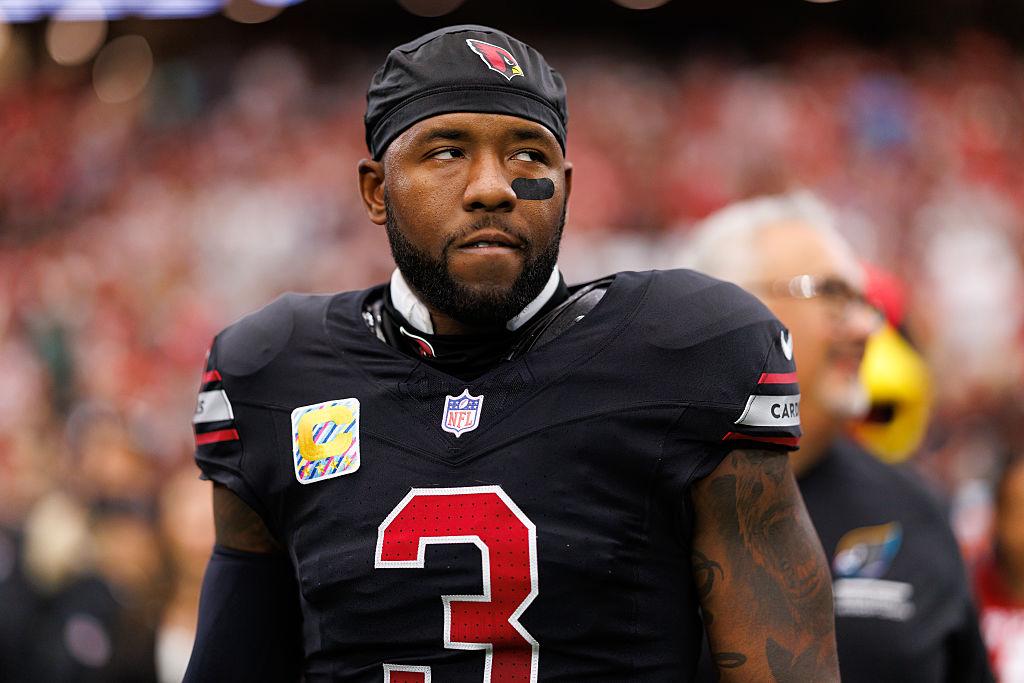
Edmunds isn’t likely to stay on the Bears’ roster because of his $17.9 million cap hit. Edmunds has been paid like a top-of-market player and simply hasn’t delivered that kind of impact to Chicago’s defense. If the Bears trade him, they could use the savings to cover the cost of multiple new linebacker contracts going forward.
Chicago may have to attach a pick as part of an Edmunds deal to off-load his nearly $14 million base salary. But a team like the Cardinals or Bengals could leap at an opportunity to add a starting-caliber player to the second level of its defense.
Jonathan Greenard, edge, Minnesota Vikings
With no guaranteed money remaining on his deal, Greenard is a candidate to either get a contract extension that converts his current $19 million salary into a signing bonus or get traded to a team that will sign him to a long-term deal. With 27.5 sacks in the last three seasons, he’s produced enough to justify a new payday—but Minnesota doesn’t have much financial flexibility. The Vikings are entering this offseason more than $40 million over the cap, and balancing the books will require multiple restructures, extensions, or roster moves.
A Greenard extension would probably have to wait until other moves are done, and ESPN reported that the Vikings are now considering trading him in case the two parties can’t come to an agreement. The Vikings may be able to get a conditional third-rounder in return, with teams like the Chargers and Patriots potentially looking to add more pass rushing juice to their rotation this offseason.
Rashan Gary, edge, Green Bay Packers
Gary hasn’t lived up to the $96 million extension he signed in 2023, and Green Bay has to consider his long-term future with the team as his cap hit balloons to $59 million over the next two years.
Gary’s production plummeted in the second half of last season. And as he approaches age 30, the timing of that cold streak couldn’t be more concerning. He’s also battled injuries and struggled to find a rhythm each time the Packers have made a change at defensive coordinator, and the Packers have a new DC (Jonathan Gannon) this year after Jeff Hafley left for the head coaching job in Miami.
Green Bay would incur $17 million in dead cap charges after a trade, but those financial losses would be worthwhile if they help it recuperate any draft capital lost in the Micah Parsons trade last summer.
Kenny Clark, defensive tackle, Dallas Cowboys
Clark was traded from Green Bay to Dallas just before the start of last season, and I don’t think it’s the last time he’ll get moved. Clark was supposed to contribute to an improved Cowboys run defense in 2025, but Dallas was worse against the run after adding Clark than it was when edge rusher Micah Parsons was on the roster.
Trading Clark for draft picks would help Dallas get in a position to add the young defensive talent it needs to build a legitimate contender. Clark could also be floated as part of a larger trade package to acquire a star player like Maxx Crosby—just as he was in the Parsons trade last year. If that sort of deal doesn’t materialize quickly, though, Clark could be cut ahead of an $11 million roster bonus that’s due later this month.
Kayvon Thibodeaux, edge, New York Giants
Thibodeaux has been a solid rotational piece, but he never blossomed into the star edge rusher many (myself included) thought he’d become when he was picked in the first round in 2022. Since then, he ranks outside of the top 40 in sacks, quarterback hits, and EPA on sacks. He also hasn’t been impactful enough against the run to balance out the middling pass rush production.
But he’s only 25 and is probably worth a call from contenders like the Chargers, Ravens, Bills, and Patriots that need pass rush help.
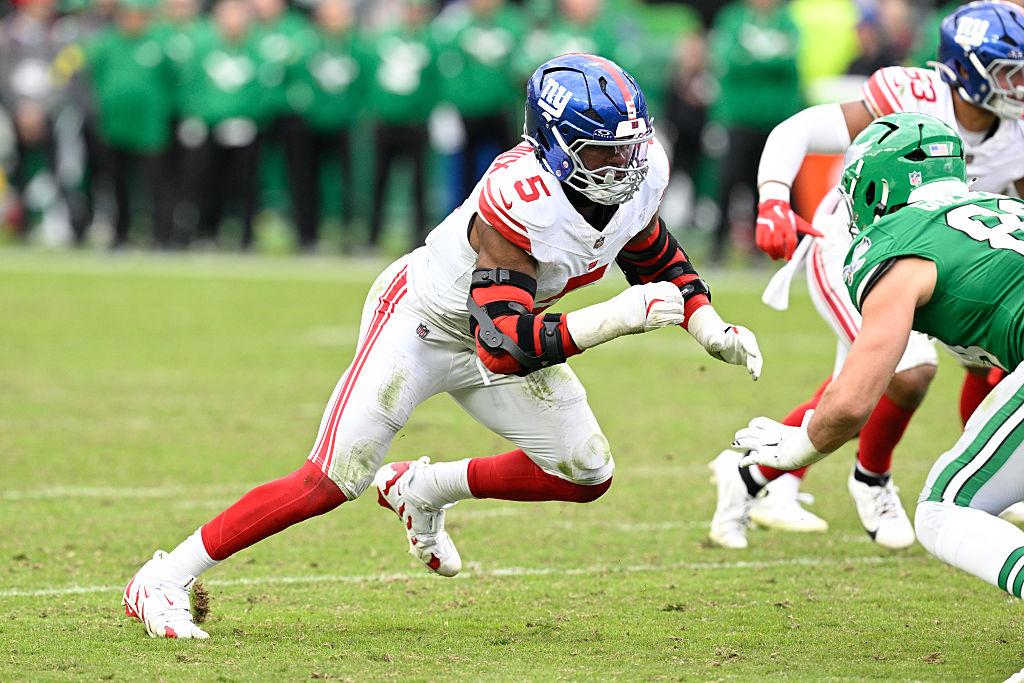
A’Shawn Robinson, defensive tackle, Carolina Panthers
There’s nothing I love more than a true run-stuffing nose tackle, but there’s no need for Carolina to carry a $12 million cap hit for a role player. Robinson is a good player to have in theory, but his presence didn’t do much to mend the interior of Carolina’s defense last season, and making a move this offseason could open cap space for the Panthers that could be spread across multiple needs across the defense.
Jalen Ramsey and Minkah Fitzpatrick, defensive backs, Pittsburgh Steelers and Miami Dolphins, respectively
New rule: These two should be traded for one another in perpetuity. And each time they swap teams, they should also swap positions, rotating who gets to play slot or deep safety.
Ramsey still has a higher ceiling than Fitzpatrick, but both players can thrive as underneath zone defenders and blitzers. Ramsey can’t line up on the perimeter and lock down the top receivers in the league like he used to, but you’d be hard-pressed to find a player his size who is as willing to make tackles in the run game and is as instinctive in the pass game. It would help Fitzpatrick to give up the dream of continuing to be a true deep safety because he’s not as impactful or consistent trying to close passing windows or jump routes deep downfield. When he’s lurking closer to the line of scrimmage, his instincts flash on tape more often.
I’d expect both players to be of interest to Dallas and Cincinnati, two teams that want to get dependable play out of their respective secondaries in the hope that it helps push them into the playoffs. (And then in 2027, they can get traded for each other again.)
Diante Lee
Diante Lee joined The Ringer as an NFL writer and podcaster in 2024. Before that, he served as a staff writer at The Athletic, covering the NFL and college football. He currently coaches at the high school level in his hometown of San Diego.