

The sources confirm that organizations frequently promote technical top performers into managerial roles without providing necessary leadership training. This creates a “command insecurity” where unprepared leaders exhibit damaging behaviors:
- Micromanagement and Control: Insecure leaders often feel threatened by high-performing team members and may attempt to suppress their talent rather than build it.
- Creating a Visibility Ceiling: To protect their own positions, these managers may block deserving employees from growth opportunities, downplay their contributions, or even take credit for their work.
- Fear-Based Environments: Such leadership kills innovation and psychological safety, driving employees to comply out of necessity while mentally checking out.
The Psychology of the “Silent Exit”
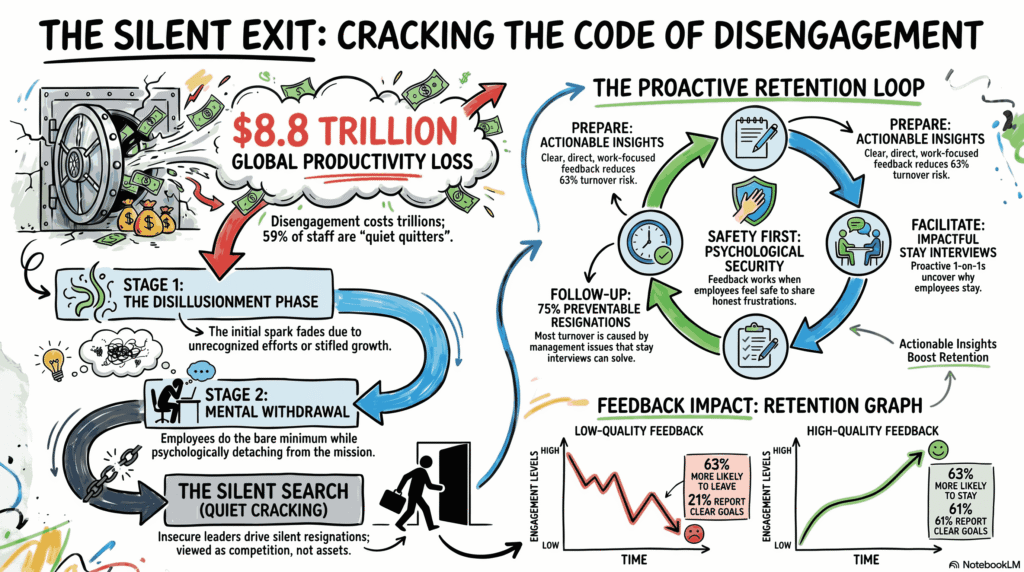
Disengagement is rarely a sudden decision; it is a progressive erosion of commitment often triggered by a “psychological contract violation”— the breaking of the unwritten agreement regarding mutual expectations between employer and employee. The sources outline this mental decline in several stages:
- Disillusionment: The initial spark fades when efforts go unrecognized or career progression seems like a mirage.
- Silence as a Message: When managers ignore requests for role reviews or career direction, the employee receives the message: “You are not a priority”.
- Actionable Feedback Gap: Feedback quality is a critical retention factor; research shows that employees receiving low-quality feedback are 63% more likely to leave within a year.
- Internal Justification: The employee eventually constructs a mental case for leaving, replaying disappointments and magnifying grievances until resignation feels like the only option.
Recognizing Early Warning Signs
Leaders often miss the subtle signals of “quiet cracking” or disengagement because they focus only on stable performance metrics. Key indicators that an employee is mentally resigning include:
- Reduced Initiative: Offering fewer constructive contributions in meetings and suggesting fewer new ideas or innovative approaches.
- Social Withdrawal: Becoming more reserved, avoiding social interactions with managers, and skipping optional team-building events.
- Shortened Horizons: A reluctance to commit to long-term projects or a loss of interest in training and development programs.
- Minimalism: Doing exactly what the job description requires—nothing more and nothing less.
Strategies for Cultural Transformation
To reverse this trend, organizations must move beyond “one-size-fits-all” solutions and focus on the manager-employee relationship.
- Mandatory Leadership Training: Shift the focus from technical expertise to emotional intelligence and motivational leadership.
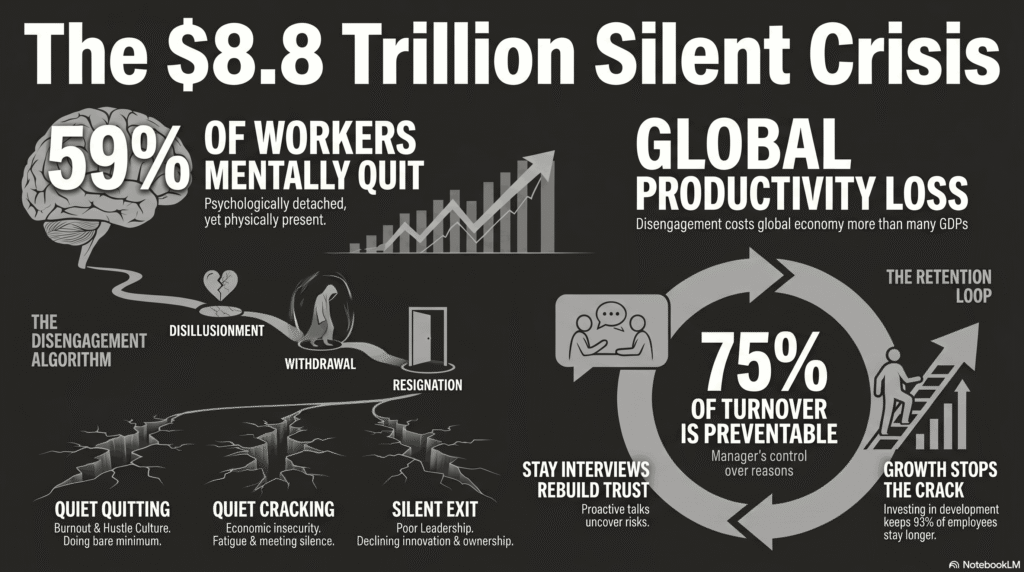
- Prioritizing Stay Interviews: These proactive, one-on-one conversations help leaders understand what keeps an employee engaged and address concerns before they lead to turnover.
- Fostering Psychological Safety: Create an environment where employees feel safe to share ideas and challenge assumptions without fear of criticism.
- Radical Transparency: Even if a promotion or raise isn’t possible immediately, honest communication about timelines and development plans builds more trust than silence or vague promises.
Ultimately, the sources reinforce your bottom line: 75% of the reasons employees leave are preventable. When organizations prioritize growth, recognition, and secure leadership, they don’t just retain staff—they create cultures where “quiet quitting” has no reason to exist.