






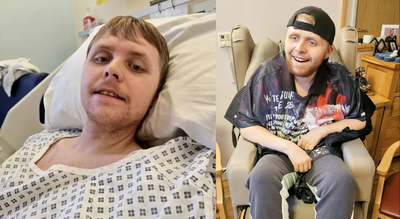
The UK’s youngest known dementia patient, Andre Yarham, has died aged 24, less than two years after being diagnosed with a rare and aggressive form of the disease. Doctors had told his family that, despite his age, his brain showed degeneration comparable to that of a 70-year-old.According to SWNS, Yarham, from Dereham in Norfolk, was diagnosed with frontotemporal dementia (FTD) a month before his 23rd birthday. Caused by a protein mutation, FTD is a rare form of dementia that typically affects people aged between 45 and 65, though in rare cases it can strike much younger patients. Unlike Alzheimer’s, which usually impacts memory first, FTD often presents through changes in personality and behaviour.The condition affects around one in 30 people with dementia in the UK and is exceptionally rare in young adults. Yarham’s family first noticed changes in 2022, when he began moving and speaking more slowly, became increasingly forgetful, and at times appeared blank or unresponsive during conversations.
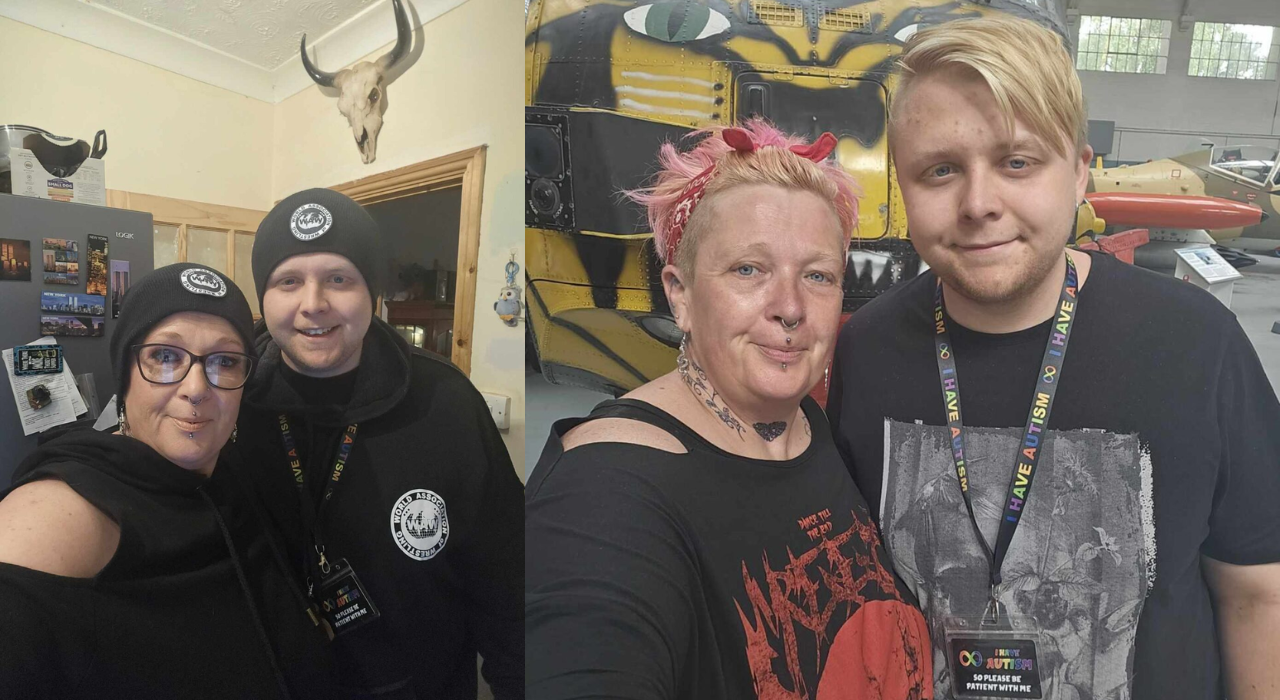
Sam Fairbairn and son Andre Yarham. (Pix via Samantha Fairbairn / SWNS)
An MRI scan the following year confirmed the extent of the damage. A consultant later told the family that the scan showed his brain resembled that of someone decades older. Fewer than 0.1 per cent of people in the UK are diagnosed with any form of dementia before the age of 65, placing Yarham among a vanishingly small group of patients. After the diagnosis, his condition deteriorated quickly. His mother, Sam, became his full-time carer, helping him eat, dress and bathe as his speech faded and his mobility declined. “Andre got his official diagnosis just before his 23rd birthday,” she said. “In that time his speech went totally. He was just making noises. The last six months was when we started to see a very rapid decline.” By late summer, he was struggling to feed himself or hold a cup and had become increasingly unsteady. The family made the decision to move him into a nursing home in September. Within weeks, he required a wheelchair and hoist support. Before his illness, Yarham had lived what his family described as a typical young life. He played rugby and football at school, followed wrestling closely and spent time gaming with friends on titles such as FIFA and Call of Duty. He also worked briefly at Lotus Cars in Norwich, replacing car headliners, but left after six months because he was struggling to get through the working day and could not explain why something felt wrong.

Before his illness, Andre Yarham led a normal young life, playing sports, gaming, and working briefly/ Andre Yarham. (via Samantha Fairbairn / SWNS)
In December, he was admitted to hospital with an infection. His mother later described this as the point at which his decline accelerated sharply, with her son becoming less aware of his surroundings. After three weeks in hospital, he was moved to Priscilla Bacon Lodge Hospice, where he was placed on end-of-life care. He died on 27 December. Following his death, the family donated his brain to medical research in the hope that it could help others. “We made the decision to donate Andre’s brain to medical research,” his mother said. “If in the future, if Andre has been able to help just one more family have a precious few more years with a loved one, that would mean the absolute world.” The case has drawn renewed attention to the difficulty of recognising dementia in younger patients and the speed with which rare forms such as frontotemporal dementia can progress. Yarham’s family said the diagnosis and its aftermath had been devastating for them all, including his father Alastair and his brother Tyler, but they hope that greater awareness may encourage others to seek help earlier. At the end of his life, Sam urged families not to dismiss early warning signs because of age. “If people do have concerns about loved ones and their memories, there are tests available and go to your GP,” she said, adding thanks to those who supported the family throughout her son’s illness. Early symptoms of dementia (according to NHS England):
- Emotional changes
- Forgetfulness
- Difficulty concentrating
- Struggling to follow a conversation or find the right word
- Being confused about time and places
Symptoms of frontotemporal dementia (according to the NHS):
- personality and behaviour changes, such as acting inappropriately or impulsively, appearing selfish or unsympathetic, neglecting personal hygiene, overeating, or loss of motivation
- language problems, including speaking slowly, struggling to make the right sounds when saying a word, getting words in the wrong order, or using words incorrectly
- problems with mental abilities, such as getting distracted easily, struggling with planning and organisation