




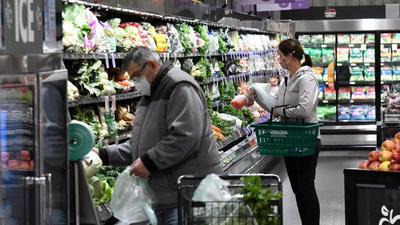
US retail sales rose 0.6 per cent in February after a slight decline in January, signalling cautious consumer activity even before a sharp surge in fuel prices triggered by the Iran war, according to AP.Data released by the Commerce Department showed retail sales rebounded from a 0.1 per cent drop in January, beating expectations. However, economists have flagged concerns that rising energy costs could weigh on consumer spending in the coming months.Gasoline prices crossed USD 4 per gallon this week for the first time since 2022, with the national average reaching USD 4.06 on Wednesday–about USD 1 higher than before the conflict began.Retail activity was mixed across categories. Sales at clothing and accessories stores rose 2 per cent, while electronics and appliance stores saw a 0.5 per cent increase. Online retail sales grew 0.7 per cent.The data excludes services such as travel and hotels, but restaurant spending–the only services category included –rose 0.4 per cent.The Iran war, which began on February 28, has disrupted global oil supplies by shutting down the Strait of Hormuz, through which around one-fifth of global oil typically flows. Brent crude prices have risen more than 45 per cent since the start of the conflict.Diesel prices have increased faster than gasoline, raising transportation costs for businesses and adding to inflationary pressures.Economists had expected higher tax refunds to boost spending early in the year, but rising fuel costs are likely to offset that benefit.“The hit to real incomes from higher gas prices is especially regressive, hurting lower-income households disproportionately, while the lift from tax refunds is more evenly spread,” said Samuel Tombs, chief economist at Pantheon Economics. “Moreover, refunds will slow to a trickle by late April, providing little protection if high prices persist.”Tombs estimated that higher fuel prices could reduce real household incomes by about USD 15 billion per month.Patrick De Haan, an analyst at GasBuddy, said gas prices are approaching 3 per cent of median household income, a level that could start affecting discretionary spending.“When that gets up to about 4, 4 1/2, 5%, that’s really when people really start trimming back on some of their discretionary purchases,” he said.Retailers have also begun warning about the potential impact. Daniel Erver, CEO of Hennes & Mauritz, said rising energy costs are expected to have a “significant impact on the consumer behavior.”Darren Rebelez, CEO of Casey’s General Store, said a sharp pullback in spending is unlikely unless gasoline prices approach USD 5 per gallon.