




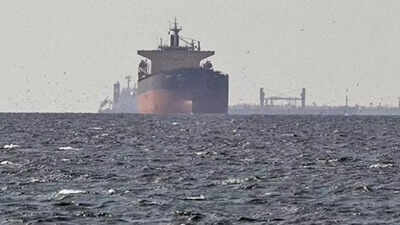
DEHRADUN: Shipping industry experts have warned of a major challenge in procurement of fertilizers by India due to the West Asia war and Iran’s attack on the Strait of Hormuz. The assessment was made by experts attending a two-day International Maritime Conference held by Integrated Maritime Exchange on ‘freight market volatility, geopolitics and global trade outlook’, in Dehradun on Friday.Shabu Oriparambil, MD of UAE-based Transbulk Intl Shipping LLC, who joined via video call, said while the focus is largely on imports of oil and gas, the other big challenge lies in the procurement of fertilizers.
“Much of India’s fertilizers come from the Gulf. With the crop sowing season coming soon, it’s going to be a problem if new solutions are not worked out soon. In the long run, this war may impact the country’s food security,” he said.Shabu added that alternatives are being analysed but “they are not sufficient”.“Another concern in the long term is the possible shortage of natural gas after the strikes on Qatar’s Ras Laffan gas facility which is the largest in the world and from where India gets around 47% of its total LNG supply. The Indian govt has so far handled the crisis well to keep the fuel prices in check but it needs to work on a long-term solution,” he said.Industry expert Krishnan Subramaniam, chief learning officer at Transworld Academy with a specialisation on tankers, said that considering the situation in West Asia, the Strait of Hormuz is no longer a “theoretical” chokepoint.“Those in the shipping industry had contingency plans to tackle such an emergency but now that the crisis is real, no such plan is working. People are turning the pages of the rulebook, but in vain. Nothing is helping in managing the crisis as the situation changes every minute there. Every minor disruption is sending shockwaves across the world,” said Subramaniam.Munish Mediratta, MD at Singapore-headquartered Bainbridge Navigation, said that long-term shipping contracts are being cancelled by shipliners. “It is because of the high risk involved along the West Asia routes now, particularly near the Strait of Hormuz and Red Sea. Many shipliners have declared ‘force majeure’, under which they have the right to freeze operations due to reasons beyond their control. Apart from this, those willing to take the route are now charging 10 times more freight on a daily basis than what was before the war,” said Mediratta.He added that there is also a shortage of fuel for the cargo ships across the world, known as ‘bunkers’. “All these factors are going to raise the ultimate cost of a product for consumers and lead to inflation,” said Mediratta.The shipping industry, amid the war, is also facing an increase in arbitration cases.“Concerned parties in a shipping contract are now going through the details of contracts to fix accountability for the delay in shipping. This is now leading to arbitration in the courts against each other,” said Jagmeet Makkar, an arbitrator and accredited mediator in maritime.Meanwhile, some experts expressed optimism in the days ahead by claiming that it might lead to “new trade routes and agreements between govts to secure future shipping lines”.Ravi Shankar, co-founder and chief commercial officer at Dubai based Shipfinex, said, “This is not the first time that the shipping lines have been disrupted. This happens every 2-3 years. But the fact is that shipping of goods can’t be stopped. And because of this, new trade routes will be worked upon to ensure transportation prevails. Having said that, the shipliners will have to be fully prepared from now on.”