
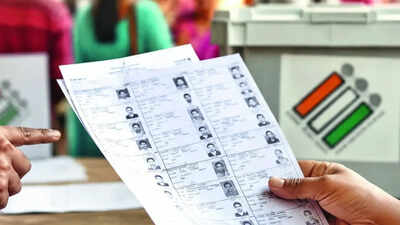
The Supreme Court on Wednesday clarified that it has not yet delivered a final ruling on the Election Commission of India’s (ECI) use of the “logical discrepancy” category to flag voters’ details during the Special Intensive Revision (SIR) of electoral rolls.A bench comprising Chief Justice of India Surya Kant and Justices Joymalya Bagchi and V Mohana said its earlier decision allowing the Election Commission to use the category in West Bengal was only an interim measure. It also clarified that the court’s ruling on the SIR exercise in Bihar had not settled every legal question surrounding the revision process.The clarification came during a hearing on a petition alleging a lack of transparency in notices issued to voters during the ongoing SIR exercise in Delhi. Senior advocate D S Naidu, appearing for the Election Commission, had argued that the court had examined all stages of the SIR process and upheld its validity.Justice Bagchi rejected the suggestion that the earlier proceedings had conclusively settled the legality of the logical discrepancy category.“Bihar is not a final determination of every question arising in these proceedings. In Bihar, the Election Commission had not initially undertaken logical discrepancy as a category. We permitted it as an interim arrangement in West Bengal. We have not finally adjudicated upon the legality of the logical discrepancy exercise,” Justice Bagchi was quoted as saying by the news agency PTI.The judge also cautioned against treating oral observations made during hearings as final judicial decisions, particularly in sensitive cases.
Share your thoughts in the comments
Be respectful · TOI community guidelines
“We do not wish to make further comments because observations in sensitive matters are sometimes taken out of context. These observations are not conclusive. There is a difficulty when judicial observations are repeatedly cited out of context as if every issue has already been decided,” he said.
What is the ‘logical discrepancy’ category
During the SIR exercise, the Election Commission uses the “logical discrepancy” category to flag inconsistencies in voters’ records. These discrepancies are identified through ERONet, the poll panel’s centralised technology platform, which uses automated checks to examine electoral data.Such flags can arise when information in a voter’s profile or details linking family members appear inconsistent with mathematical, biological or clerical records. The category is intended to identify entries that require scrutiny.