
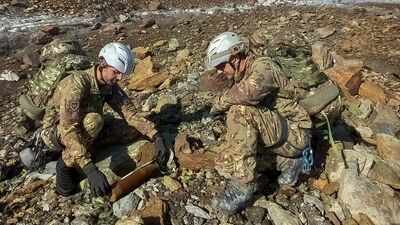
More than a century after the First World War, melting glaciers in Italy’s Dolomites are exposing a deadly reminder of the conflict, with the Italian Army recovering around 250 unexploded munitions from the mountains.The discovery is part of a wider European problem, where shells, grenades and aerial bombs left behind by the First and Second World Wars continue to emerge from glaciers, forests, farmland and urban construction sites.According to CNN, the Italian Army’s Julia Alpine Brigade recovered and neutralised the munitions during a clearance operation that ended on October 16. The weapons date back to the White War, fought between Italian and Austro-Hungarian forces in the Alps from 1915 to 1918, when soldiers battled in some of Europe’s harshest mountain terrain.The recovered ammunition included Italian artillery shells and French-made Thevetot mortar bombs, alongside other unexploded devices.The first find of the summer was a 90-millimetre mortar shell discovered in June near Caldonazzo after a car rolled down a ravine. The army’s specialist bomb-disposal team subsequently removed it, while the wider clearance operation involved working at high altitudes and across difficult mountain terrain, according to CNN.The danger is not confined to Italy’s melting glaciers. Across Europe, unexploded ammunition from both world wars continues to surface decades after the fighting ended, with drought, falling river levels, construction work and wildfires revealing weapons that had remained buried or submerged.In Belgium, the annual discovery of First World War ammunition in former battlefields is so common that the practice of finding remnants while ploughing fields is known as the “iron harvest”.The country’s explosive ordnance disposal service responds to more than 3,000 calls a year and disposes of 200 to 250 tonnes of munitions left over from both world wars, according to the Associated Press.Germany faces a continuing challenge from unexploded Second World War aerial bombs, many of which are discovered during construction and infrastructure projects. In March 2026, authorities in Dresden defused a 250-kilogram British bomb found during work near a bridge in the city centre, evacuating around 18,000 people before the operation.France has faced a similar problem after wildfires swept through the country’s southwest in August 2026. In Le Porge, near Bordeaux, bomb-disposal specialists recovered more than 400 shells and other munitions believed to date from the Second World War.The cache included French and German mortar shells, as well as other ammunition. Authorities said the heat had caused some buried shells to explode, alerting them to the hidden weapons.The discoveries underline how Europe’s wartime legacy remains a present-day hazard more than 80 years after the Second World War and over a century after the First.From Alpine glaciers to former battlefields and urban construction sites, unexploded shells and bombs continue to surface, with changing environmental conditions making some of these long-hidden dangers harder to predict.