
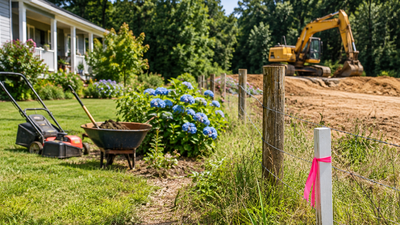
Using a piece of land for decades can create a strong sense of ownership, especially when people regularly maintain it, plant gardens and use it for everyday activities. However, long-term use does not automatically establish legal ownership. A Tennessee couple who claimed that a strip of land beside their home belonged to them after nearly 30 years of maintenance have lost their legal battle, with an appeals court ruling in favour of the developer.In its October 29, 2026, decision in Developed by Design, LLC v. James M. Travis et al., available on Justia, the Tennessee Court of Appeals upheld a lower court’s ruling that the disputed land belonged to the development company. The court found that James M Travis and his wife, Mary M Travis, had failed to establish ownership through adverse possession. Their activities, including mowing, gardening and holding yard sales, were not sufficient to satisfy the legal requirements.
How the property dispute began
The dispute involved Developed by Design, LLC, which had acquired approximately 43.39 acres of undeveloped land in Rhea County, Tennessee. The company planned to develop the property, which was located next to the Travises’ home. The disagreement began in 2021 when James Travis objected to work being carried out near his property. He believed the company was crossing the boundary and interfering with land that his family had used for years. The developer maintained that the boundary shown in its property records was correct. It relied on a survey prepared by Jack B. Kimsey in 1966 and recorded in the Rhea County Register of Deeds in April 1967.On June 14, 2023, the company filed a lawsuit seeking to establish the correct boundary and confirm its rights to a 30-foot right-of-way across the Travises’ property. It also requested an injunction preventing the couple from interfering with its use of the access route. The couple challenged the company’s position and filed a counterclaim, arguing that they had acquired ownership of the disputed strip through adverse possession.
Why the couple claimed ownership
James Travis testified that his family had treated the disputed area as part of their property since purchasing their home in 1996. He described activities including mowing the grass, using weed trimmers, clearing walking paths, spreading gravel and maintaining a garden. They had also planted blueberry bushes, held yard sales and stored various belongings in the area.The couple argued that these activities demonstrated continuous and exclusive use of the land for more than the 20-year period required under Tennessee’s common-law adverse possession principles. However, the development company disputed their claims. Its representative, Caleb Yawn, testified that he had observed a garden near the boundary but believed it was located on the Travises’ side of the surveyed property line. Yawn also said that several objects, including a car door, kitchen sink, bicycle and old pipes, appeared in the disputed area after the disagreement began in 2021. He testified that, to his knowledge, the Travises had not begun mowing the disputed area until 2021. The trial court also questioned the credibility of James Travis’s testimony concerning the couple’s use of the disputed land.
Why the appeals court rejected their claim
Under Tennessee law, adverse possession requires proof of actual, exclusive, adverse, continuous, open and notorious possession for the required period. The claim must be established through clear and convincing evidence. The appeals court found that the Travises had not satisfied these requirements. Although the couple had maintained and used the area, the judges concluded that mowing grass, gardening and planting bushes did not demonstrate the necessary degree of control over the property.The court also examined whether their use was sufficiently open and notorious. This means that the actual owner must have known about the possession or that the activities must have been visible enough to provide notice of the ownership claim. The couple had not installed fences or no-trespassing signs to indicate that they considered the disputed area exclusively theirs. Their daughter, Olivia Keller, also testified that there was nothing on the land indicating that it belonged to her parents.The court further found that the couple had not demonstrated exclusive possession against competing ownership claims. Regularly maintaining an area was not enough to establish that they had exercised legal control over it.
Court upholds the developer’s rights
Judge Thomas R. Frierson II delivered the appeals court’s opinion, joined by Chief Judge Frank G Clement Jr. and Judge Steven W Maroney. The court affirmed the lower court’s October 20, 2025, judgment in all respects. This confirmed the boundary line presented by Developed by Design and its right to use the 30-foot right-of-way. The case was remanded to the trial court for execution of the judgment and collection of costs. The appeals court also assessed the costs of the appeal against James and Mary Travis.The ruling highlights an important distinction in property law: using and maintaining land for decades does not automatically make someone its legal owner. A person claiming ownership through adverse possession must establish that their actions meet every legal requirement, rather than relying solely on the length of time they have used the property.