
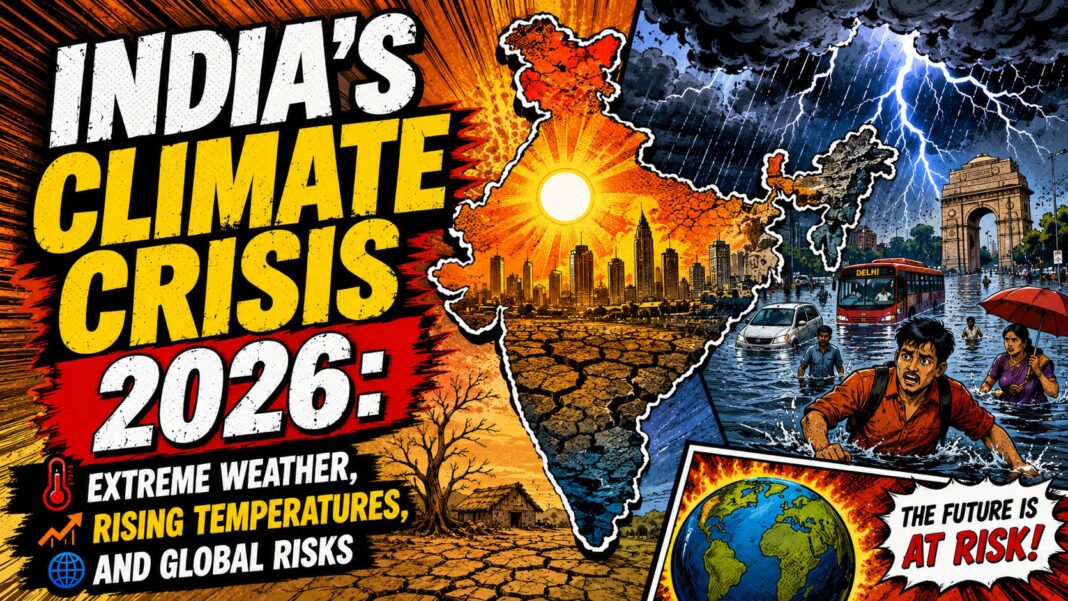
The latest scientific data for 2025 and early 2026 confirms a harrowing reality: our planet is heating at an accelerating pace, and India is standing at the epicenter of this crisis. According to the State of India’s Environment 2026 report, our nation experienced extreme weather events on 331 out of 334 days in 2025 – effectively 99% of the year. These disasters, ranging from heatwaves to devastating floods, claimed at least 4,419 lives and damaged over 17.4 million hectares of cropland, directly threatening our national food security.
A Planet Pushed Beyond Its Limits
We are no longer just “approaching” environmental limits; we are crossing them. Scientists have identified nine “planetary boundaries” that define a safe space for humanity, and the latest assessments show that seven out of nine have now been breached. These include climate change, biodiversity loss, and most recently, ocean acidification, which has increased by 30–40% since the industrial era.
Global temperatures continue to shatter records. The World Meteorological Organization (WMO) has confirmed that 2025 was one of the three warmest years on record, with the global average surface temperature reaching 1.44°C above pre-industrial levels. Even more alarming is the projection that we could surpass the critical 1.5°C threshold within just four years.
The Warming Oceans and the Antarctic “France-Sized” Hole
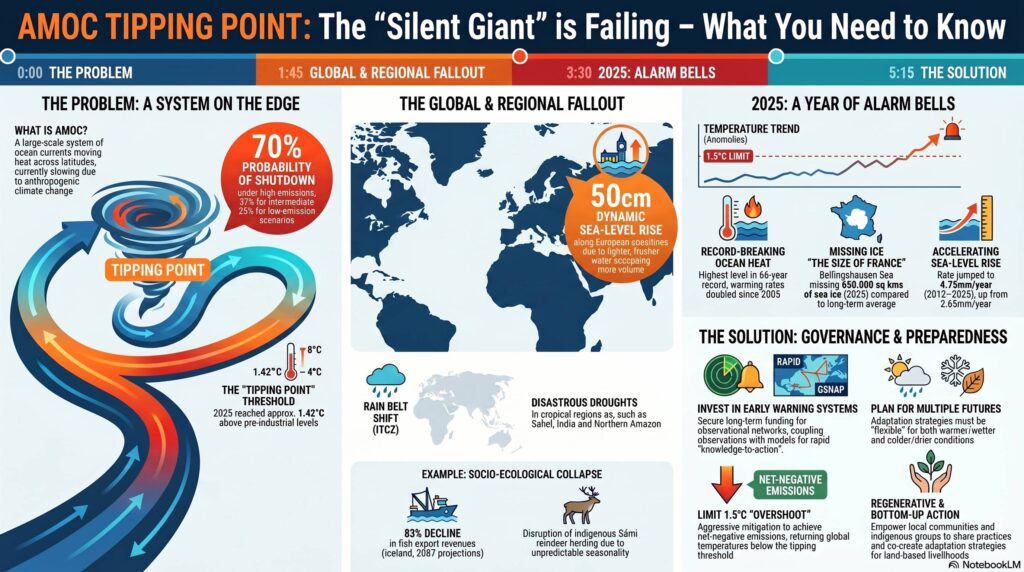
Our oceans are bearing the brunt of this heat, absorbing over 90% of excess energy from global warming. In 2025, ocean heat content reached its highest level in the 66-year observational record. This oceanic fever is causing unprecedented changes at the poles. Antarctica’s west coast is currently missing an area of winter sea ice the size of France, a loss so significant that some experts fear the region’s sea ice may never fully recover.
The Looming Threat to the Indian Monsoon
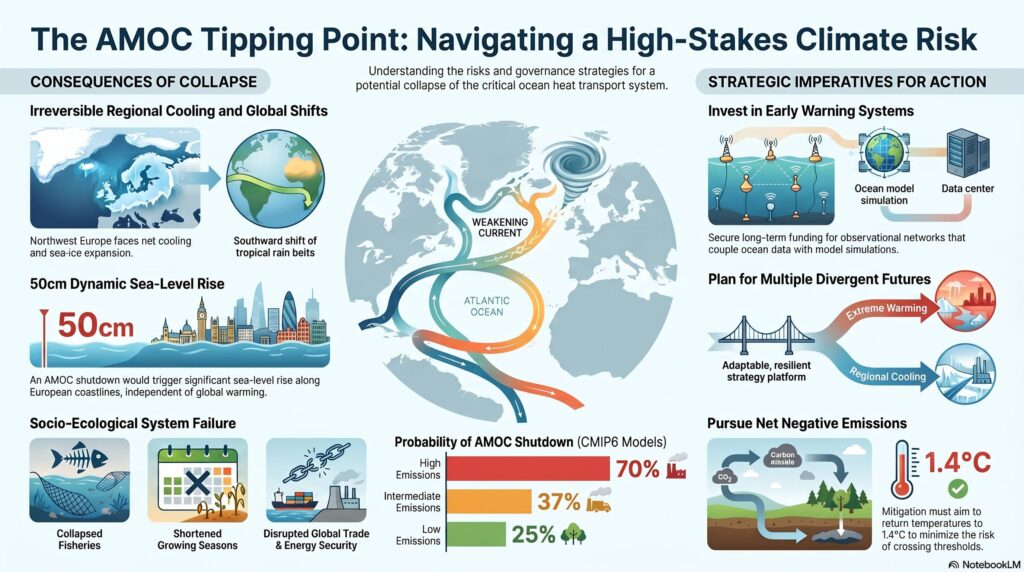
While melting ice at the poles might seem distant, it is connected to a global system that could fundamentally alter India’s climate. Scientists are warning of a potential collapse of the Atlantic Meridional Overturning Circulation (AMOC)—a massive system of ocean currents. New research suggests the risk of this collapse has been underestimated.
If the AMOC collapses, it would trigger a southward shift of the Intertropical Convergence Zone (ITCZ), the tropical rain belt. For India, this could mean disastrous consequences for the monsoon, leading to prolonged, severe droughts that would cripple our agricultural sector and social safety nets.
The “Data Blind Spot” in India’s Air Quality
Despite these escalating threats, India suffers from significant gaps in environmental monitoring. Analysis shows that 85% of India’s population lives outside the effective coverage of real-time air quality monitoring. Only about 12% of our 4,041 census cities and towns have any monitoring stations at all, creating a massive “data blind spot” that prevents effective public health alerts and policy enforcement.
The Road Ahead: Preparation and Action
As we look toward COP30, the message from the global scientific community is clear: current efforts are not enough to meet the goals of the Paris Agreement. We must prepare for a potentially strong El Niño event in 2026, which is 90% certain to increase global temperatures and exacerbate extreme weather.
To survive this “new normal,” we must:
- Invest in Early Warning Systems: Strengthening multi-hazard warnings is vital to save lives during extreme events.
- Bridge the Monitoring Gap: India needs a massive expansion of air and climate monitoring to inform local adaptation.
- Accelerate Decarbonization: A rapid global phase-out of fossil fuels is required to prevent crossing irreversible tipping points like the AMOC collapse.
The climate crisis is no longer a distant threat for future generations-it is a lived reality for every Indian today. The time for half-measures has passed; the time for systemic, planetary-scale action is now.