
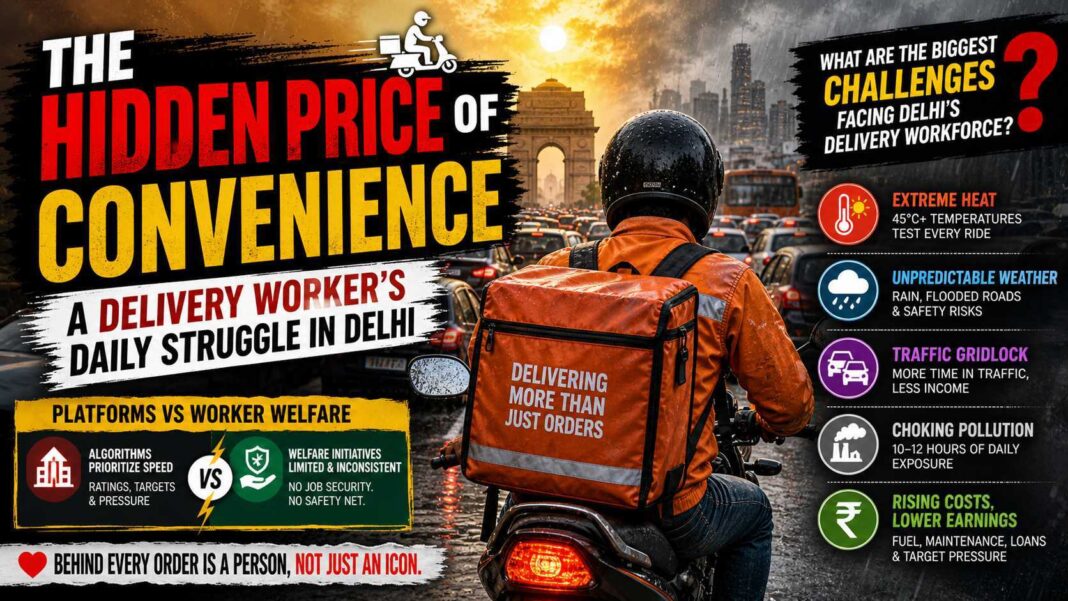
In Delhi, the constant buzz of motorcycles weaving through traffic has become part of the city’s rhythm. Behind many of those riders are delivery workers the invisible force powering the convenience we’ve all grown used to. Food, groceries, essentials everything arrives with a tap. But behind that ease lies a much tougher reality.
A Job Run by Apps, Not People
Most delivery workers aren’t classified as employees. They’re called “independent partners,” which sounds empowering but often means no job security, no insurance, and no guaranteed support system.
Their work is controlled by algorithms. Speed matters more than anything. Deliver faster, earn more. Slow down-even for a break-and your ratings drop. Over time, this creates constant pressure to push limits, whether it’s skipping meals or taking risks on crowded roads.
This raises a bigger question:
what are the biggest challenges facing Delhi’s delivery workforce today?
At its core, it’s a mix of unstable income, lack of worker protections, and a system where machines—not humans decide performance and rewards.
Fighting More Than Just Traffic
Delhi is a difficult city to navigate even on a normal day. For delivery workers, it’s a daily battle against multiple forces at once.
- Extreme Heat: Summers regularly cross 45°C, turning every ride into a test of endurance.
- Monsoon Chaos: Rain floods roads, slows everything down, and increases accident risks.
- Air Pollution: Spending 10–12 hours outdoors means constant exposure to hazardous air.
- Traffic Congestion: Gridlock is unavoidable and costly.
Which leads to another important point: how do weather and traffic impact a delivery worker’s earnings?
Quite directly. Every delay whether from rain, heat fatigue, or traffic jams means fewer deliveries. Fewer deliveries mean lower income. In a system where pay is tied to output, even small disruptions can significantly reduce daily earnings.
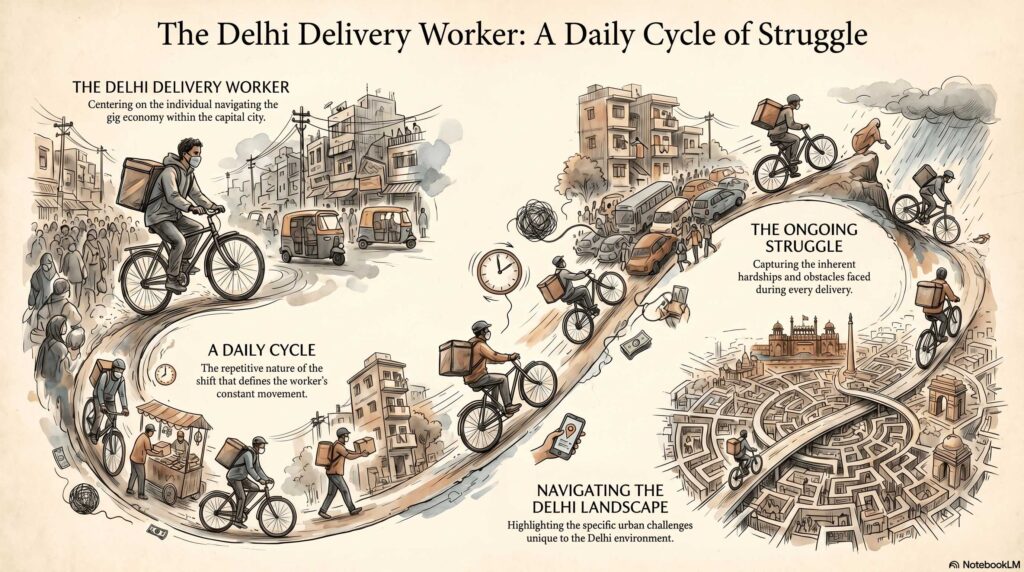
The Illusion of Earnings
From the outside, it might seem like delivery workers earn well, especially during peak hours. But the reality is far more fragile.
- Fuel and Maintenance: These are personal expenses, and rising fuel prices constantly cut into profits.
- Debt Pressure: Many start with loans for bikes or smartphones, so earnings are tied to repayments from day one.
- Incentive Dependency: A large part of income depends on hitting strict delivery targets. Miss the target even slightly—and expected earnings drop sharply.
This brings us to a critical area worth exploring:
what is the relationship between delivery platforms and worker welfare initiatives?
While some platforms have introduced limited insurance or emergency support, these efforts are often inconsistent and not comprehensive. The “partner” model allows companies to scale quickly, but it also shifts most risks onto the workers themselves. Welfare, in many cases, becomes optional rather than guaranteed.
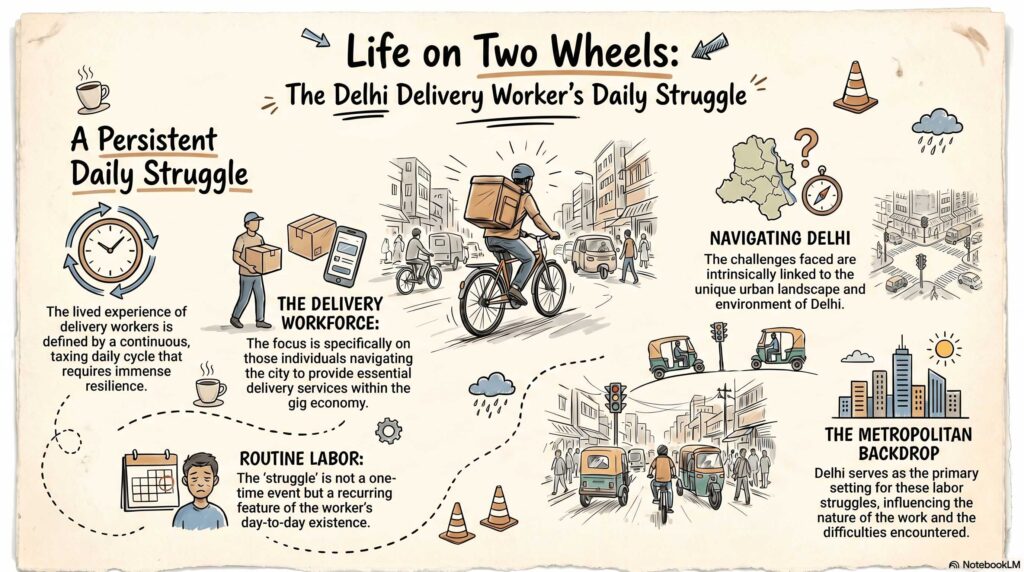
More Than Just a Delivery
What looks like a simple order on your phone is, for someone else, a day full of trade-offs between speed and safety, income and health, effort and uncertainty.
So the next time you see that little icon moving closer on your screen, remember: it’s not just a delivery. It’s a person navigating heat, traffic, pollution, and pressure just to bring a bit of convenience to your doorstep.