




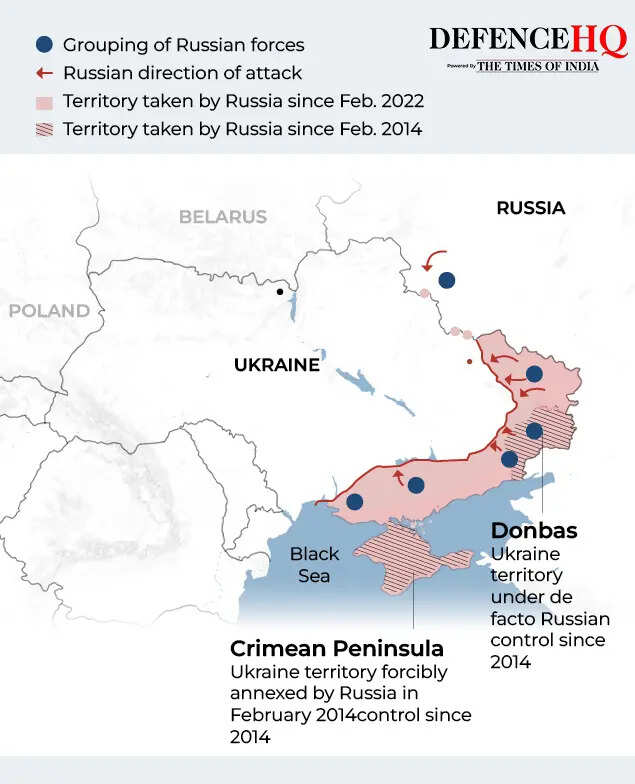
Since Russia’s full-scale invasion in 2022, Ukraine has confronted an advisory with clear advantage in manpower, ammo stockpiles, industrial depth, and air power. By conventional military logic, Moscow’s larger size and resources should have delivered a decisive advantage. Yet Ukraine endures, striking deep behind Russian lines, challenging Moscow’s naval presence in the Black Se, and even reclaiming some occupied ground. A major reason for this resilience has been Ukraine’s rapid transformation into one of the world’s most innovative wartime defense economies.President Volodymyr Zelenskyy recently highlighted this pivot in a lengthy address lauding Ukraine’s defence sector. He revealed the annual output of millions of First Person View (FPV) drones, artillery shells, interceptor systems, and homegrown long-range missiles now proving themselves in battle. He spotlighted Flamingo, Ruta, Peklo, Neptune, Palianytsia, and Vilkha as evidence that Ukraine’s arms industry has moved beyond emergency improvisation into sustained wartime production.
Zelenskyy also touted Ukraine’s expanding long-range strike power, noting that Kyiv’s drones are striking targets 1,750 km from the border. He cited defence systems such as Sichen, Liutyi, Morok, Bars, Obriy, and FP as key additions to this arsenal. These weapons have allowed Kyiv to extend the fight deep behind enemy lines, compelling Russia to shield airfields, refineries, depots, and key infrastructure located far from active combat zones.
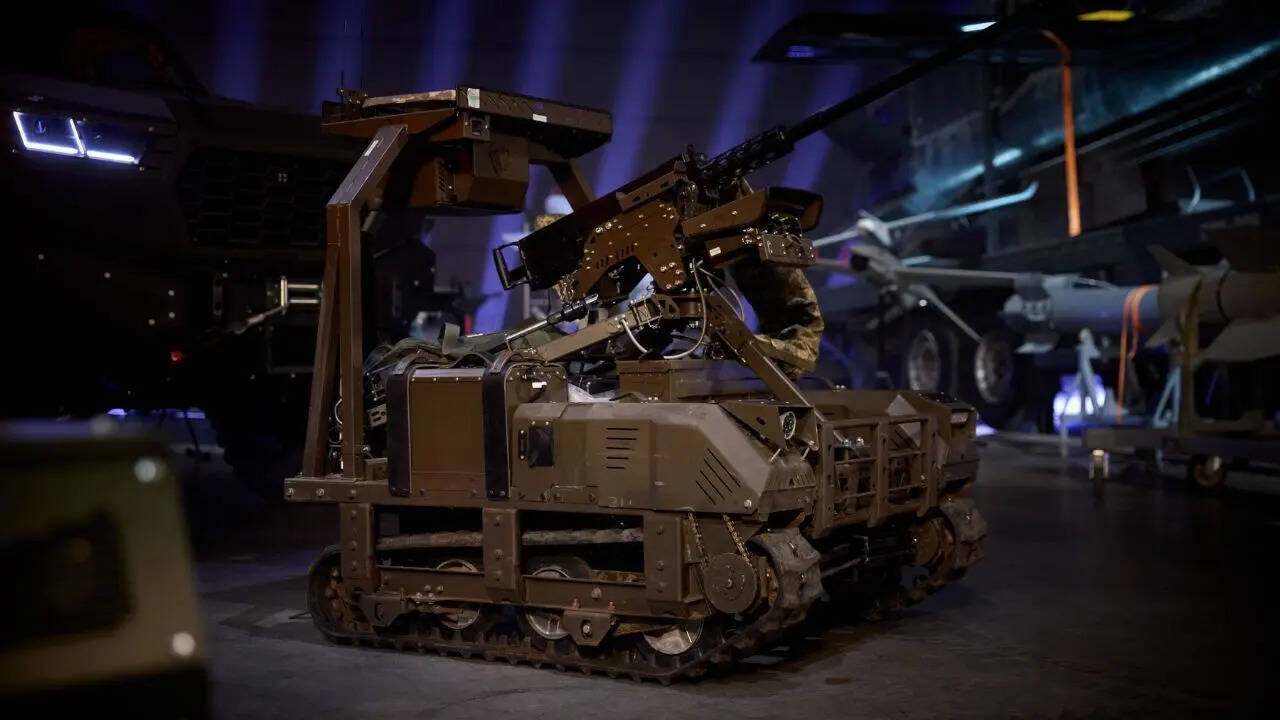
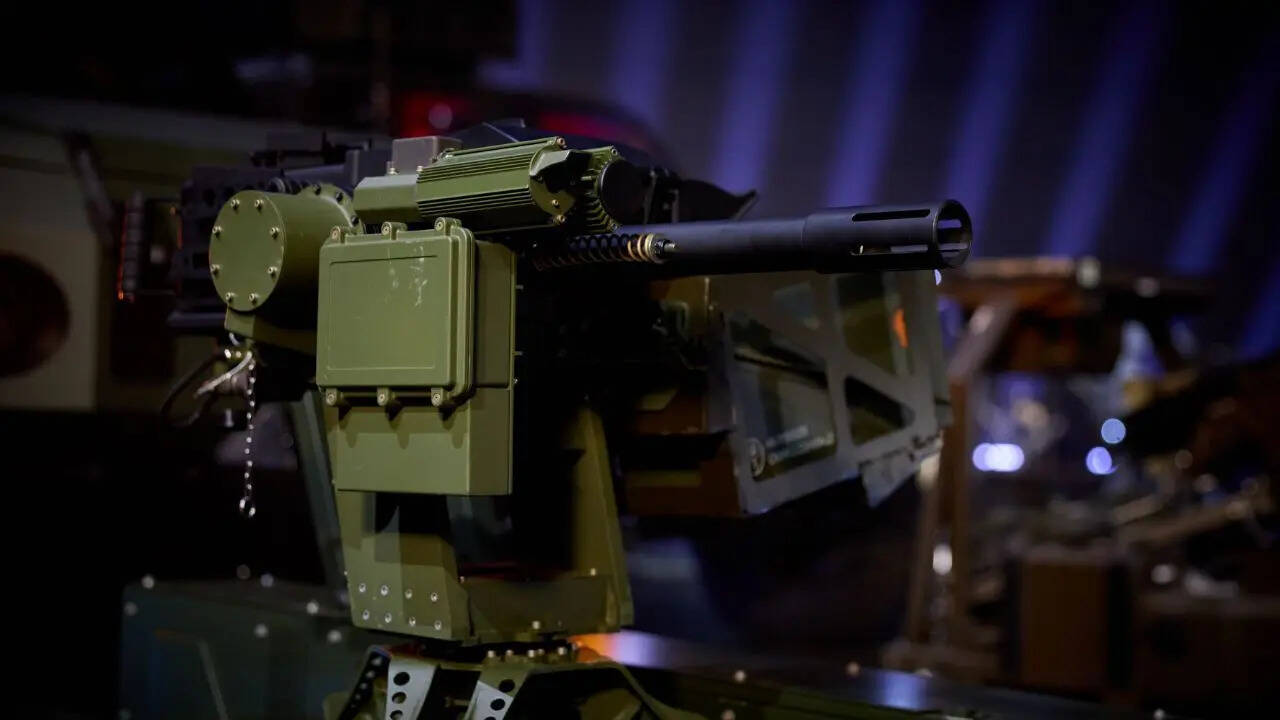
Perhaps most strikingly, Zelenskyy described a new phase of battlefield warfare in which Ukrainian forces captured an enemy position using only unmanned platforms—ground robots and aerial drones—without deploying infantry and without casualties. He added that robotic systems such as Ratel, TerMIT, Ardal, Rys, Zmiy, Protector, and Volia had already completed more than 22,000 front-line missions in just three months, replacing soldiers in the most dangerous tasks.
Rather than relying solely on foreign military aid, Ukraine has built a broad ecosystem of long-range kamikaze drones, cruise missiles, naval drones, robotic ground vehicles, precision rocket artillery, and mass-produced FPV strike drones. Together, these systems have enabled Ukraine to hit oil depots, command posts, logistics hubs, artillery batteries, trenches, and warships while preserving scarce manpower. In many ways, Ukraine’s survival has become a case study in how technology, innovation, and domestic production can offset the advantages of a larger military power.
Ukraine’s strategic logic: Replace mass with precision
Russia entered the war with clear advantages in manpower, artillery stockpiles, armored vehicles, missile inventories, and industrial depth. Ukraine, by contrast, could not afford to fight a prolonged conventional war based purely on numbers. It lacked the population size and reserve capacity to match Russia shell for shell or soldier for soldier. As a result, Ukraine was forced to develop a different military logic: compensate for limited mass through superior precision, innovation, and smarter use of resources.Instead of relying on large troop assaults or indiscriminate firepower, Ukraine focused on striking the most valuable parts of Russia’s war machine. This meant targeting command centers, ammunition dumps, fuel depots, bridges, radar systems, air bases, and logistics routes rather than wasting resources on low-value objectives. A single accurate strike on a fuel storage facility or supply hub could create greater battlefield disruption than days of conventional shelling.
This strategy also placed major emphasis on unmanned systems. Drones, robotic ground vehicles, and naval drones allowed Ukraine to attack enemy positions while reducing risks to its own soldiers. In a war where trained manpower is irreplaceable, preserving infantry became as important as destroying enemy equipment. Machines could be sent into minefields, trench lines, or contested waters where human losses would be severe.At the tactical level, inexpensive FPV drones became substitutes for artillery shells and anti-tank missiles. At the operational level, precision rockets and guided systems struck Russian rear positions. At the strategic level, long-range drones and cruise missiles carried the war deep into Russian territory, forcing Moscow to defend infrastructure far from the front lines.
In effect, Ukraine turned warfare into a contest of efficiency rather than scale. Russia may possess more weapons and personnel, but Ukraine’s objective has been to make every strike count more, every soldier survive longer, and every limited resource generate maximum military effect. This doctrine of precision over mass has become one of the defining reasons Ukraine has been able to sustain resistance against a larger opponent.
Liutyi: Ukraine’s Long-Range Kamikaze Drone
The Liutyi is one of Ukraine’s best-known deep-strike drones. It is generally described as a long-range one-way attack drone designed to hit targets far behind the front line.Its likely range is over 1,000 kilometers, with some assessments suggesting even longer reach depending on payload and route. It uses GPS navigation, terrain-following routes, and low-altitude flight to evade radar.
The Liutyi has strategic importance because it allows Ukraine to strike oil refineries, ammunition depots, airfields, and industrial plants inside Russia. Every successful strike forces Russia to disperse air defenses and spend resources protecting rear areas rather than front-line troops.The drone’s warhead is smaller than a cruise missile, but its affordability allows repeated attacks. In economic warfare terms, Liutyi helps Ukraine impose constant pressure on Russian infrastructure.
Flamingo and RUTA: Indigenous cruise missile capability
The emergence of the Flamingo and RUTA systems marks a major shift in Ukraine’s wartime strategy—the development of a domestic long-range precision strike capability. For a country facing a larger adversary with greater missile reserves, building indigenous cruise missiles is not merely a technological achievement but a strategic necessity. These systems allow Ukraine to hit critical Russian military and industrial targets without relying entirely on foreign-supplied weapons.
Unlike ballistic missiles, cruise missiles fly at lower altitudes and can maneuver during flight, often using terrain for concealment. This makes them harder to detect and intercept, especially when launched alongside drones or decoy systems. Their ability to approach from multiple directions places additional strain on enemy air defenses.While many technical details remain classified, Flamingo and RUTA are believed to be part of Ukraine’s expanding family of precision-guided strike weapons. They are likely designed to reach targets several hundred kilometers away, with future versions potentially extending farther. Their guidance systems likely combine satellite navigation, inertial systems, and terrain-matching technology for greater accuracy.Their battlefield value lies in the type of targets they can destroy. Cruise missiles are well suited for striking command centers, logistics hubs, bridges, fuel depots, radar stations, air defense sites, naval bases, and aircraft at distant airfields. Compared with smaller kamikaze drones, they typically carry heavier warheads capable of causing greater structural damage.
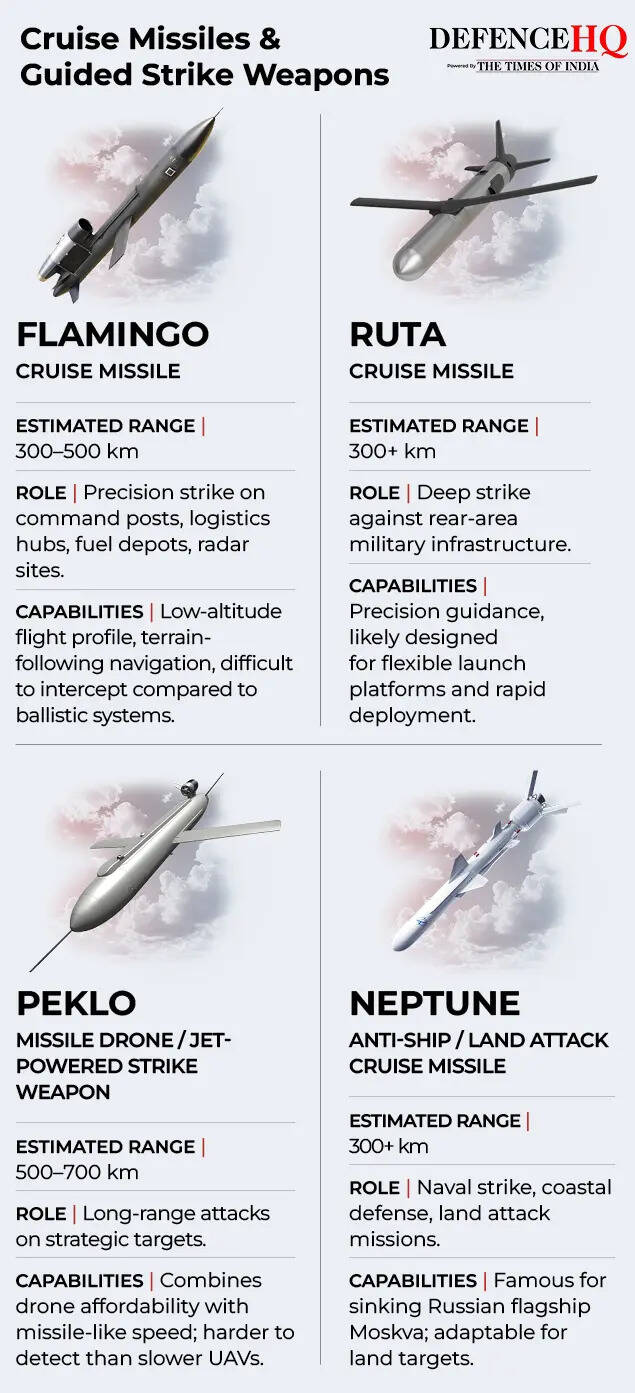
Flamingo and RUTA also give Ukraine greater strategic autonomy. Foreign partners often restrict how donated long-range weapons may be used, especially against targets inside Russia. Domestically produced missiles reduce that dependence and allow Kyiv to choose targets based on military priorities.Another advantage is sustainability. Imported missile supplies can be limited or delayed, while local production enables Ukraine to maintain a continuous strike capability, expand output, and improve designs through battlefield experience. Even limited numbers can force Russia to relocate depots, disperse aircraft, and invest heavily in air defenses.
Peklo and BARS: Missile-Drone Hybrids
The Peklo and BARS systems are often described as missile drones. These represent a hybrid category between a drone and a cruise missile.They likely use jet or turbojet propulsion, allowing faster speeds than propeller drones, while remaining cheaper than traditional missiles. Such systems may carry moderate warheads and be optimized for saturation attacks.Their battlefield role is important. If Russia can intercept some cruise missiles, Ukraine can supplement attacks with faster drone-missiles launched in larger numbers. A wave of mixed systems complicates Russian defenses.These weapons are particularly useful for targeting radar stations, logistics hubs, and energy infrastructure.
Palianytsia: Turbojet drone missile system
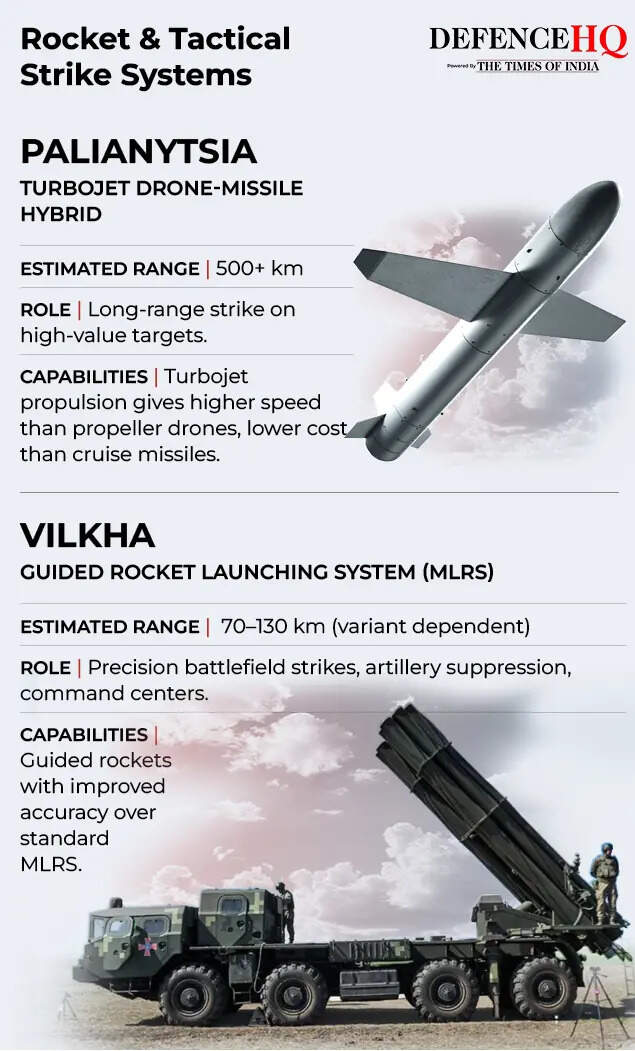
The Palianytsia system has drawn attention as a turbojet-powered strike platform. Turbojet propulsion gives it higher speed and potentially greater survivability than slower propeller-driven drones.While exact range figures remain unclear publicly, analysts believe it is designed for long-range attacks against high-value rear targets. Its speed reduces enemy reaction time, especially when used in coordinated strikes with slower drones and missiles.Palianytsia is significant because it demonstrates Ukraine’s growing ability to build advanced air-breathing strike systems domestically despite wartime conditions.
Vilkha: Precision rocket launching system
The Vilkha is a Ukrainian guided rocket artillery system derived from Soviet-era launchers but modernized with precision guidance.It fires 300 mm rockets with ranges typically estimated around 70 to 130 kilometers depending on variant. Unlike older area-barrage rockets, Vilkha uses guided munitions for improved accuracy.That means Ukraine can hit artillery positions, troop concentrations, command posts, bridges, and logistics nodes with fewer rockets.Rocket artillery is crucial because it responds faster than aircraft and can launch salvos before relocating. In trench warfare conditions, precision rockets are ideal for destroying Russian rear support networks.
SICHEN, FP-1, Morok, Obriy: Deep strike drone family
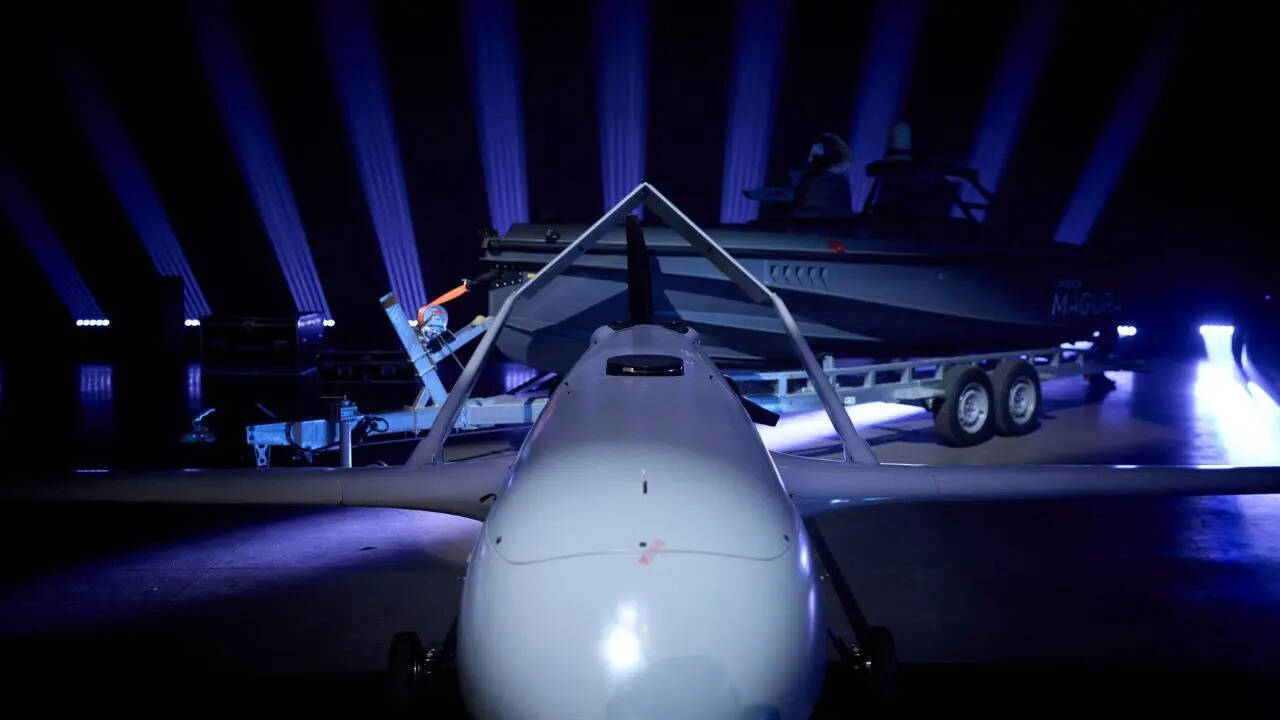
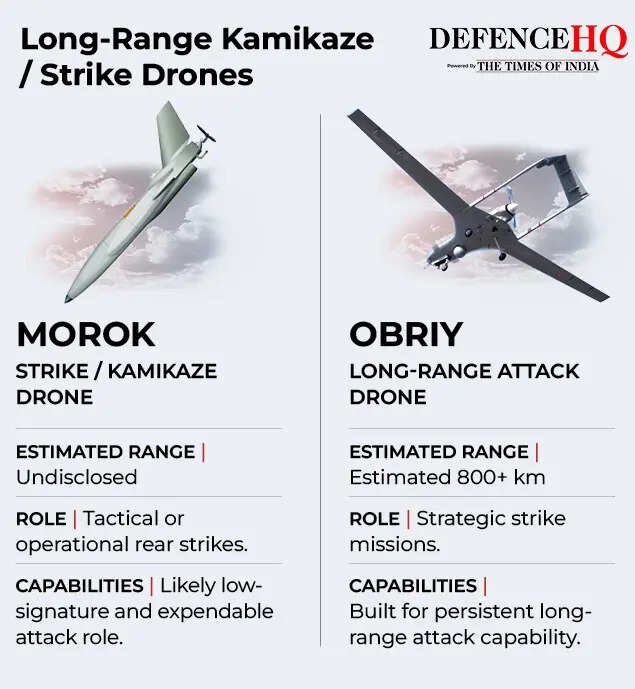
Zelenskyy grouped several systems together—Sichen, FP-1, Morok, and Obriy—as proof of Ukraine’s long-range strike reach.These appear to be part of a family of indigenous attack drones designed for strategic raids deep inside Russia.
- SICHEN: Described as a long-range kamikaze drone, Sichen likely focuses on range, endurance, and payload balance. It can be used against fuel storage, industrial plants, or military depots.
- FP-1: Another long-range drone, FP-1 likely emphasizes scalable production and lower cost. Such drones are useful when launched in swarms.
- Morok and Obriy: Though fewer details are public, these systems likely represent specialized strike or reconnaissance variants. Together, these platforms matter because no single drone wins wars. Sustained campaigns require multiple airframes, engines, payload types, and navigation systems to prevent disruption.
Magura V5: Sea Drone That Changed Naval Warfare
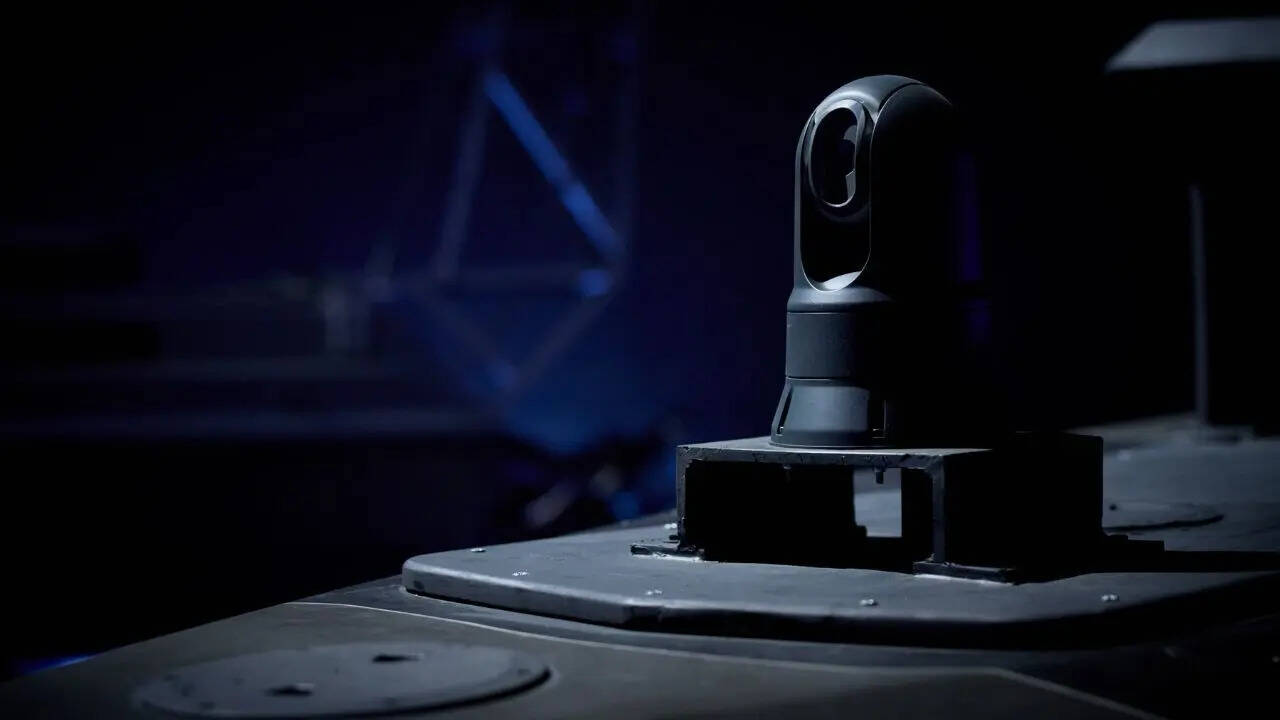
The Magura V5 is among Ukraine’s most famous unmanned naval systems. It is a fast, low-profile explosive sea drone used in the Black Sea.Its approximate operational range is often estimated in the hundreds of kilometers. It can navigate remotely or semi-autonomously and carry an explosive payload sufficient to damage or sink ships.Magura V5 helped transform the naval balance. Ukraine lacked a conventional fleet large enough to challenge Russia directly, but sea drones allowed it to threaten Russian patrol ships, landing craft, and even larger vessels.The result was strategic: Russia’s Black Sea Fleet had to relocate assets, limit movements, and operate more cautiously.A relatively cheap robotic boat imposed pressure on one of the world’s larger navies.
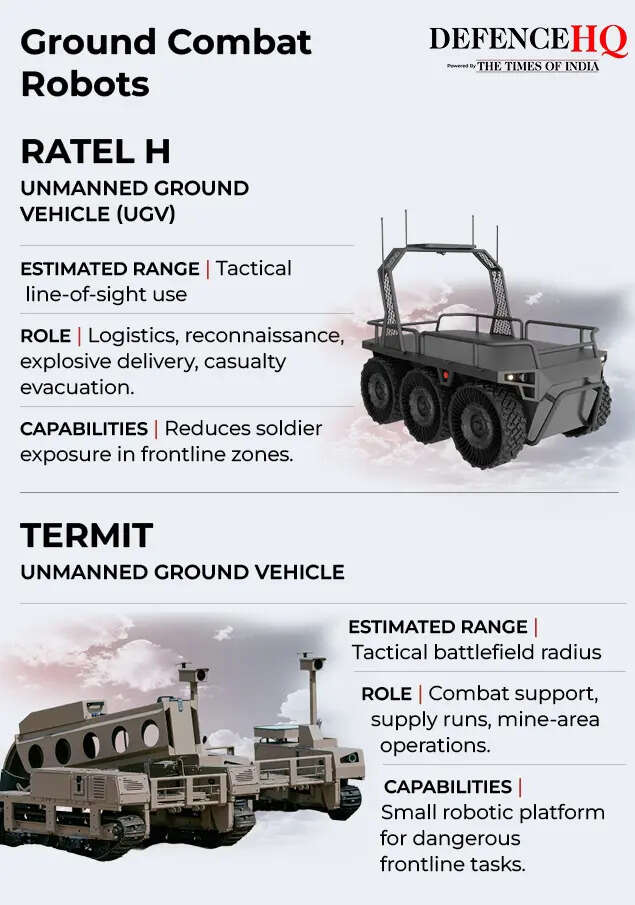
Ratel H and Termit: Robotic Ground Warfare
Ukraine’s manpower is precious. Ground robotic systems therefore have immense value.
- Ratel H: The Ratel H unmanned ground vehicle is associated with assault and demolition missions. It can carry explosives toward bunkers, trenches, or armored positions. Its advantage is obvious: sending a robot toward mines or machine-gun fire is preferable to sending soldiers.
- Termit: The Termit appears oriented toward engineering and battlefield support. Such systems may clear mines, carry supplies, tow loads, or breach obstacles.
In static front-line warfare filled with mines and trenches, engineering robots can save many lives.When Zelenskyy said enemy positions were taken entirely through unmanned systems, platforms like Ratel and Termit were central to that concept.
Millions of FPV Drones: The tactical backbone
While long-range systems get headlines, the real daily engine of Ukraine’s defense may be the mass production of FPV drones.FPV means first-person-view drones piloted through goggles or remote screens. These inexpensive quadcopters or fixed-wing drones carry explosives and strike tanks, bunkers, trucks, artillery, and infantry.
Ukraine’s claim of producing millions per year reflects industrial adaptation. FPV drones are now battlefield artillery in the air.Their range is usually short compared with strategic drones—often several kilometers to tens of kilometers depending on relay systems—but their precision is devastating.For a fraction of the cost of a missile, an FPV drone can destroy a tank or disable an armored vehicle.Why these weapons allow Ukraine to keep fightingUkraine’s domestic weapons ecosystem sustains the war in several ways.
- First, it lowers dependence on foreign political timelines. If aid is delayed, local production continues.
- Second, it preserves manpower. Robots and drones replace soldiers in dangerous missions.
- Third, it stretches Russian defenses. Russia must guard oil depots, bridges, ships, factories, and airfields far from the front.
- Fourth, it imposes economic pain. Repeated strikes on fuel and industrial sites create repair costs and logistical disruption.
- Fifth, it keeps innovation cycles short. Ukrainian engineers can redesign systems quickly based on battlefield feedback.
However, these systems are not magic solutions. Russia also uses drones, electronic warfare, glide bombs, and mass artillery. GPS jamming, interception, and industrial strikes can disrupt Ukrainian production.Long-range drones carry smaller warheads than cruise missiles. Ground robots can lose signal or become stuck in mud and trenches. Sea drones remain vulnerable to helicopters, barriers, and machine guns.Yet warfare is comparative, not absolute. Ukraine does not need perfection—it needs enough innovation to offset Russia’s scale.
A new model of national resistance
Ukraine’s ability to sustain the war against Russia has come not only from courage or foreign aid, but from building a wartime technology state. Weapons such as Liutyi, Flamingo, RUTA, Peklo, Palianytsia, Vilkha, Magura V5, Ratel H, Termit, Sichen, BARS, and FP-1 show how a smaller nation can resist a larger invader through precision, automation, and industrial creativity.Where traditional military power relies on mass armies and huge fleets, Ukraine has demonstrated another model: distributed production, autonomous systems, deep-strike drones, and constant adaptation.If this conflict has rewritten military doctrine, it is because Ukraine proved that innovation can sometimes compensate for size—and that the future battlefield may belong not only to soldiers, but to machines.