
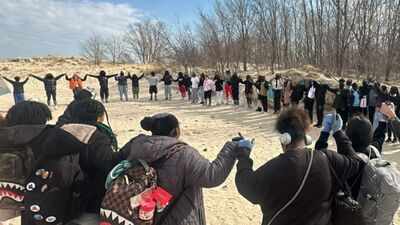
Nearly 4,000 New York City public school students have taken part in an effort to restore protective dunes at Coney Island Creek Park in Brooklyn. Since 2022, students, teachers and community members have planted more than 100,000 American beachgrass culms across more than 2.25 acres of frontal dunes.The project is part of the Resilient Schools and Communities (RiSC) programme run by the National Wildlife Federation (NWF). According to the organisation, it combines environmental education with habitat restoration and aims to help the local community prepare for flooding and other risks linked to extreme weather.Coney Island’s coastline has faced serious flooding during major storms. Superstorm Sandy in 2012 and Hurricane Ida in 2021 highlighted the risks faced by the area. The RiSC programme was launched in 2017 in seven South Brooklyn public schools, including schools in Coney Island, to help students understand these risks and learn about the environment around them.The programme was also created to address gaps in climate education. At the time, students were receiving limited climate education, mainly through science classes, while resilience was not part of their curriculum. NWF developed a curriculum and a RiSC Vulnerability Assessment to help students understand how their schools and communities could be affected by climate-related risks and how those risks could be addressed.
How beachgrass can protect the coast
The restoration work focuses on American beachgrass, a native plant with a dense network of roots and rhizomes. These underground structures help the grass hold soil together. Its ability to stabilise dunes and reduce erosion has been documented, while the dunes can also provide coastal flood protection during extreme wave conditions.The beachgrass also provides cover for wildlife found in Coney Island Creek Park, including snakes, small mammals and native and migratory birds.Since 2022, habitat restoration events at the park have involved students, teachers, volunteers and community members. Nearly 4,000 public school students, more than 200 teachers and hundreds of community members have worked with NWF, NYC Parks, the American Littoral Society, corporate volunteers and Coney Islanders.The planting effort has so far restored more than 2.25 acres of frontal dunes. Teachers are also brought to the site for professional development, connecting the restoration work with environmental education.The programme aims to expand the plantings further, with the goal of building functional flood protection for more than 50,000 people living next to Coney Island Creek Park.The organisation also wants the plantings to help stop sand from moving into roads, homes and sewer drains, as clogged drains can worsen flooding on streets.
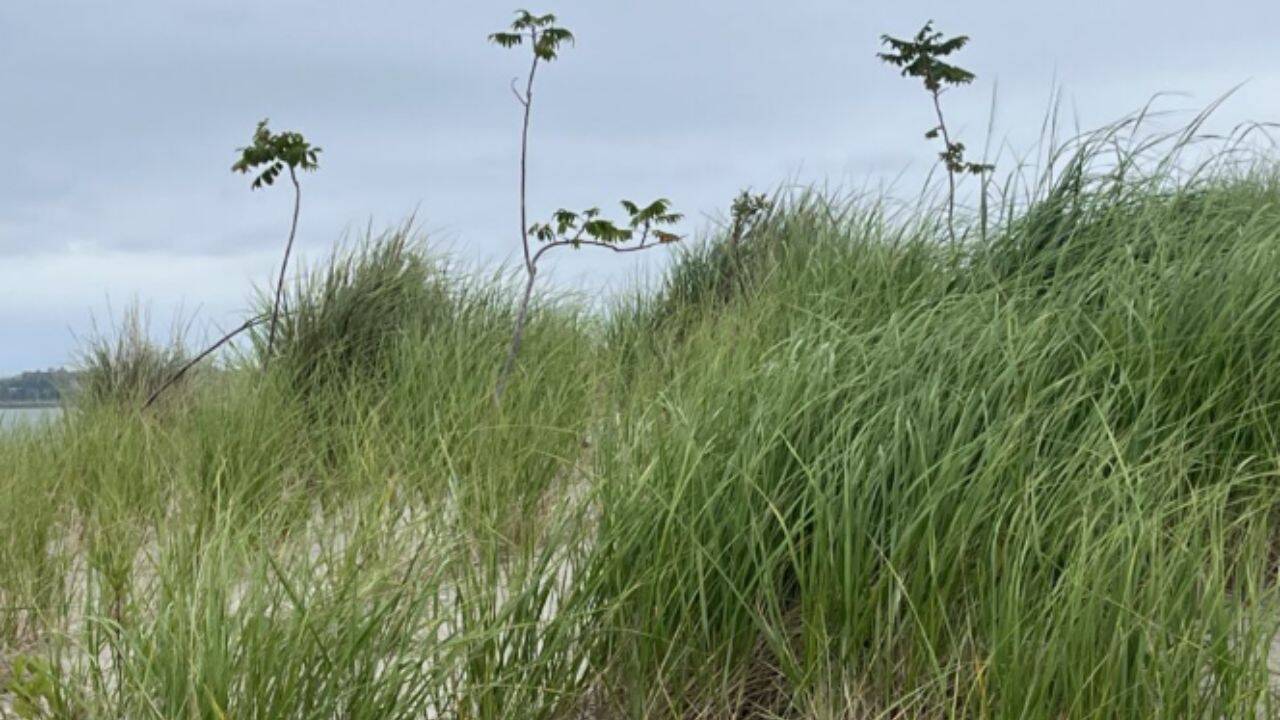
Coney Island Creek Park
Lessons from Superstorm Sandy
The RiSC programme was shaped by what happened during Superstorm Sandy in October 2012. About 50,000 homes in Coney Island were left uninhabitable after the storm. Thousands of public housing residents were without heat and hot water for weeks, while an 11-foot storm surge brought polluted water and sand into homes and businesses.The RiSC 3.0 curriculum was developed specifically for Coney Island. It was created with community leaders, teachers and scientific advisers and looked at the area’s ecological and social history, as well as its vulnerability to coastal flooding.The programme also draws on the role of dunes in protecting coastal communities. FEMA states that primary frontal dunes are often the first line of defence against flooding in coastal regions.The plan is to continue planting native woody shrubs and trees in the maritime forest near the road. These plantings are expected to provide additional flood protection and sand stabilisation, while also creating more habitat for birds.Coney Island Creek Park has also recorded a wide range of bird species. According to NWF, eBirders have documented 244 species in the park, including grebes, loons, gulls, terns, warblers, ducks and sandpipers.
Community support and long-term work
Community involvement has been central to the project. In November 2025, the organisation carried out extensive outreach in Coney Island before holding a meeting where residents could learn about the RiSC programme, ask questions and provide feedback.The meeting was attended by students, community board members, representatives from four elected officials’ offices and a homeowner association. NWF said feedback towards the programme was overwhelmingly positive, while continued shoreline restoration was identified as a top priority by the local community board.The organisation has built relationships within the Coney Island community since 2020. NYC public schools have continued to support the habitat restoration work, while NYC Parks has helped with permits, staff, tools, plant material and other supplies.Emily Fano, who leads the NYC project for NWF, said the organisation learned that working in a community with a history of disinvestment required patience and trust.“I think about these four key things as a nonprofit coming into a frontline community like Coney Island that has experienced historic disinvestment: listen, be humble, earn trust, and ask what people need,” Fano said.She said residents were involved in programme planning and design as paid advisers, while local educators and volunteers received stipends.The organisation has committed to continuing its work in Coney Island until it is sure that the plantings provide functional flood protection.