




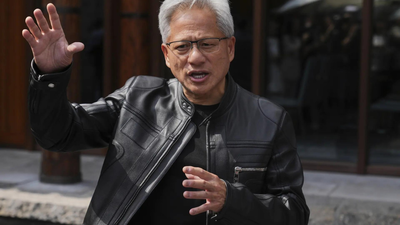
Nvidi CEO Jensen Huang isn’t just defending Nvidia’s right to sell chips in China—he’s rejecting the entire premise that it’s a market Nvidia would lose anyway. On the Dwarkesh Podcast this week, when host Dwarkesh Patel suggested that even with full access, Nvidia might eventually be edged out by domestic Chinese rivals, Huang pushed back without hesitation. “We have to keep innovating and, as you probably know, our share is growing, not decreasing,” he said. “You’re not talking to somebody who woke up a loser. That loser attitude, that loser premise makes no sense to me.”Central to his argument is that computing ecosystems don’t switch like consumer products. “We are not a car,” Huang said. “The fact that I can buy this car brand one day and use another car brand another day, easy. Computing is not like that.” He pointed to x86 and ARM as examples of how deeply sticky these ecosystems become—costly and disruptive to replace, and something most developers simply don’t want to do.
Nvidia’s share is growing, not shrinking—and Jensen Huang wants that on record
Rather than treating China as a market slowly slipping away, Huang framed it as one Nvidia is actively winning where it’s allowed to compete. His argument: conceding it preemptively, based on the assumption of eventual loss, is both strategically wrong and factually unsupported. “Conceding a marketplace based on the premise you described, I simply can’t acknowledge that,” he said. “It makes no sense.”Huang also pointed to the stickiness of CUDA—Nvidia’s computing platform—as a structural advantage that competitors can’t easily replicate. Developers build on it first, optimize for it, and rarely leave. That dynamic, he argued, holds in China just as it does anywhere else.
Why Nvidia CEO says restricting chips backfired
Export controls, in Huang’s telling, haven’t slowed Chinese AI—they’ve accelerated domestic alternatives like Huawei, which just posted a record year in chip shipments. Giving up the market doesn’t weaken China’s AI development; it just removes Nvidia from the equation while Chinese hardware fills the gap.The remarks come weeks after Huang confirmed at Nvidia’s GTC conference in San Jose that the company had received purchase orders for H200 chips from Chinese customers and was restarting manufacturing—the first concrete movement on China sales after months of regulatory limbo.