







Waking up with a dry mouth can feel like a small irritation. A sip of water seems enough to fix it, and the day moves on. But when it starts happening every morning, it signals something more than just “not drinking enough water.”Doctors now see this complaint more than before. Changing sleep habits, rising stress levels, and underlying health issues all play a role. As Dr Rajesh Kumar, Director of Internal Medicine at Paras Health Gurugram, explains, “Waking up with a dry mouth every day is often assumed to be due to inadequate water intake, but in clinical practice, we see that dehydration is just one of many possible causes.”So what exactly is happening overnight that leaves the mouth so dry by morning?
The silent shift to mouth breathing
Many people sleep with their mouths open without realising it. This often happens when the nose is blocked or airflow is restricted.“Persistent morning dryness can be linked to mouth breathing during sleep, which is commonly associated with nasal congestion, sinus issues, or structural problems like a deviated septum,” says Dr Kumar.Air moving directly through the mouth dries out saliva faster than the body can replace it. Over time, this becomes a pattern. A blocked nose due to pollution, allergies, or even a mild cold can quietly trigger this cycle.

It can stem from mouth breathing, sleep disorders, medications, or underlying health conditions like diabetes and reflux.
When sleep itself is the problem
Dry mouth can also be a sign of disturbed breathing during sleep.Dr Kumar points out, “Another important and often overlooked cause is obstructive sleep apnea, where repeated pauses in breathing reduce saliva production and leave the mouth extremely dry on waking.”In conditions like Obstructive Sleep Apnea, the airway collapses briefly during sleep. The body struggles for air, often leading to mouth breathing and fragmented sleep.This is not just about dryness. It can also mean fatigue, headaches, and poor concentration during the day.The National Heart, Lung, and Blood Institute has detailed findings on sleep apnea and its effects on breathing and oxygen levels.
Medicines that quietly dry you out
Many everyday medications come with an unnoticed side effect: reduced saliva.“Several commonly used medications—including antihistamines, antidepressants, and drugs for hypertension—can significantly reduce salivary flow as a side effect,” Dr Kumar explains.This matters because saliva is not just moisture. It protects teeth, balances bacteria, and helps digestion begin in the mouth.According to the National Institute of Dental and Craniofacial Research, reduced saliva flow is one of the leading causes of chronic dry mouth.Even a single medication taken regularly can shift the balance overnight.
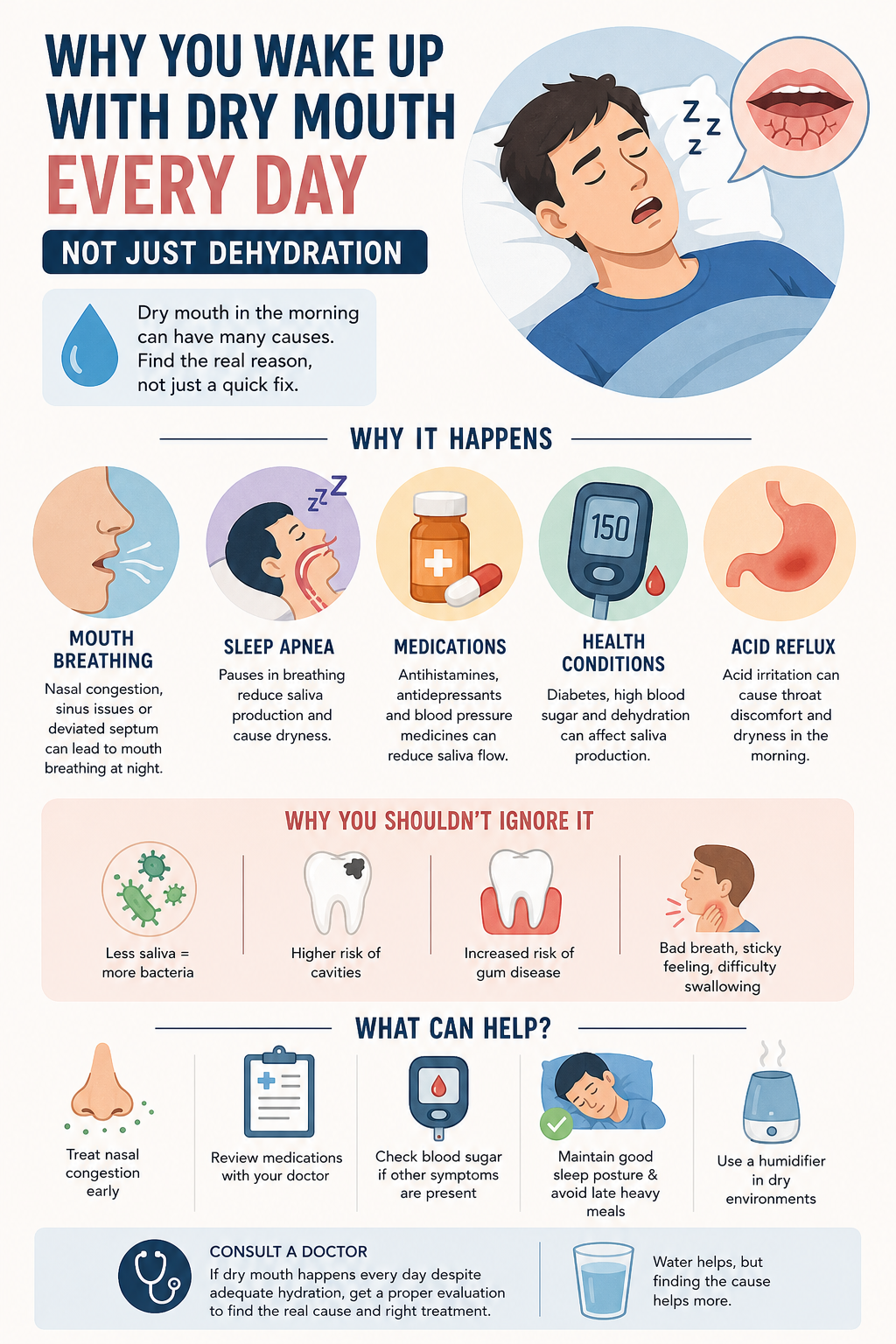
Identifying the cause early helps prevent long-term oral and systemic health issues.
Hidden health conditions showing up in the morning
Dry mouth sometimes reflects what is happening inside the body.Dr Kumar notes, “Systemic conditions such as uncontrolled diabetes can also contribute, as high blood sugar levels lead to increased urination and dehydration, which in turn affects saliva production.”In Type 2 Diabetes, the body loses more fluids than usual. That loss shows up clearly after hours of sleep.He adds, “Gastroesophageal reflux is another factor, as it can irritate the throat and contribute to dryness and discomfort in the morning.” Conditions like Gastroesophageal Reflux Disease may not always cause heartburn, but can still affect the throat and mouth overnight.The Centers for Disease Control and Prevention highlights dry mouth as a common but overlooked symptom linked to diabetes.
Why ignoring it can backfire
Dry mouth is easy to dismiss, but the mouth depends on saliva to stay healthy.“Dry mouth should not be ignored, especially if it is persistent or accompanied by symptoms like bad breath, a sticky feeling in the mouth, difficulty swallowing, or disturbed sleep,” says Dr Kumar.Without enough saliva, bacteria multiply faster. This increases the risk of cavities, gum disease, and oral infections.The impact builds slowly. What starts as mild dryness can turn into dental problems that are harder to reverse.
What can actually help?
Small changes can make a real difference, but they need to match the cause.
- Address nasal blockage early instead of ignoring it
- Review long-term medications with a doctor if dryness is frequent
- Check blood sugar levels if other symptoms are present
- Maintain good sleep posture and avoid late heavy meals
- Use a humidifier in dry environments
Dr Kumar emphasises, “If someone is experiencing daily dry mouth despite adequate hydration, it is advisable to seek medical evaluation. A thorough assessment can help identify the underlying cause—whether it is a sleep disorder, metabolic issue, medication side effect, or ENT-related problem—and guide targeted treatment rather than relying on temporary fixes like frequent water intake.”
A small symptom with a bigger story
Dry mouth in the morning is often the body’s quiet signal. It does not shout, but it repeats itself every day.Listening early can prevent bigger issues later.Medical experts consultedThis article includes expert inputs shared with TOI Health by:Dr Rajesh Kumar, Director, Internal medicine at Paras Health Gurugram.Inputs were used to explain how waking up with a dry mouth is not always due to dehydration, but can also be linked to underlying factors, and why experts recommend proper evaluation instead of ignoring it or relying on self-remedies.