
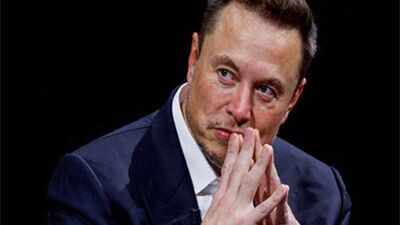
A Ukrainian defence technology adviser has challenged Elon Musk’s claim that Ukraine’s military breached Starlink’s terms of service by using the satellite network for offensive drone strikes, prompting SpaceX to restrict access to the high-speed technology.According to CNBC news report, Serhii Beskrestnov, an adviser to Ukrainian president Volodymyr Zelenskyy on defence technology, disputed Musk’s explanation in a telegram post on Sunday. He argued that existing operational restrictions on Starlink in Ukraine would have made the type of attacks described by the SpaceX chief technically impossible.Ukrainian officials have previously said the restrictions disrupted military drone operations and weakened the country’s ability to defend itself against Russian attacks.Musk alleged on Saturday that Ukraine’s military had violated Starlink’s terms of service by using the network for offensive drone strikes intended to kill people. He made the claim in a post on X.Beskrestnov questioned Musk’s understanding of how the system operates in Ukraine, pointing out that Starlink’s civilian service does not work inside Russian territory. He also said Ukrainian drones using the technology had been subject to speed limits of 70 to 90 kmph (43 to 56 mph) for several months.“Consequently, it is physically impossible for us to use commercial Starlink for deep-strike or medium-range strike operations,” Beskrestnov wrote.
Starlink and Starshield services restored
Ukrainian officials said on Saturday that high-speed connectivity through spacex’s starlink and starshield satellite communication systems had been restored. Kyiv had blamed the service disruption for affecting its drone-based air defence capabilities amid repeated Russian aerial attacks.Starlink is spacex’s commercial satellite internet network, while Starshield is a military-oriented system designed for government and national security applications using technology developed for Starlink.Before Musk publicly acknowledged restricting the systems, uncertainty surrounded the decision and who had ordered the changes. Musk had earlier suggested in a social media post that the US government was responsible, but US president Donald Trump said he was unaware of the decision.Ukrainian officials have also said the restrictions were imposed by Starlink or the US without advance warning, catching the country off guard. Musk has not publicly explained why Ukraine was reportedly not notified before the changes took effect.Musk and SpaceX did not respond to CNBC’s requests for comment.
Ukraine and allies explore alternatives
The disruption has added urgency to efforts by Ukraine and its partners to develop or secure alternative satellite communication networks that would reduce their dependence on foreign providers.Poland’s deputy defence minister Cezary Tomczyk discussed his country’s plans in an episode of the podcast influence zone earlier this month. Ukraine has also announced partnerships involving Norway, finland’s telecommunications company nokia and satellite manufacturer ICEYE as part of efforts to develop alternatives.Other countries are pursuing similar initiatives. The European union is developing IRIS², a satellite constellation intended to strengthen the bloc’s communications infrastructure and strategic autonomy. However, its first launches are not expected until 2029.
Starlink revenue rises amid growing demand
SpaceX’s Starlink business generated $5.25 billion in revenue in the third quarter of 2026, up from $3.1 billion in the corresponding period a year earlier.Consumer subscriptions accounted for $3.12 billion of the quarterly revenue, while government and enterprise customers contributed $2.13 billion.A range of customers, including non-government organisations, the governments of Poland and France, and the US Pentagon, have paid spacex to supply starlink and Starshield equipment and connectivity services for use in Ukraine.